GAC, Zeekr, XPeng: How to pronounce Australia’s new car brands

From the long-running debate over how to pronounce Hyundai, to the bizarre way some New Zealanders say Subaru, car brand names have long been a source of confusion – and occasionally heated debate.
But with dozens of unfamiliar marques arriving in Australia in recent years, the problem has become even more, ahem, pronounced. A wave of new Chinese carmakers, many with unusual names and equally unfamiliar pronunciations, has left even the most passionate motoring enthusiasts scratching their heads.
Is it G-A-C or 'Gack'? Is it 'Dee-pal' or 'Dee-puhl'? And how exactly do you say Jaecoo?
To clear things up – and save you the embarrassment of getting it wrong while holding forth at your next backyard barbecue – we’ve done some digging to find out how Australia's most debated car brands should be pronounced.
Avatr
Let’s start with a mind bender. While it looks like a typo, Avatr is an Anglicised form of a Chinese phrase derived from the English word ‘avatar’ – Ā wéi tǎ. So it has effectively been translated from English to Chinese and back to English again. While wéi is pronounced with a ‘w’ sound, Avatr is pronounced the same way as the English ‘avatar’. The name was purportedly chosen because the company wanted its cars to be a 'digital twin' or an extension of the driver's personality through smart EV technology.
Chery
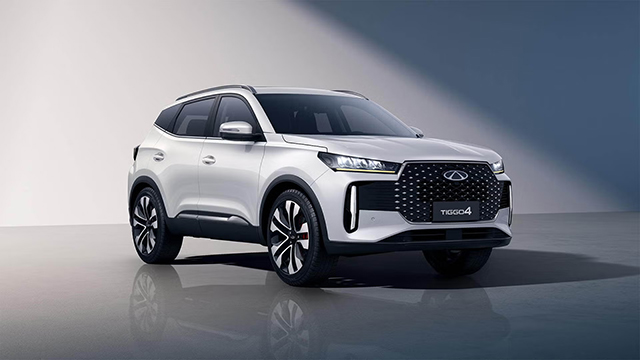
In Australia, this brand is almost universally pronounced the same way as the fruit. Yet because it’s derived from the Chinese word Qirui (meaning ‘especially lucky’) it should be pronounced closer to the alcoholic drink, with a soft ‘sh’ sound – ‘shair-ee’.
Citroën
Few car names have elicited wider debate over their pronunciation than Citroën. Go back a few decades in Australia and it wasn’t uncommon to hear ‘sit-troh-en’, while in the UK it has always been more like ‘sit-trinn’ (which we’ve now largely adopted). The original clumsy-sounding Australian pronunciation was arguably closer to the native French, however, which has three distinct sounds, albeit much softer and with less separation.
Cupra
Once a performance division of Seat (owned by the Volkswagen Group since the 1980s), Cupra was split off into a separate brand in 2018. Early on, you would sometimes hear the name pronounced ‘cup-ruh’, but the correct pronunciation is ‘koo-pruh’.
Deepal
This probably isn’t a name you’ve heard spoken much, because Deepal sales have been very modest in Australia. But if it comes up in conversation, the correct pronunciation according to parent company Changan is ‘dee-puhl’ (rhymes with ‘people’) and not ‘dee-pal’.
Farizon
This new-to-Australia Chinese brand is part of the Geely Holding Group. Unlike many other names on this list, Farizon is pronounced exactly as you’d expect, rhyming with ‘horizon’.
Forthing
Owned by the Dongfeng Motor Group in China, Forthing is based on English word ‘forth’ and is therefore pronounced with a soft ‘th’ sound (as opposed to the harder sounding ‘th’ in ‘father’).
GAC
This marque’s letters stand for ‘Guangzhou Automobile Group’. According to GAC’s local representatives, the name should be pronounced ‘G-A-C’ – but presuming the average Aussie will utter three syllables rather than the monosyllabic “Gack” is probably optimistic.
Geely
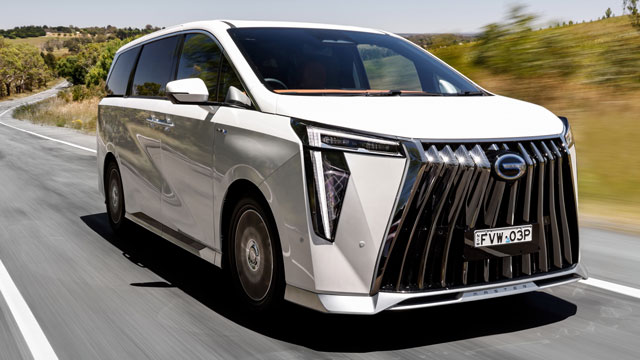
Hard or soft ‘g’, that is the question. You’ll frequently hear Geely pronounced with a hard ‘g’ (as in ‘grape’ or ‘gargle’), but the company says it should be a soft ‘g’ (as in ‘gentle’ or ‘geranium’).
Hyundai
These days, car manufacturers tend to take a firm hand in how their Australian marketing operations are conducted to ensure brand consistency, but that wasn’t always the case (see also Subaru).
The first Hyundais arrived here in 1986, and between then and now the brand was variously pronounced ‘hee-un-die’, ‘hee-un-day’ and ‘high-oon-die’. The latter two are the most common in Australia today, while the US and Canada pronounce it ‘hun-day’.
The original South Korean word, meaning ‘modern’ or ‘up-to-date’, is difficult to render accurately in English. According to Hyundai it is closest to ‘hye-un-deh’ or ‘he-un-day’.
iCAUR
If you’re wondering why something pronounced ‘eye-car’ is spelled C-A-U-R, you have a trademark dispute to thank. Originally released in China in 2023 as the iCar, it was changed to iCAUR to avoid legal action from tech company Apple, which felt the name was too similar to products such as the iPhone and iPad.
Isuzu
The dispute here is whether it should be a short or long ‘i’. The answer is short – it’s ‘ee-soo-zoo’ not ‘eye-soo-zoo’.
JAC
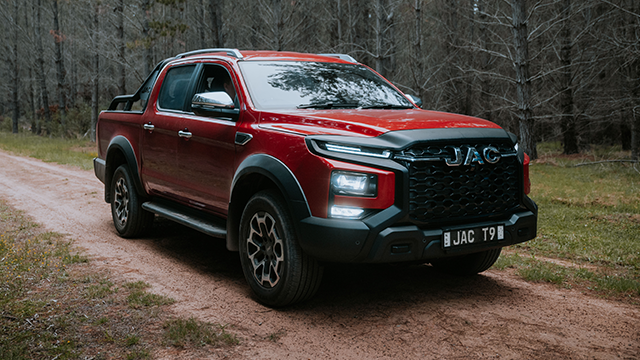
Like GAC, JAC is a simplified abbreviation for a longer company name (Anhui Jianghuai Automobile Company). In contrast to GAC, however, JAC is pronounced as the acronym – ‘jack’.
Jaecoo
The most common English pronunciation – ‘jay-koo’ – is the correct one for this increasingly popular Chinese brand, which is supposedly a portmanteau of the German word Jäger (meaning ‘hunter’) and the English word ‘cool’ (in the slang sense, meaning popular or trendy). Given that ‘Jäger’ is pronounced with a Y sound (‘yay-guh’) you could argue the brand should be pronounced ‘yay-koo’. Apparently in some regions of the world, you’ll hear it enunciated more like ‘jak-ku’.
Jetour
If you’ve never heard of this marque (a Chery sub-brand) you’re not alone. It’s coming to Australia in 2027 and when it does, be sure to avail friends, family members, work colleagues and random strangers of the correct pronunciation – everyone loves a pedant – which is ‘jay-tour’ (rhymes with ‘day tour’) and not ‘jet-tour’.
Lepas
Only arriving on Aussie shores this year, Lepas is (yet another) a sub-brand of Chery. It’s one of those names that could feasibly be pronounced half a dozen ways, but at the Aussie launch execs were saying ‘lepp-uhss’.
Nissan
This is another brand subject to regional dialects. The Americans say ‘Nee-sahn’, in the UK it’s usually ‘Niss-ann’ and in Australia you’ll often hear something closer to ‘Niss-uhn’. Annoyingly, the Yanks have it closest to the original Japanese pronunciation.
Peugeot
While not as verbally troublesome as its French cousin Citroën, Peugeot has been subject to some interesting interpretations over the years – the most common being ‘pew-jho’. The right pronunciation is ‘perr-jho’ (although that buzzy ‘g’ sound is hard to render phonetically in English – listening to a Frenchman say it helps).
Subaru
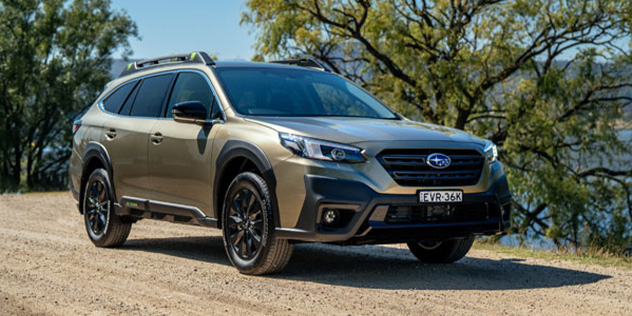
The Japanese brand has been part of the Australian automotive landscape since 1973 and we’ve always pronounced it ‘soo-buh-roo’. New Zealand, by contrast, didn’t get Subaru dealerships until the early 1990s and they say ‘soo-BAH-roo’. We once spoke to a Kiwi motoring journalist about this discrepancy, and he explained the NZ pronunciation derived from the brand’s early TV advertising, which put emphasis on the second syllable.
Wey
Expected to arrive in Australia before the end of 2026, Wey is a GWM sub-brand and pronounced ‘way’. Wei Jianjun, Great Wall Motor’s chairman, is the name’s inspiration.
XPeng
If you’ve been pronouncing this one how it looks (‘ex-peng’), you’re on the money – that is unless you’re in the brand’s native China. The X stands for Xiǎo in Mandarin and Peng is pronounced ‘pung’, so over there the name is pronounced ‘shao-pung’. You’ll also occasionally hear ‘pung’ as a variant to ‘peng’ in the English version.
Zeekr
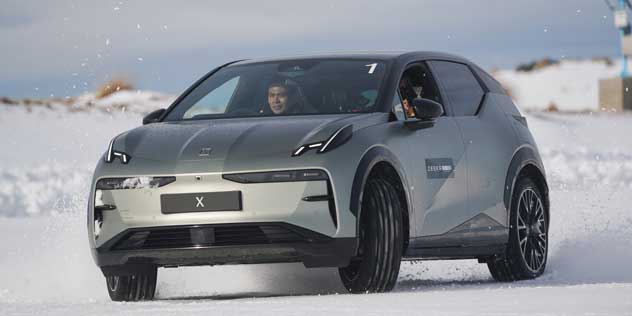
This one rhymes with ‘speaker’ (‘zee-kuh’). Any weird alternatives you’ve encountered are incorrect.