
Cheapest electric cars in Australia


If you’re shopping for the cheapest electric car, the latest in EV news is you no longer have to spend north of $30,000 just to get into one.
Nor are these entry-level models necessarily bare-bones; even the least expensive now come with five-star safety ratings and tech, as well as usable cabin space and warranties that look reassuring on paper. The caveat is the stuff you’ll notice after the honeymoon: smaller batteries mean tighter range, lower cost of owning an EV and cost to charge an EV, DC fast-charging can be modest, and some ‘from’ prices rely on conditions that don’t suit every buyer.
What is the cheapest electric car in Australia?
In 2026 there are now twelve electric vehicles in Australia that start from below $40,000, with the most affordable of them starting at just $23,990 before on-roads: the BYD Atto 1, winner of the Best Value Electric Vehicles award from Open Road in 2026.
BYD Atto 1
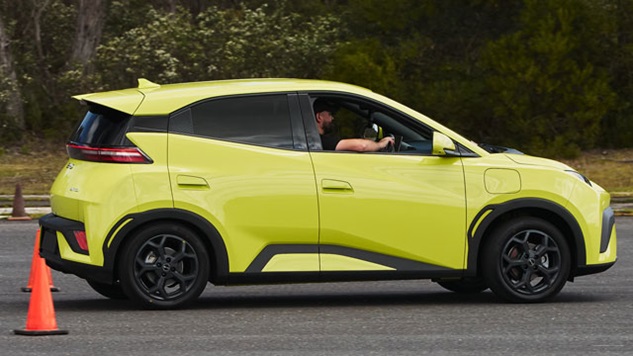
If you’re chasing the cheapest electric car you can buy new in Australia, the BYD Atto 1 is now firmly in the conversation and priced from just $19,990 driveaway for in-stock vehicles until December 15, 2026. It’s a small, city-first hatch measuring 3990mm long, with a 308-litre boot that’ll handle the weekly shop and a couple of soft bags without drama.
The range story depends on which version you pick. The Atto 1 Essential runs a 30kWh LFP battery for a claimed 220km (WLTP), paired with a 65kW and 175Nm front-drive setup and a 0-100km/h time of 11 seconds. Step up to the Atto 1 Premium and you get a bigger 43kWh LFP pack and 310km (WLTP), plus a healthier 115kW and 220Nm, and a quicker 0-100km/h claim of 9.1 seconds. In the real world, the Premium’s extra battery capacity is the difference between a car that’s mostly for school runs and errands, and one that can start to look like a genuine only-car option for some households.
Charging is probably the main bugbear, and representative of the price tag. Both variants support 11kW AC – handy if you’ve got a three-phase setup at home or at work, but DC charging tops out at 65kW (Essential) or 85kW (Premium). That’s not headline stuff, although with the smaller batteries (30 minutes from 10-80 per cent for the Atto 1 and 39 minutes for the Atto 2) it charges fast enough for a proper coffee stop rather than a long lunch.
As with most budget buys, it pays to look past the sticker price and check the fine print that matters day-to-day, such as warranty coverage, charging access, and how often you’ll be leaning on public fast chargers. On the upside, BYD backs the Atto 1 with a six-year/150,000km vehicle warranty and an eight-year/160,000km battery warranty, and you also get V2L for powering gear like a campsite fridge, lights, or charging an e-bike – great utility at an entry-level price.
BYD Atto 1 price:
- BYD Atto 1 Essential starts from $23,990 (promotional price $19,990 driveaway until December 15, 2026)
- BYD Atto 1 Premium starts from $27,990
Geely EX2
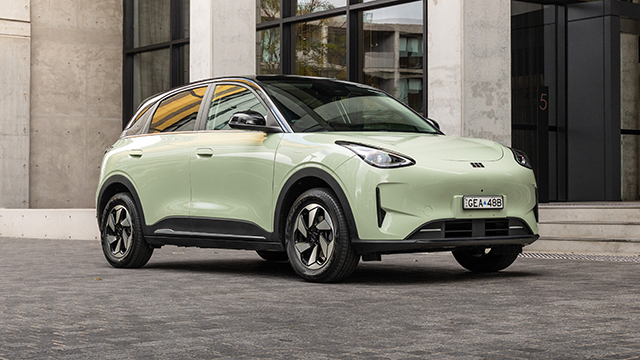
The Geely EX2 is Australia’s cheapest five-seat electric car, with the small rear-wheel-drive hatch priced from $26,490 plus on-road costs.
Two variants are available. The entry-level EX2 Complete pairs a 60kW/150Nm motor with a 35.3kWh lithium iron phosphate battery, delivering 252km of WLTP driving range. The better-equipped EX2 Inspire costs $30,990 plus on-roads and steps up to an 85kW/150Nm motor, 47.1kWh battery and 345km WLTP range.
Both versions support 6.6kW AC charging, while maximum DC charging rates are 60kW for the Complete and 80kW for the Inspire. Liquid-cooled batteries should help manage battery temperatures during charging and hot Australian weather.
Despite its budget positioning, the EX2 offers independent multi-link rear suspension and a locally tailored ride and handling tune. Its rear-mounted motor also leaves room for a useful 70-litre storage compartment under the bonnet.
Measuring 4135mm long, the EX2 is designed primarily as an urban runabout, although its five-seat cabin and 375-litre boot give it more flexibility than some similarly priced city cars. The longer-range Inspire is likely to suit buyers wanting greater scope for trips beyond the daily commute.
Geely EX2 price:
- Geely EX2 Complete starts from $26,490
- Geely EX2 Inspire starts from $30,990
BYD Dolphin
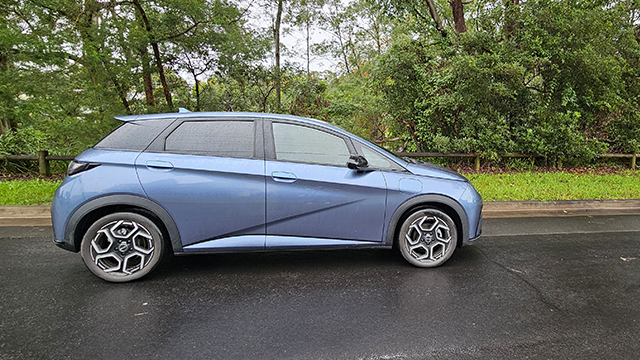
The BYD Dolphin (priced from $28,888 driveaway until December 15, 2026) sits in a handy middle ground for shoppers who want something more liveable than the very cheapest electric car options, without stepping up into SUV money. It’s a hatchback with a bit of extra height and a tidy footprint, and at 4290mm long it’s still easy to nimbly thread through city streets. Boot space is listed at 345L, which is a decent everyday figure for groceries, sport kit, or a weekend away.
When introduced in 2023, the Dolphin came in two variants — Dynamic ($36,890 plus on-road costs) and Premium ($42,890 plus on road costs).
Two years on and BYD has introduced a new Essential variant that starts from $29,990. The Dolphin Essential is priced from $29,990, with a 44.9kWh LFP battery and 340km of WLTP range. Outputs are 70kW and 180Nm through the front wheels, with a 0–100km/h time of 12.3 seconds. That suggests it’s tuned more for calm commuting than quick overtakes, though in stop-start traffic most drivers will find it perfectly willing.
While it does away with perks like a panoramic sunroof, electric and heated seats, tinted glass, foldable mirrors, and wireless phone charging, it is still an attractive offering for those looking for a budget EV.
The introduction of the Essential trim saw BYD do away with the mid-range Dynamic, but for those wanting a step up, there is still the Dolphin Premium variant, now starting from $36,990 before on-roads.
It brings a much bigger 60.48kWh LFP battery and a claimed 427km WLTP range. You also get a more powerful 150kW and 310Nm, plus a quicker 0–100km/h claim of 7 seconds, making it better for people who do regular motorway runs, or simply want an EV that feels punchier without going all the way into hot hatch territory.
The Dolphin comes with ergonomically designed front sports seats (heated in the Premium variant only) and headrests made of vegan leather. Rear seats offer fairly decent legroom and when folded down, expand the 345L boot to 1310L.
The Premium variety gets a large panoramic sunroof, rotating 12.8" infotainment system with Apple CarPlay and satellite navigation, adaptive LED headlights, a 360-degree camera system, a wireless phone charger, keyless entry and push-button start.
Charging comes with a caveat. Both Dolphin variants are listed at 7kW for AC charging, which is slower than the 11kW you’ll see on some rivals, so home top-ups might take longer if you’re arriving back with a low state of charge. DC charging tops out at 88kW, taking the battery from 30 to 80 per cent in just under 30 minutes.
Both Dolphins include 3.3kW V2L, which is a nice bonus at this price point for anyone who wants to power small appliances or charge gear away from a powerpoint. Warranty is listed as 6 years, 150,000km for the vehicle and 8 years, 160,000km for the battery, keeping it aligned with the rest of BYD’s local approach.
BYD Dolphin price:
- BYD Dolphin Essential starts from $29,990 (promotional price $28,880 driveaway until December 15, 2026)
- BYD Dolphin Premium starts from $36,990
Aion UT
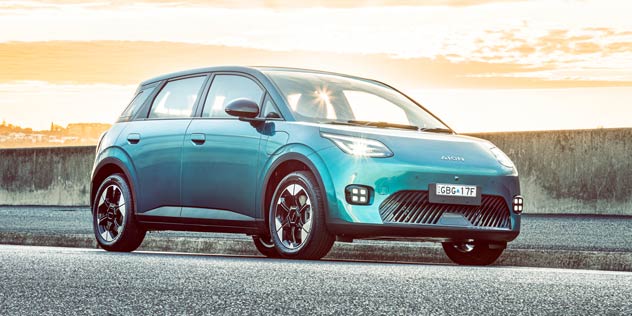
The Aion UT lands as another budget-minded electric hatch option, prcied from $31,990 for the Premium and $35,990 for the Luxury variant.
This is a compact hatch aimed at city use, but GAC is clearly pushing the idea that it punches above its size for cabin space. The company says the Aion UT rides on a 2,750mm wheelbase and offers 905mm of rear legroom, plus a 321-litre boot that expands to 689 litres with the rear seats folded. That could matter for buyers who want a small car footprint for tight urban streets and car parks, but still need something that can handle the weekly shop or a bit more gear on weekends.
Australian models use a 60kWh LFP battery with a claimed 430km WLTP range, energy use of 16.4kWh/100km, and a front-wheel-drive powertrain producing 150kW and 210Nm. GAC says it can charge from 30 to 80 per cent takes in under 24 minutes at up to 87kW on a DC public charger, while AC charging tops out at 11kW. It also gets 3.3kW vehicle-to-load capability, which is a handy inclusion in a car at this end of the market.
Aion UT pricing:
- Aion UT Premium starts from $31,990 drive away
- Aion UT Luxury starts from $35,990 drive away
MG MG4 Urban
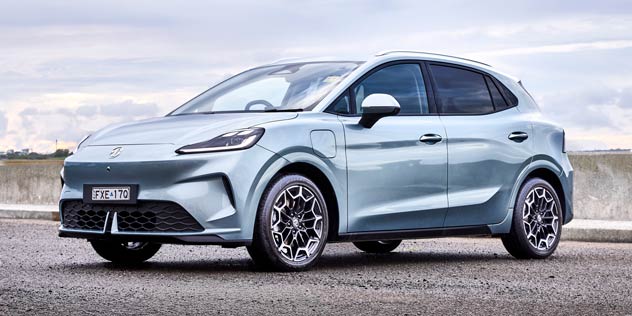
MG has added a new lower-cost rung to its electric MG4 hatch line-up with the MG4 EV Urban, that sports a smooth refined facelift and is priced from $31,990 drive-away. This puts it firmly in the conversation for buyers chasing one of the best value new EVs in Australia, particularly those stepping out of a small petrol hatch or looking to cut running costs without stretching into the mid-$30,000 bracket.
MG says it will be offered with two battery choices, a 43kWh Standard (316km WLTP) and a 54kWh Long Range (405km WLTP), with DC fast charging up to 150kW for a 10 to 80 per cent recharge in about 30 minutes.
Underneath, MG says the MG4 EV Urban uses a 6-in-1 electric drive system in a front-wheel drive layout, with the brand also pointing to a high-efficiency heat pump and a reworked torsion bar rear suspension. The pitch here is straightforward enough: more usable interior and luggage space, a tighter turning circle, and a set-up better suited to the stop-start reality of urban driving.
As with the rest of the MG4 family, the Urban is backed by the brand’s 10-year warranty when serviced through its dealer network.
MG MG4 Urban pricing:
- MG MG4 Urban 43kWh RWD starts from $31,990 drive away
- MG MG4 Urban 54kWh RWD starts from $34,990 drive away
BYD Atto 2
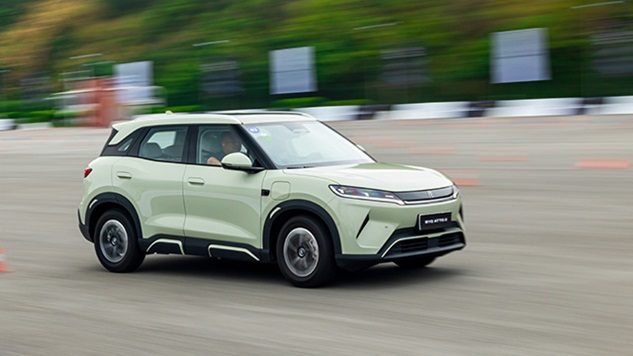
The BYD Atto 2 is the next rung up, still aimed at value hunters, but with more breathing room for Australian roads and routines. It’s longer and taller than the Atto 1 at 4310mm long, with a 380L boot that’s a better fit for prams, bigger grocery runs, and weekends away.
Both Atto 2 variants use the same drivetrain, a 51kWh LFP battery, front-wheel drive, and outputs of 130kW and 290Nm, with a claimed 0–100km/h of 7.9 seconds. WLTP range is listed at 345km for both the Dynamic and Premium, which is the sort of figure that tends to pass the pub test for mixed metro driving with the occasional longer trip, as long as you’re not expecting to sit on 110km/h all day with a headwind.
Charging comes with one clear caveat. DC fast charging tops out at 82kW, which is fine for the odd road trip, but AC charging is listed at 7kW. That’s slower than many rivals and slower than the Atto 1 on paper, so if you’re planning to rely on home charging, it’s worth thinking about how that fits your daily kilometres and how often you’ll want the car back at 100 percent.
Like the Atto 1, the Atto 2 includes V2L, and the warranty coverage is the same, 6 years, 150,000km for the car, and 8 years, 160,000km for the battery. In short, it’s not the cheapest electric car in BYD’s lineup, but it does make a strong case for buyers who want a budget-friendly EV with a more relaxed range buffer and a roomier footprint.
BYD Atto 2 pricing:
- BYD Atto 2 Dynamic starts from $31,990
- BYD Atto 2 Premium starts from $35,990
GWM Ora 5
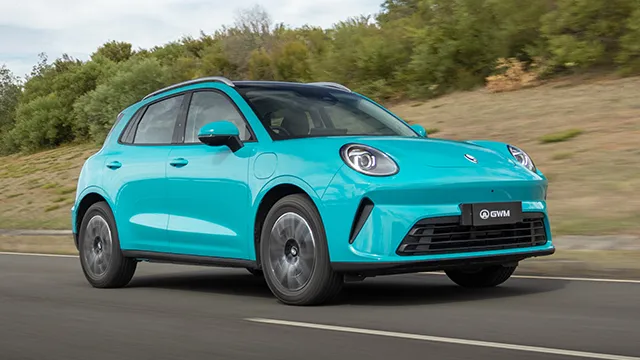
The GWM Ora has now been replaced by the Ora 5, which came third in the Best Value Electric Cars awards in 2026.
The GWM Ora 5 takes the nameplate in a new direction, replacing the outgoing Ora hatch with a larger electric SUV. It is offered in Lux and Ultra grades, priced from $33,990 and $36,990 drive-away respectively, putting it among Australia’s cheapest electric SUVs.
Both variants use a 58.3kWh lithium iron phosphate battery and a front-mounted motor producing 150kW and 260Nm. That is enough for a claimed 0–100km/h time of eight seconds, a noticeable step up from the 126kW and 250Nm offered by the outgoing Ora.
GWM quotes up to 435km of range using the WLTC testing standard. This is not directly comparable with the WLTP figures quoted for most other vehicles in this article, although it suggests the Ora 5 should offer enough range for commuting and occasional longer trips.
DC charging peaks at 120kW, with GWM claiming a 10–80 per cent recharge in around 30 minutes under suitable conditions. The 6.6kW onboard AC charger takes approximately 6.6 hours to replenish the battery from empty. Vehicle-to-load capability provides up to 6kW for running appliances or other electrical equipment away from home.
At 4471mm long, 1833mm wide and 1641mm tall, the Ora 5 is 236mm longer than the outgoing hatch, with its wheelbase growing by 70mm to 2720mm. Boot capacity is 362 litres, while an integrated space-saver spare tyre and 750kg towing capacity add some useful flexibility.
The Lux comes with 18-inch alloy wheels, a 14.6-inch touchscreen, 10.25-inch digital instrument display, wireless Apple CarPlay and Android Auto, adaptive cruise control and a 360-degree camera. The Ultra adds an electric tailgate, panoramic glass roof, heated and ventilated front seats, heated steering wheel, driver’s seat memory, wireless phone charging and a nine-speaker audio system.
For buyers comparing the cheapest electric vehicles, the Lux offers the same battery, range and performance as the Ultra. The additional $3000 is largely paying for cabin comfort and convenience features rather than extra capability.
GWM Ora 5 pricing
- GWM Ora 5 Lux starts from $33,990 drive-away
- GWM Ora 5 Ultra starts from $36,990 drive-away
GWM Ora pricing
- GWM Ora Lux starts from $34,990 drive away
- GWM Ora GT starts from $37,990 drive away
Jaecoo J5
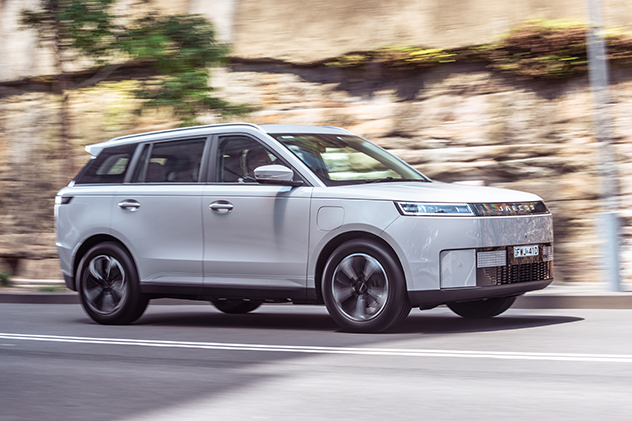
The Jaecoo J5 EV is offered as a single variant starting from $35,990 before on-roads, and as a compact electric SUV it has a practical, upright shape and a fairly generous equipment list.
Power comes from a permanent magnet synchronous motor producing 155kW and 288Nm, paired with a 58.9kWh LFP battery. Jaecoo quotes a WLTP driving range of 402km, which puts it in the mix as a usable small SUV for everyday driving and weekend trips alike. Drive modes include Eco, Normal and Sport, while regenerative braking has three levels. A 0-100km/h time of 7.7 seconds is respectable.
The J5 EV supports 6.6kW single-phase AC and 10.3kW three-phase AC charging, along with DC fast charging up to 130kW. Jaecoo says a 30 to 80 per cent DC charge can be completed in around 28 minutes under ideal conditions.
The J5 measures 4380mm long, 1860mm wide and 1650mm tall, with a 2620mm wheelbase. Boot space is quoted at 384 litres to the cargo cover and 480 litres to the roof. It rides on 18-inch alloy wheels, uses a MacPherson strut front suspension and multi-link rear setup, and can tow 750kg unbraked.
Inside, the J5 EV leans into comfort and tech. It gets synthetic leather-appointed trim, heated and ventilated front seats, six-way power adjustment for both front seats, dual-zone climate control, rear air vents, ambient lighting and a 60:40 split-fold rear seat. There is also an 8.88-inch digital instrument display and a 13.2-inch central touchscreen, plus wireless Apple CarPlay and Android Auto, an eight-speaker audio system, voice control, and a 50-watt wireless phone charger.
Standard exterior gear includes LED lighting, rain-sensing wipers, heated and power-folding mirrors, a glass roof with powered sunshade, roof rails and a powered tailgate.
Safety equipment appears extensive, with features including adaptive cruise control, autonomous emergency braking, blind spot detection, rear cross traffic alert and braking, lane support systems, a 360-degree camera, parking sensors and seven airbags.
Jaecoo J5 pricing:
- Jaecoo J5 starts from $35,990 before on-roads
MG MG4

If you’re searching the market for the cheapest electric car that still feels grown-up on Australian roads, the MG4 remains a key player, partly because it gives you a proper spread of battery sizes without forcing you into SUV pricing.
The MG4 is the first EV from the SAIC-owned brand to come to Australia on a pure electric platform and is currently priced from $37,990 drive away.
Under the bonnet of the entry-level Excite 51 variant lies a 51kWh battery with 50.8kWh of usable energy, delivering a capable 125kW of power and 250Nm of torque. It provides spirited performance, sprinting from 0-100km/h in 7.7 seconds, and reaches a respectable top speed of 160km/h.
Charging convenience is key, with the Excite 51 offering an impressive DC fast-charging capability of up to 88kW, enabling a recharge from 10 to 80 per cent in around 37 minutes. When charging at home or at an AC charger, the vehicle reaches a maximum rate of 6.6kW, fully replenishing the battery in approximately 7.5 hours.
The MG4 sits at 4287mm in length, with a wheelbase of 2705mm providing a generous interior space. Storage is also competitive for its class, boasting 363 litres with seats up and expanding to a spacious 1177 litres when they’re folded flat.
Safety hasn't been overlooked either. The MG4 Excite 51 comes equipped with MG Pilot technology, featuring nine active driver safety systems, including lane keeping assistance, adaptive cruise control, forward collision warning, and automatic emergency braking.
Stepping above the $40,000 mark, the 64kWh option provides a touring buffer, with MG quoting up to 450km WLTP for the $43,990 Excite 64 and 435km WLTP for the $45,990 Essence 64, both with 150kW on tap and a 7.2 second 0-100km/h claim.
At the top of the tree, the 77kWh Long Range is listed at 530km WLTP and punches harder with 180kW and 350Nm for a 6.5-second sprint. It’s priced from $49,990 drive away.
Charging is one of the bigger caveats between grades. Most MG4 variants run a 6.6kW onboard AC charger, while the 77kWh Long Range gets 11kW three-phase AC capability for quicker battery top-ups.
On DC, MG quotes 10-80 per cent times that range from 28 minutes for the Excite 64 on a 150kW charger, to almost 40 minutes for the 51kWh variant and the Long Range.
Boot space is listed at 363 litres for the Excite grades, and 350 litres for the Essence 64 and Long Range 77, with a 4287mm length and 2705mm wheelbase giving it a planted stance for a hatch. Vehicle-to-load (V2L) is fitted across the range, and MG even quotes a 500kg towing capacity, which is handy for bike racks and small trailers, even if it won’t be a caravan hero.
MG MG4 pricing:
- MG MG4 51kWh RWD starts from $37,990 drive away
- MG MG4 64kWh RWD starts from $43,990 drive away
- MG MG4 77kWh RWD starts from $49,990 drive away
Chery E5
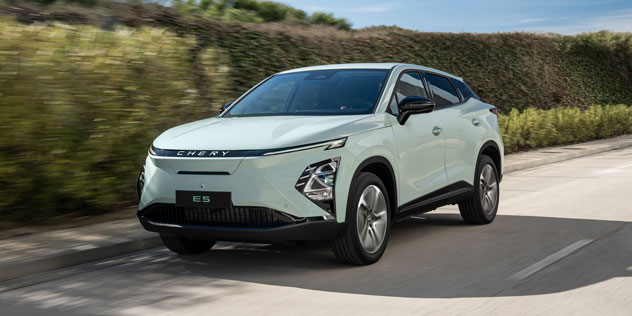
The Chery E5, starting from $38,990, is pitched as a compact electric SUV with a strong numbers-led value case, particularly if you care more about range than outright acceleration. It runs a 58.9kWh LFP battery paired with a front-wheel drive motor producing 155kW and 288Nm, and Chery quotes 430km of WLTP driving range.
Charging is set up for everyday convenience rather than chasing monster peak rates. There’s a front-mounted charge port, Type 2 for AC and CCS2 for DC, with a 6.6kW single-phase onboard charger or 10.3kW three-phase. On a 130kW DC charger, Chery quotes a 30-80 per cent top-up in around 30 minutes. One caveat worth flagging: the EV trickle charger isn’t included with purchase.
Size-wise it’s at 4424mm long, 1830mm wide and 1588mm tall, on a 2610mm wheelbase. Boot space is listed at 300 litres up to the cargo cover, expanding to 1079 litres with the second row folded. There’s also a small 19-litre front storage compartment on the Urban grade only, because the Ultimate uses that space for its heat pump system.
Chery leans heavily on safety spec. The E5 is listed as having a five-star ANCAP rating (2022) and a long driver-assistance list including AEB, adaptive cruise control, lane keeping functions, blind spot monitoring, rear cross-traffic alert and braking, door opening warning and a driver monitoring system. Airbags include front, side and curtain coverage, plus a front centre airbag.
The grade split is mostly about comfort and convenience. Both the Urban and Ultimate get dual 12.3-inch screens, wired and wireless Apple CarPlay and Android Auto, voice control (“Hello Chery”), and dual-zone climate control with rear vents. The Ultimate adds items such as a 360-degree camera, a Sony-branded eight-speaker audio system (the Urban has six), 50-watt wireless phone charging, heated front and rear outboard seats, a heated steering wheel, plus features such as a powered sunroof and tailgate.
Towing is rated at 750kg for a non-braked trailer, with a 75kg maximum towball download, so it’s in the 'light-duty' camp. Warranty cover is listed at seven years/unlimited kilometres for the vehicle, and eight years/unlimited kilometres for the battery.
Chery E5 pricing:
- Chery E5 Urban starts from $38,990
- Chery E5 Ultimate starts from $42,990
Leapmotor B10
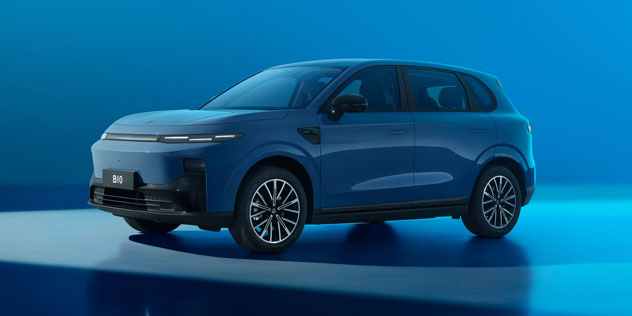
The Leapmotor B10 is a small electric SUV sized for city streets, but pitched as one of the roomier options in this price bracket. It arrives in two trims, Style and Design LR (Long Range), with drive-away pricing from $38,990 and $41,990.
The catch for comparisons is the range figure. The Style packs a 56.2kWh LFP battery offering up to 442km (NEDC) claimed range, while Design LR steps up to a 67.1kWh LFP pack and up to 516km (NEDC). Real world figures will be substantially less, with pundits guesstimating a 30 per cent drop on NEDC figures.
Battery capacity is listed as 56.2kWh (Style) and 67.1kWh (Design Long Range), with power quoted at 160kW/240Nm, a sprint from 0-100km/h in eight seconds, and a top speed of 170km/h. For charging, Leapmotor says both variants support 11kW AC, and the Design LR is quoted with DC charging up to 168kW, with a 30-80 per cent top-up in about 20 minutes under ideal conditions.
It is the longest of this list: the B10 measures 4515mmx1885mmx1655mm, with a 2735mm wheelbase. Leapmotor also calls out 22 storage compartments and generous cabin measurements, including 2390mm from the rear seat backrest to the footwell and 1400mm of rear passenger width.
Inside, both get an 8.8-inch driver display and a 14.6-inch high-resolution central touchscreen, plus connectivity including Wi-Fi, 4G and over-the-air updates. There’s also a neat dual-slot phone setup up front, with wireless charging for one device, and the cabin pitch includes fully reclinable front seats and a panoramic glass roof with an electric sunshade.
On safety and tech, Leapmotor lists Leap Pilot L2 ADAS with 17 driver assistance functions, alongside features like a 360-degree camera with dynamic guidelines and an integrated 360-degree dashcam recorder. Step up to the Design Long Range and you add comfort upgrades such as TechnoLeather seats, a heated steering wheel, heated and ventilated front seats, 12-speaker surround audio, electric adjustment for the driver and passenger seats, multi-colour ambient lighting, and a powered tailgate. Support is via the Stellantis network for servicing and parts.
Leapmotor B10 pricing:
- Leapmotor B10 Style starts from $38,990 drive away
- Leapmotor B10 Design LR starts from $41,990 drive away
BYD Atto 3
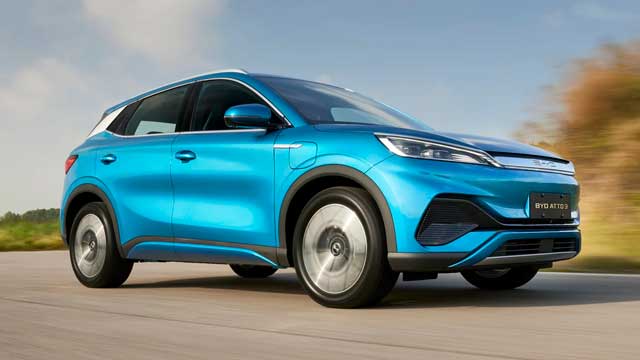
The BYD Atto 3 is a medium-sized all-electric SUV that offers a good mix of driving range, storage and towing capacity.
Priced from $39,990 in its Essential trim, the Atto 3 features a 49.92kWh BYD Blade Battery, delivering 150kW of power and 310Nm of torque, achieving a 0-100km/h sprint in 7.9 seconds and a top speed of 160km/h. It boasts a WLTP-rated range of up to 345km, with DC charging capacity up to 70kW and AC charging at 7kW, providing a full charge in approximately 7.75 hours.
The Atto 3 measures 4455mm in length, 1875mm in width, and offers the longest wheelbase at 2720mm, translating to substantial interior space. Storage capacity is commendable at 440 litres, expanding to 1340 litres with rear seats folded. It also offers braked and unbraked towing capacity at 750kg.
Standard features across the Atto 3 range include a panoramic sunroof with electric slide and anti-trap, an electric tailgate with one-touch open and close, roof rails, wireless Apple CarPlay and Android Auto, wireless phone charging, and the brand’s rotating touchscreen –12.8-inch on the Essential and 15.6-inch on the Premium.
Safety kit includes a 360-degree monitor, stop and go adaptive cruise control, AEB, blind spot detection, lane keeping assistance, and rear cross traffic alert and braking. A 2.2kW V2L function is included, along with a V2L discharge adapter.
The Atto 3 is also available in a Premium format for an extra $5000. This buys a 60.4kWh battery that offers up to 420km driving range and quicker 7.3-second 0-100km/h acceleration. This version also supports faster 88kW DC charging.
BYD Atto 3 pricing:
- BYD Atto 3 Essential starts from $39,990
- BYD Atto 3 Premium starts from $44,990
Hyundai Inster
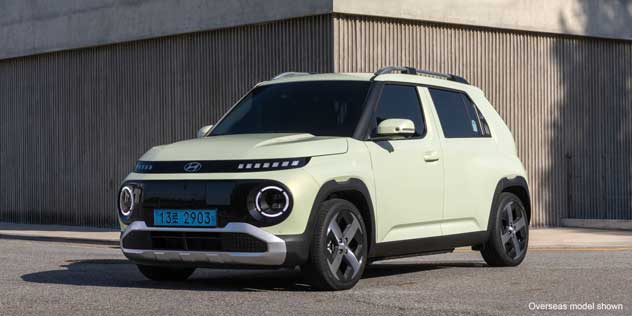
The Hyundai Inster is a pint-sized electric hatch with a clear city focus, though Hyundai is also pitching it as a practical small EV with a surprising amount of useful kit. It opens with the Standard Range currently priced from $39,000 before on-roads, while the Extended Range starts from $42,500. Both use front-wheel drive and a single-speed reduction gear, with the Standard Range paired to a 71.1kW/147Nm electric motor and the Extended Range stepping up to 84.5kW/147Nm.
As for range, Hyundai quotes up to 327km WLTP for the Standard Range and up to 360km WLTP for the Extended Range, while the Inster Cross Extended Range gets just 293km WLTP with battery capacity of 42kWh for Standard Range and 49kWh for Extended Range. Acceleration is modest at 11.7 seconds for 0-100km/h, and AC and DC maximum charging speeds are 10.5kW and 120kW respectively.
Even in base form, the Inster does not look bare-bones. Standard features include 15-inch alloy wheels, dual 10.25-inch screens (one for the instrument cluster and one for multimedia), satellite navigation with Bluelink live traffic, Apple CarPlay and Android Auto, multi-Bluetooth connection, connected car services and over-the-air navigation updates. There is also a heat pump, battery conditioning system, internal and external vehicle-to-load capability, smart regenerative braking with i-Pedal mode, rain-sensing wipers, LED daytime running lights, LED interior lighting, a leather steering wheel and a 50:50 split-folding rear seat. Hyundai SmartSense driver assistance tech is listed as standard.
Step into the Inster Cross and the vibe shifts from tidy urban runabout to lifestyle-flavoured city EV. Pricing starts from $49,562.47 drive-away (originally $45,000 before on-roads), and it uses the Extended Range 84.5kW front-wheel-drive powertrain. Claimed range is up to 360km WLTP in Cross trim with the sunroof, though that drops sharply to 293km WLTP when fitted with the roof basket option.
The Cross adds a longer list of comfort and cosmetic upgrades over the regular Inster. It brings 17-inch alloy wheels, a sunroof with manual sunshade, rear privacy glass and backlit glass, heated and ventilated front seats, a heated steering wheel, artificial leather-appointed seats, ambient mood lighting with 64 colours, a smart temperature control system, and an electronic chromic mirror. It also keeps the twin 10.25-inch displays, navigation, smartphone mirroring, wireless charging pad, Bluelink services, OTA navigation updates, heat pump, battery conditioning and V2L capability. Buyers choosing the Roof Basket version also get the basket itself in place of the sunroof, plus a black two-tone roof.
In other words, the regular Inster looks to be the more sensible entry point if maximum efficiency and lower spend are the brief, while the Inster Cross leans harder into style and equipment, but ticking the roof basket box comes with a trade-off in range.
Hyundai Inster pricing:
- Hyundai Inster Standard Range starts from $39,000 before on-roads
- Hyundai Inster Extended Range starts from $42,500 before on-roads
- Hyundai Inster Inster Cross starts from $45,000 before on-roads


