Guide to NSW car licence laws for international drivers
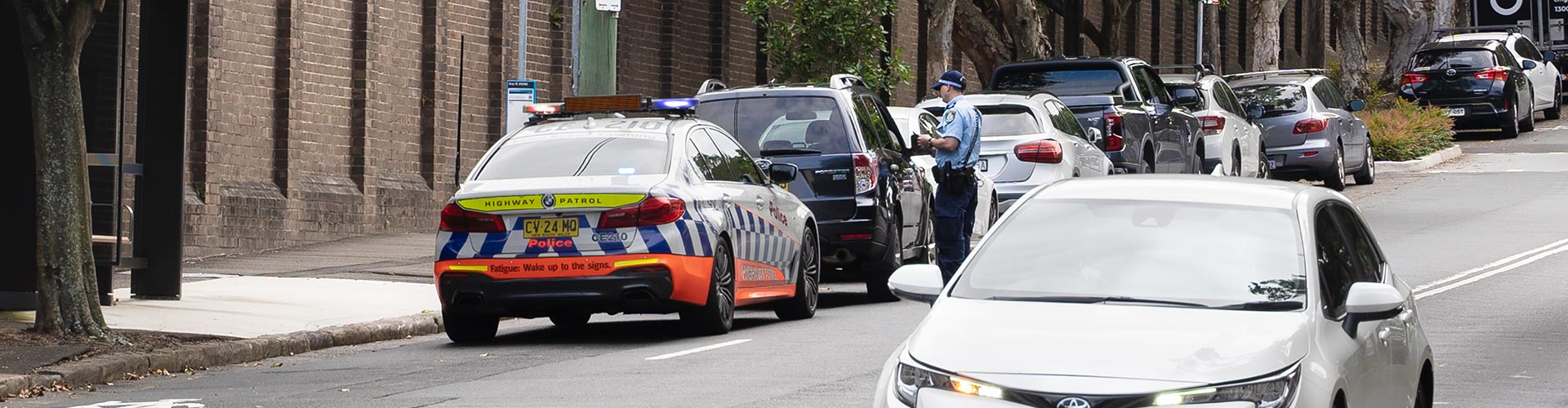
International licence holders living in Australia as well as international visitors are being urged to revisit the rules around driver licensing in New South Wales, following a host of new legislation changes.
From February 1, 2026, NSW will implement changes to its existing 'Experience Driver Recognition' program which will prevent overseas licence holders living in NSW from simply transferring their licence - as has been done in the past.
The former regime had previously applied to drivers over 25 years of age. In essence, if your overseas licence had been issued by an approved country or jurisdiction, you were able to simply apply for a NSW licence without any additional training or assessment.
However, from February 1, 2026, NSW will align with all other Australia states and territories by requiring nationals from the below list and living in NSW for more than six months to undergo additional training and testing.
NSW residents using licences granted from following countries will be impacted by the rule change: Bulgaria, Czech Republic, Estonia, Hong Kong (Special Administrative Region of the People's Republic of China), Hungary, Latvia, Lithuania, Poland, Republic of Cyprus, Republic of Korea (South Korea), Republic of Serbia, Romania, Slovakia, Slovenia, South Africa and Taiwan.
What is the process for licence holders listed under the Recognised Country Scheme?
Herein lies the kicker as part of the latest changes: at the time of writing, even the countries that continue to be listed under the Recognised Country Scheme are likely to be impacted.
That's because authorities in NSW are currently undertaking a review of the scheme, and have paused the assessment of applications in the process.
"Austroads has made a considered decision to temporarily pause the assessment of applications from overseas licensing agencies seeking recognition under the Recognised Country Scheme," a statement read.
"We have identified some areas where the assessment framework could be improved. As a result, we are conducting a comprehensive review to ensure that future recognition decisions are based on a consistent process that is both transparent and robust.
"During this temporary pause, no new applications for Recognised Country status will be assessed. This will allow time for a comprehensive review of the framework, with the goal of strengthening the assessment process and ensuring that future recognition decisions are consistent, robust and deliver the outcomes expected by both road managers and users."
For the record, the following countries are currently listed under the Recognised Country Scheme: Austria, Belgium, Bosnia and Herzegovina, Canada, Croatia, Denmark, Finland, France, Germany, Greece, Guernsey, Ireland, Isle of Man (for licences first issued on or after 1 April 1991), Italy, Japan, Jersey, Luxembourg, Malta (for licences first issued on or after 2 January 2004), Netherlands, New Zealand, Norway, Portugal, Singapore, Spain, Sweden, Switzerland, UK and the USA.
What are the rules for international visitors driving in NSW?
International visitors driving in NSW are subject to different rules compared to international licence holders living in NSW.
If you are a tourist or overseas visitor, you can drive in NSW using your overseas licence for up to six months, pending some rules. Beyond the six-month timeline, the rules have recently changed.
From March 1, 2025, overseas drivers who have not yet converted their licences after six months will be treated as ‘unlicensed’, according to the NSW Government. The six-month rule previously stood for international visitors who began living in NSW on or after July 1, 2023, but will now apply to visitors who arrived before that date.
The crackdown follows a spate of fatalities involving international drivers on NSW roads.
Data obtained by the NRMA’s Open Road reveals that between 2019 and 2023, there were 24 fatal crashes involving a driver or rider with an overseas licence, resulting in the loss of 26 lives. In 2024 alone, preliminary figures reveal there were two fatal crashes involving a driver or rider with an overseas licence, resulting in three fatalities.
A Transport for NSW spokesperson urged overseas residents to take the local driving test and bring their knowledge and skillset up to speed with state requirements.
“More than 200,000 international drivers have converted their overseas licence to a NSW driver licence since 1 July, 2023,” the spokesperson said. “This initiative is aimed to improve road safety and ensure that overseas visitors who wish to drive meet the state’s road safety standards.
“This process is designed to make sure that licence holders possess the necessary skills and knowledge for safe driving on NSW roads, tested through theoretical and practical driving or riding exams.
“Having as many international drivers as possible convert their overseas licence to a NSW licence means more drivers being familiar with the local rules, and also lowers the risk of demerit point fraud.”
The same rules also apply to international students living in New South Wales.
How do I convert my international drivers licence to a NSW drivers licence?
The process of converting your overseas drivers licence to a New South Wales drivers licence is relatively straight-forward. The first port of call is the Service NSW website, which provides an overview of what you’ll need, what the licence conversion will entail, as well as any assistance with providing a licence for temporary overseas visitors – if you’re a temporary visa holder or cannot provide proof of permanent residence.
You may need to pass a knowledge or driving test, depending on where your overseas licence was issued.
Additionally, drivers aged 75 years or older will be required to undergo a medical review and may need to take a practical driving test, depending on circumstances.
Need help? NRMA offers Driver Training programs that can give drivers refresher lessons if a driving test is needed. NRMA also offers senior assessments and lessons for over 75’s.
What happens if I’m caught driving unlicensed?
It goes without saying the penalties for driving without a licence in NSW are pretty hefty.
According to the Service NSW website, drivers who have never held a licence in NSW risk a maximum fine of up to $2200 if caught by NSW Police.
That’s for the first offense. Second or subsequent infringements can lead to a fine of up to $3300 and/or six months imprisonment, along with a mandatory disqualification period.
A separate $818 fine can be issued for driving a car that is not insured or is unregistered.