2026 Audi Q3 review
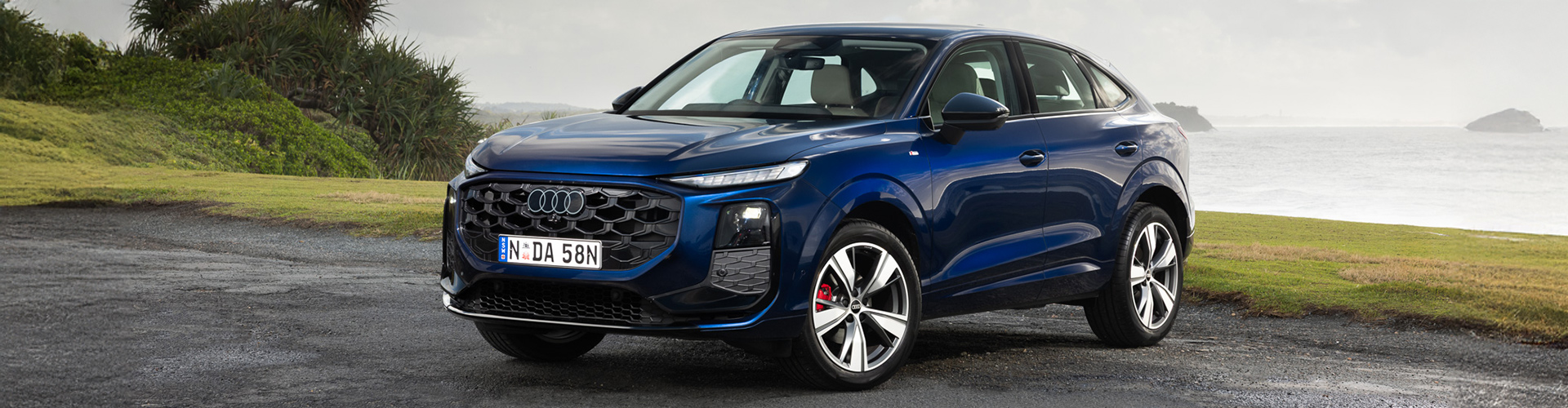
The Audi Q3 has worked hard to dispel the myth that small can’t mean sophisticated in luxury car parlance.
The new third-generation model might just be its defining argument.
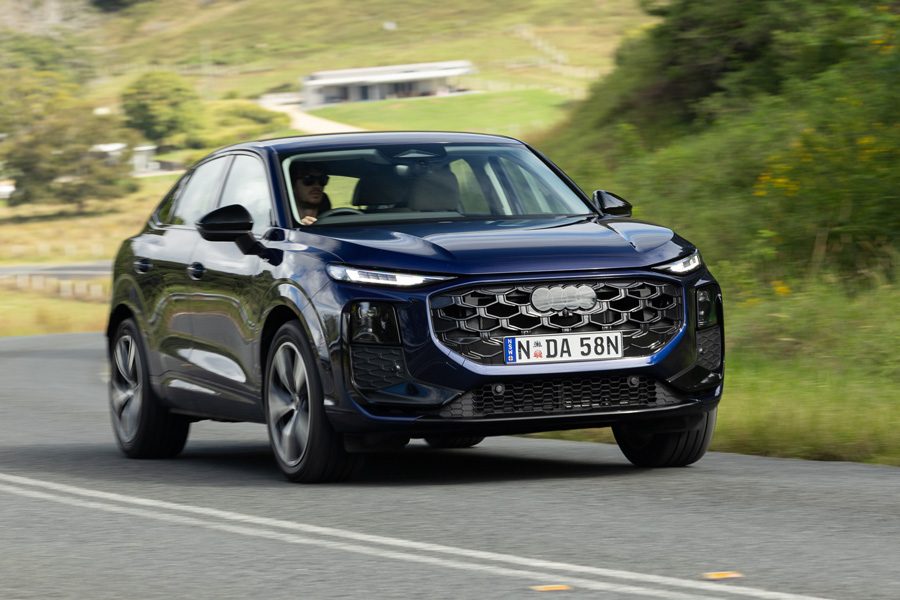
The 2026 Audi Q3 lobs in Australia this month promising a true elevation in driving dynamics, technology, safety, comfort and refinement, especially compared with the two generations that came before it.
The newcomer does so while imposing some expected pricing increases. The final result is a telling one: the most rounded Q3 yet.
How much does the Audi Q3 cost?
The new Audi Q3 range opens at $61,600 (plus on-road costs) in Australia, a circa $3000 increase on the model it replaces.
There are no less than 10 variants available when you consider SUV and Sportback body styles, different engine options, as well as the limited Launch Edition models which are being used to introduce the Q3 initially.
The Launch Edition models specifically impose a $5400 increase on the regular grades – adding some additional tinsel and adaptive suspension – and will be phased out in the coming months.
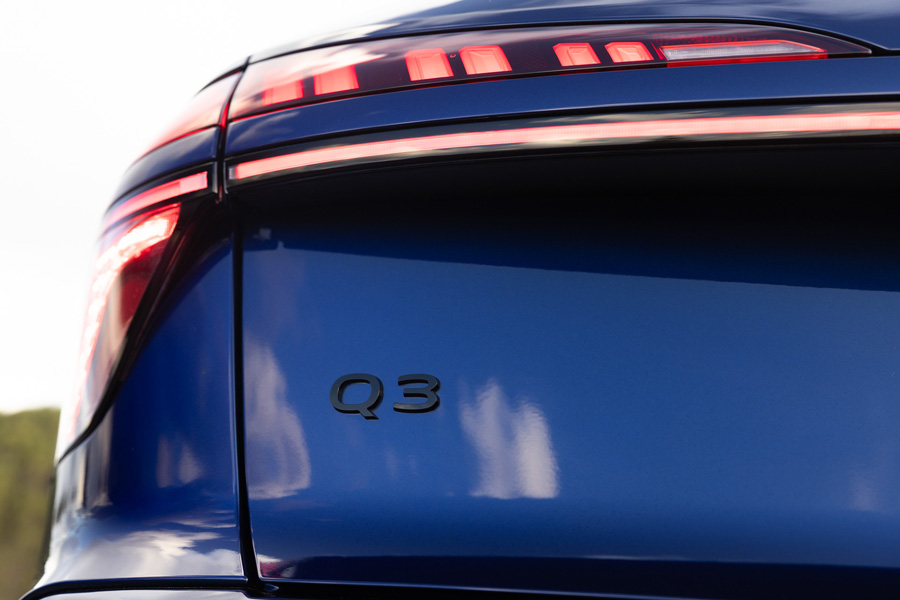
Meanwhile Sportback versions add a $3000 premium over the more traditional SUV shape, bringing a raked roofline, as well as styling and cosmetic enhancements.
Buyers get a choice of three four-cylinder petrol drivetrains at the time of launch, with a fourth plug-in hybrid version being mooted for Australia in the coming months (though not yet locked in).
The Q3’s pricing aligns quite closely with luxury small SUVs including the Mercedes-Benz GLA Class (from $63,600 plus ORCs) and the BMW X2 (from $72,000 plus ORCs).
What is the Audi Q3 like inside?
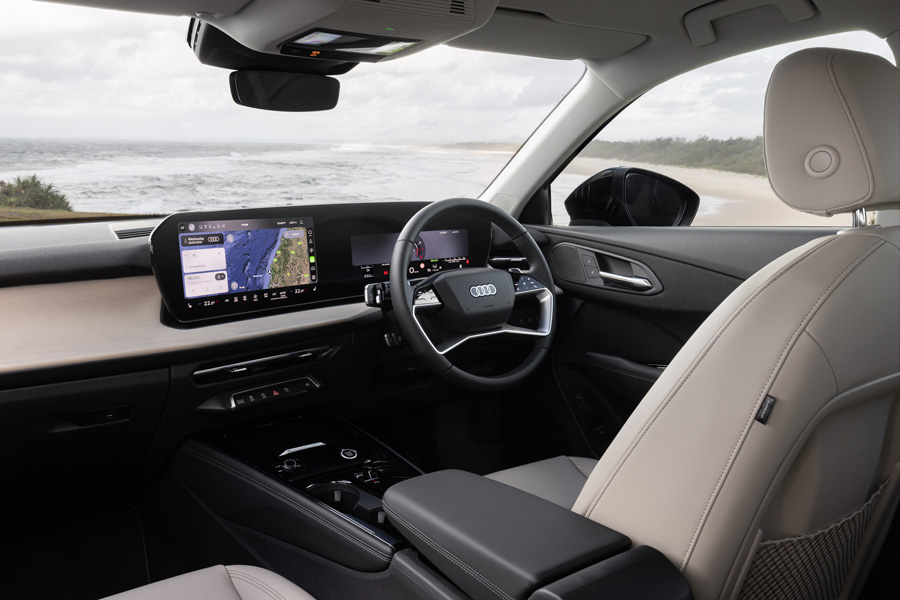
Although Audi insisted on near identical interior proportions in the new Q3 – citing continued customer demand for its 4.53-metre long footprint – the interior feels like a paradigm shift in terms of presentation, materials and outright execution.
Designers have taken a leaf from the larger A5 and Q5 models, with nicer materials and less of the scratchy contact points which have graced Q3 models in the past.
As such, the cabin feels light and airy on our test cars, each fitted with an optional sunroof, fashionable interior colour schemes and adequate in-car storage.
Some occasional piano black inlays appear a magnet for fingerprints, but stand up strongly across two days of testing. More importantly, front seat comfort is terrific and outward vision is relatively unobscured.
Despite a relatively small 2.86-metre wheelbase, the Q3 offers ample rear seat proportions for a couple of adults, children or a forward-facing child seat. The door aperture is moderate in size, ensuring easy enough ingress and egress, while the seat is relatively comfortable and serviced by a selection of open cubbies, air vents and cavernous door pockets.
Further back the Q3’s 488-litre boot offer enough space for a couple of full-size suitcases, with the raked roofline of the Sportback imposing a small height compromise but otherwise carryover dimensions. Happily, the boot area is underslung by a space-saver spare tyre – a boon for practicality.
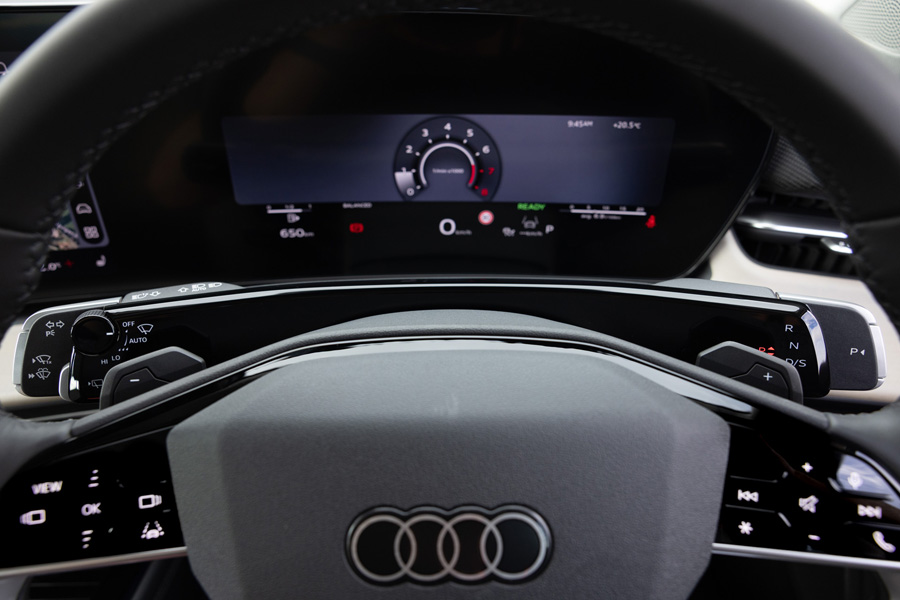
On the infotainment front, the Q3’s dashboard is furnished by a 12.8-inch centre touch screen display, matched by an 11.9-inch digital instrument cluster.
Eight basic icons grace the screen in a layout not dissimilar to your iPhone – affording easy access and ensuring you’re not digging into needless sub menus for basic commands.
The displays are crisp, legible and reactive to inputs. The one criticism is a huge slab of black plastic surrounding the instrument cluster, which looks a bit out of place.
We found all the tech on board easy to navigate and intuitive in layout, matching handily with hard-wired buttons. A new fixed stalk in front the steering wheel offers straight-forward access to the gear selector on one side, with the window wipers, blinkers and other functions house on the other side.
— Sam Charlwood
What equipment does the Audi Q3 come with?
The entry 110TSI Audi Q3 offers 19-inch alloy wheels, adaptive LED headlights, electric tailgate, auto-dimming side mirrors with memory function, auto-dimming rear-view mirror, keyless entry and start, leather-appointed upholstery, heated and power-adjustable front seats with memory for the driver, tri-zone climate control, and ambient lighting.
Infotainment comprises a 12.8-inch infotainment screen and an 11.9-inch virtual cockpit display, with a ventilated wireless phone charging pad, 10-speaker audio system, Apple CarPlay and Android Auto (both wired and wireless).
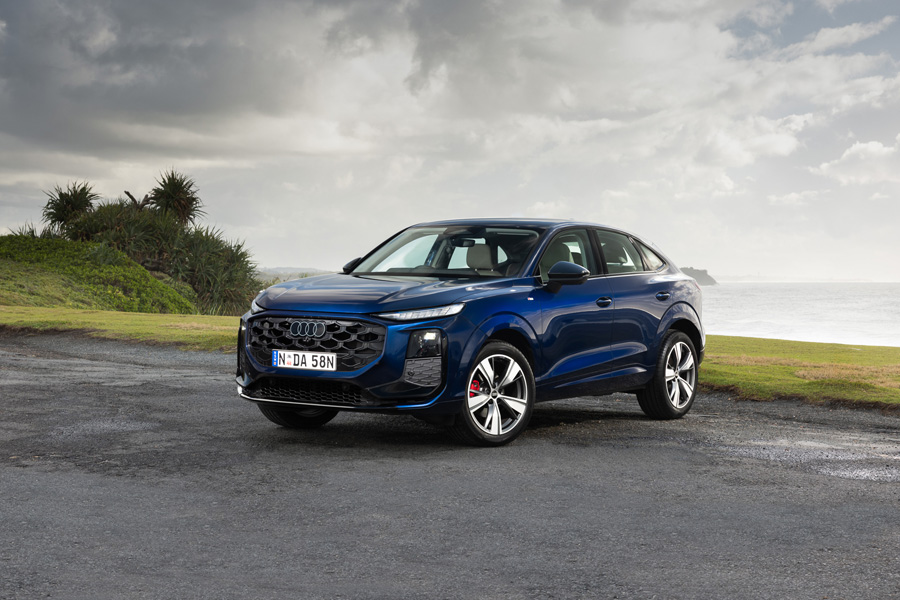
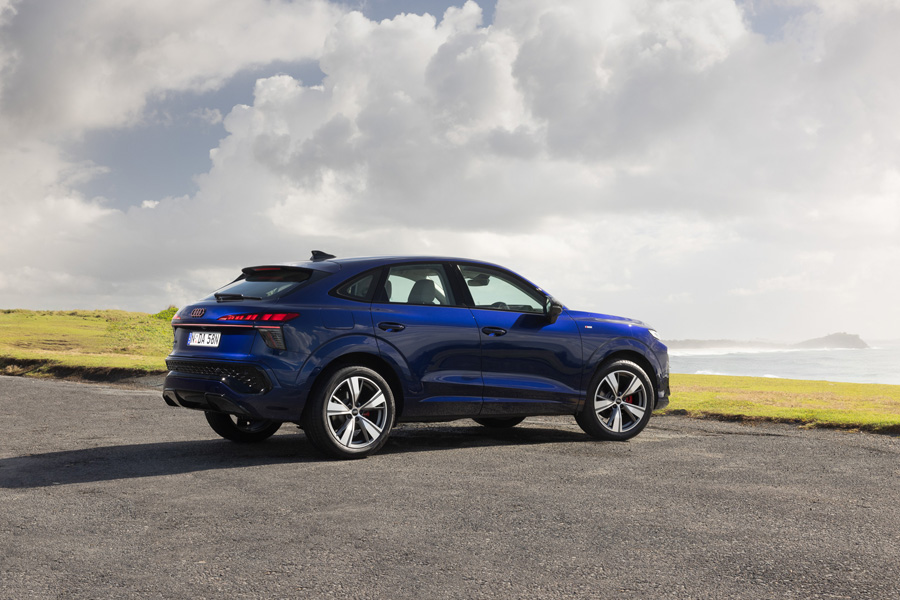
The swoopy Sportback version adds S Line exterior styling (and badging) and sporty 19-inch alloy wheels – for an extra $3000.
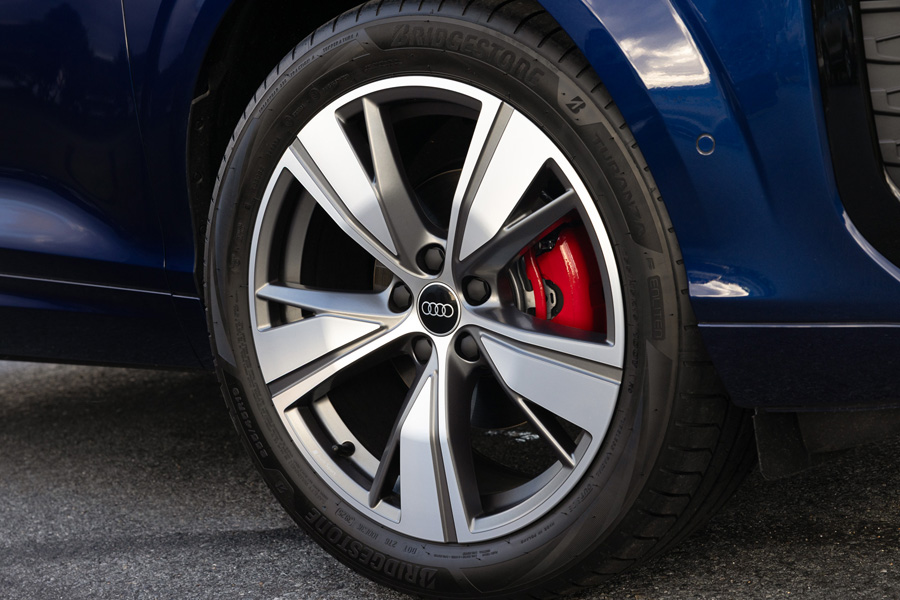
Both body styles are being offered temporarily as a Launch Edition which adds an S Line exterior treatment to the SUV, 19-inch Audi Sport wheels, metallic paint, red brake callipers, black exterior styling package, adaptive dampers, and a sound actuator.
In terms of aftersales provisions, the Q3 is backed by a five-year/unlimited kilometre factory warranty in Australia, plus roadside assist covering the same provision.
Servicing packs are available at the point of purchase, set at $3330 for five years, based on 12-month/15,000km intervals.
How safe is the Audi Q3?
It’s very safe, backed by a five-star ANCAP rating (2025), seven airbags, front and rear parking sensors and both rear and overhead 360-degree cameras.
All the usual driver aids are correct and present – including adaptive cruise control with stop and go functionality, autonomous emergency braking with pedestrian, cyclist and vulnerable road user detection, rear cross-traffic alert, blind spot monitoring, lane departure warning, lane keeping, driver fatigue warning and driver attention detection.
The best bit? You can turn all the annoying beeping and bonging chimes off if you so wish, and there’s no need to do so again each time you start the car (other manufacturers take note, Audi is among the best for deciphering the rules).
What powers the Audi Q3?
Audi has deployed a trio of petrol four-cylinder engines for the 2026 Q3.
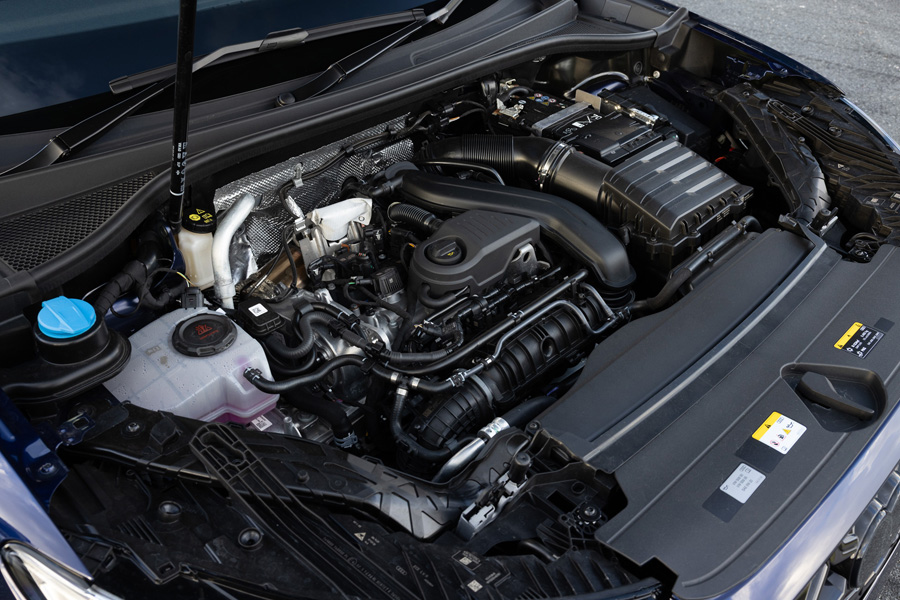
Occupying the entry 110TSI variant is an 110kW/250Nm 1.5-litre turbo-petrol which is augmented by a 48-volt mild hybrid system, driving the front wheels only.
Mild-hybrids are often criticised as offering superficial real-world fuel savings, however the 110TSI begs to differ, claiming a 25 per cent fuel saving over the 1.4-litre unit it replaces, as well as a 9kW/50Nm torque fill in certain driving conditions.
The mild hybrid system contributes to a miserly combined fuel claim of 5.8L/100km in theory – read on to see what the practical translation is – plus a 0-100km/h claim of 9.1 seconds.
Moving through the model walk, customers also have a choice of a 150kW/320Nm turbo-petrol four or a 195kW/400Nm turbo-petrol four – each driving both axles via Audi’s quattro system.
All three engine variants deploy drive through a seven-speed dual-clutch automatic transmission.
Further afield, Audi is also considering a plug-in hybrid version of the Q3 – potentially later this year.
Otherwise the new Q3 rides on a retuned chassis with tweaked McPherson strut front suspension and a four-link rear axle promising more compliance and control.
Progressive steering is now standard across the range, in a move promising more meaningful weight and accuracy, while electronics have been adjusted to better fit the car’s tauter base.
Towing is rated between 1.9 tonnes braked and 2.1 tonnes braked depending on variant – which is quite good for a vehicle of this size.
What is the Audi Q3 like to drive?
For all of the clever marketing rhetoric around the Q3, the truth is it feels like a step-change product from its predecessor on-road.
From the sereneness of the cabin to the execution of the tuning on its key controls, the Q3 feels like a much more mature version of itself. Day-to-day driving is decidedly more refined, while open road touring brings a more sophisticated bent through supple suspension, flexible engines and clever tuning of the electronics.
The base 110TSI presents the biggest surprise of the bunch. Its new mild-hybrid system does an excellent job with torque-filling the driveline’s traditional holes, such as taking off between intersections and in stop-start traffic. It means the low speed hesitation that has long afflicted smaller Audi models fitted with a dual-clutch transmission is much less noticed, while power is smoother and the drive experience more streamlined.
Granted, the peppier 150TSI and 195TSI models bring elevated all-wheel-drive dynamics, but the cheaper entry price and redeeming driveline qualities of the 110TSI are hard to overlook. To us it stands out as the pick of the bunch, and it consumed just 6.3L/100km on test.
On the dynamic front, the Q3 isn’t hugely memorable, but it does offer neutral and confident handling when required, with more meaningful weighting to the steering and better body control than in the past.
The caveat – and this is quite a big caveat – is how the entry Q3 handles bumps. See, the Launch Edition variants we experienced earlier this month were all fitted with clever two-valve adaptive dampers – not the standard passive dampers that will feature on ordinary Q3 variants.
It means the jury is out in some respects, but we shall follow up with an additional review in due course. Given the overseas Q3 reviews have mentioned a fidgety ride with passive suspension, we’d recommend test driving one with and without the technology before laying down your hard-earned.
The NRMA’s take on the Audi Q3
The new Audi Q3 proves once and for that luxury can come in small packages.
The baby SUV belies its stature with mature road dynamics, excellent cabin technology and a sophisticated feel inside and out.
Price rises withstanding, this feels like the best execution of the Q3 brief yet, and one that could be made better still with the eventual introduction of a plug-in hybrid option.
What we liked
- Excellent engine and driving refinement
- Strong technology and safety out of the box which is easy to use
- Strong incidental storage and a space-saver spare tyre standard
What could be better?
- The jury is out on the Q3’s standard passive suspension
- The unsightly slab of black plastic surrounding instrument cluster looks tacky
- Pricing increases across the board could make the Q3 out of reach to many