One on One: Toyota HiLux SR5 vs Kia Tasman X-Line

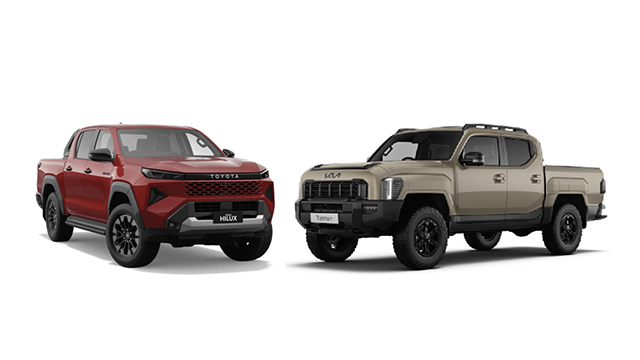
Chronologically, 57 years separate the Toyota HiLux and the Kia Tasman.
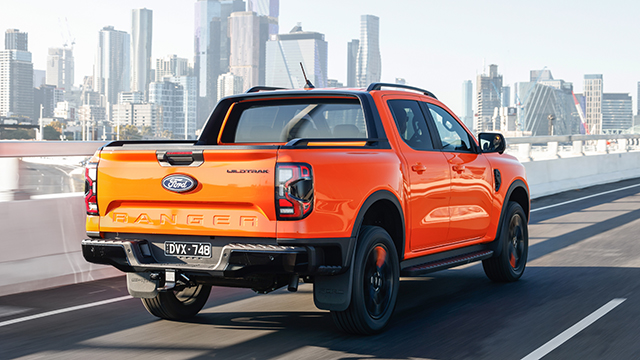
The former launched in Australia back in 1968 and has been a favourite among tradies ever since – especially during the last decade, when it has regularly topped sales charts.
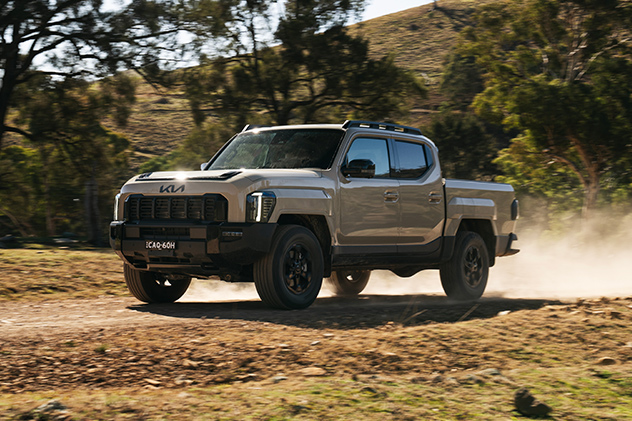
The Kia Tasman, by contrast, landed in 2025 on the back of fevered consumer interest and a huge promotional campaign, only to fall short of expectations due in large part to its out-there styling.
Never mind the preconceptions and sales figures, though. How do the Toyota HiLux and Kia Tasman stack up on a back-to-back road test in the real world? Let’s find out.
| Vehicle | Toyota HiLux SR5 | Kia Tasman X-Line |
| Power | 150kW | 154kW |
| Torque | 500Nm | 440Nm |
| Economy | 7.2L/100km | 7.8L/100km |
| ANCAP | 5 stars | Not rated |
| Price | $65,990 | $67,990 |
Price and equipment
Toyota HiLux — 6/10
The mid-grade SR5 is priced at $65,990 (plus on-road costs), with a manual option $2000 less. Eighteen-inch alloy wheels, LED headlights and tail-lights, dual-zone climate control and dual 12.3-inch displays are standard fare in this grade, together with a five-year warranty.
Kia Tasman — 7/10
The penultimate grade of the Tasman range, the X-Line, is priced at $67,990 (plus on-road costs). It matches the HiLux for specifications and infotainment while adding items such as synthetic leather seats with front seat warmers and electric seat adjustment. Superior seven-year warranty
WINNER: Kia Tasman
Cabin space and comfort
Toyota HiLux — 6/10
Obvious work ute origins, with harder plastics, fewer creature comforts and the bare minimum for storage space and cubbies. Rear seat space is one of the smaller layouts in the class and there’s no option to recline the rear seat. Very sparse tray area.
Kia Tasman — 9/10
The new gold standard of the dual-cab ute scene, particularly when it comes to rear seat packaging. Excellent storage all round and some clever innovations, including reclining rear seats. Comfortable, refined and spacious. The tray area is equally commodious and well considered.
WINNER: Kia Tasman
Performance and economy
Toyota HiLux — 7/10
The 2.8-litre turbo-diesel is carry-over in the ninth-generation HiLux. It gets up to speed adeptly and offers decent throttle response, although it is prone to flaring in headier circumstances – think lots of noise and a lack of refinement. While the six-speed auto feels its age, we love the availability of a manual.
Kia Tasman — 7/10
The Tasman’s 2.2-litre oiler has been around on other Kia models for yonks. Its 154kW of power is on the money, but its 440Nm torque count can occasionally feel languid. Thankfully a quick-thinking eight-speed auto keeps it on the boil most of the time.
WINNER: Tie
Safety features
Toyota HiLux — 8/10
Awarded a five-star safety rating under the latest ANCAP protocols thanks to a full suite of driver aids and electronic systems. Occupants are mostly spared the typical beeping and bonging of other dual-cab models.
Kia Tasman — 6/10
Gets a full suite of airbags and the latest safety acronyms and initialisms, but the listed five-star ANCAP rating only applies to SX grades, not the X-Line or X-Pro. The intervention of some systems is plain annoying; every time we drove the Tasman we found ourselves switching off the driver attention monitoring, speed limit warning and lane keeping assistance.
WINNER: Toyota HiLux
Ride and handling
Toyota HiLux — 7/10
The HiLux makes genuine strides in on-road refinement for its ninth-generation, thanks in large part to new electrically assisted power steering and a quieter cabin. There’s no escaping the older origins of Toyota’s ute, but it’s great off-road and steady under tow.
Kia Tasman — 8/10
Kia has done its homework with the ride and handling tune, developing one of the more sophisticated offerings in class. Considered ride, lightly weighted controls and a quiet cabin are highlights. The Tasman is likewise strong under load and excellent in off-road settings.
WINNER: Kia Tasman
VERDICT
Toyota HiLux SR5
Total: 34/50
The HiLux offers something the Tasman cannot: it has been tried and tested in the field for more than a decade and offers legendary resale value. Even so, it cannot match the Tasman’s level of polish and on-road performance.
Kia Tasman X-Line
Total: 37/50
The elephant in the room here is the Tasman’s appearance, hence its slow sales in Australia. If you can look beyond that, Kia’s first effort is supremely polished and well considered across all dual-cab duties.
OVERALL WINNER: Kia Tasman X-Line