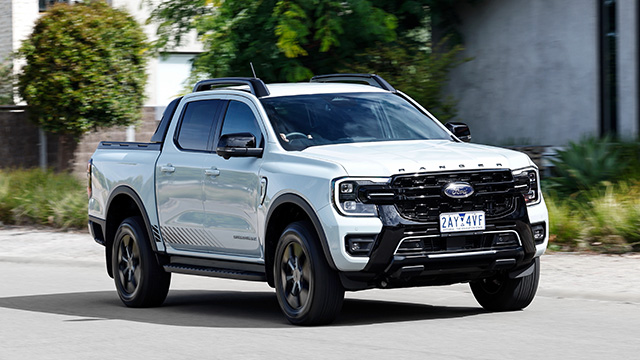
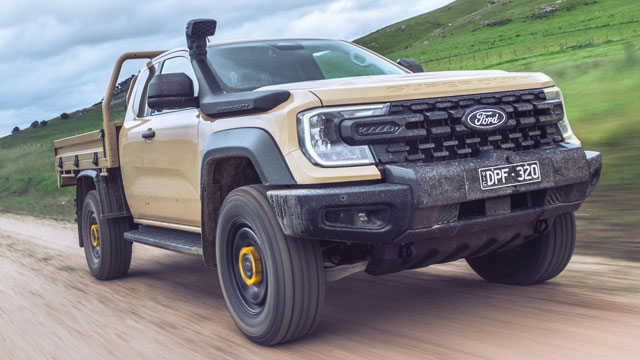
2026 Ford Ranger review

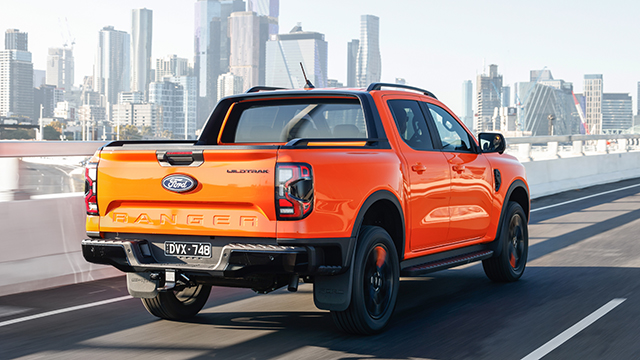
It has dominated the new vehicle sales charts for years and its popularity shows no sign of wavering – in total sales for April 2026 it ranked second only to fellow ute juggernaut, the Toyota HiLux.
But political, environmental and financial pressures are increasingly coming to bear on diesel vehicles and the Ford Ranger isn’t immune. While this MY26.5 update sees the bi-turbo diesel engine variant retired for good, overall choice and value are improved thanks to cosmetic, mechanical and technological enhancements.
How much does the 2026 Ford Ranger cost?
Given the bare-bones Ranger XL cab chassis model now comes with Ford’s 10-speed transmission and 12-inch central touchscreen, it’s impressive to see the starting price remains at $37,130 before on-road costs.
As with most utes, the Ranger lineup has an enormous price spread to cater for the endless permutations buyers might want, including basic workaday transport, off-road capability, luxury appointments and sporty customisation.
Double cab pick-up range
XL 4x2 $42,000*
XL 4x4 2.0-litre $51,400
XL 4x4 3.0-litre $57,900
Black Edition 2.0-litre $53,000*
Black Edition 3.0-litre $60,000*
XLT 4x2 $52,990
XLT 4x4 $67,990
Wolftrak $73,000*
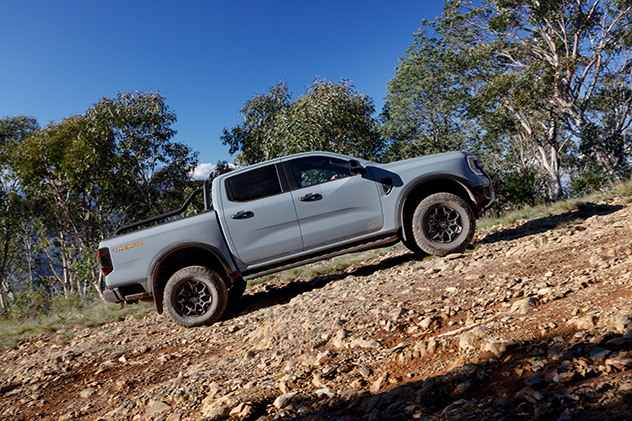
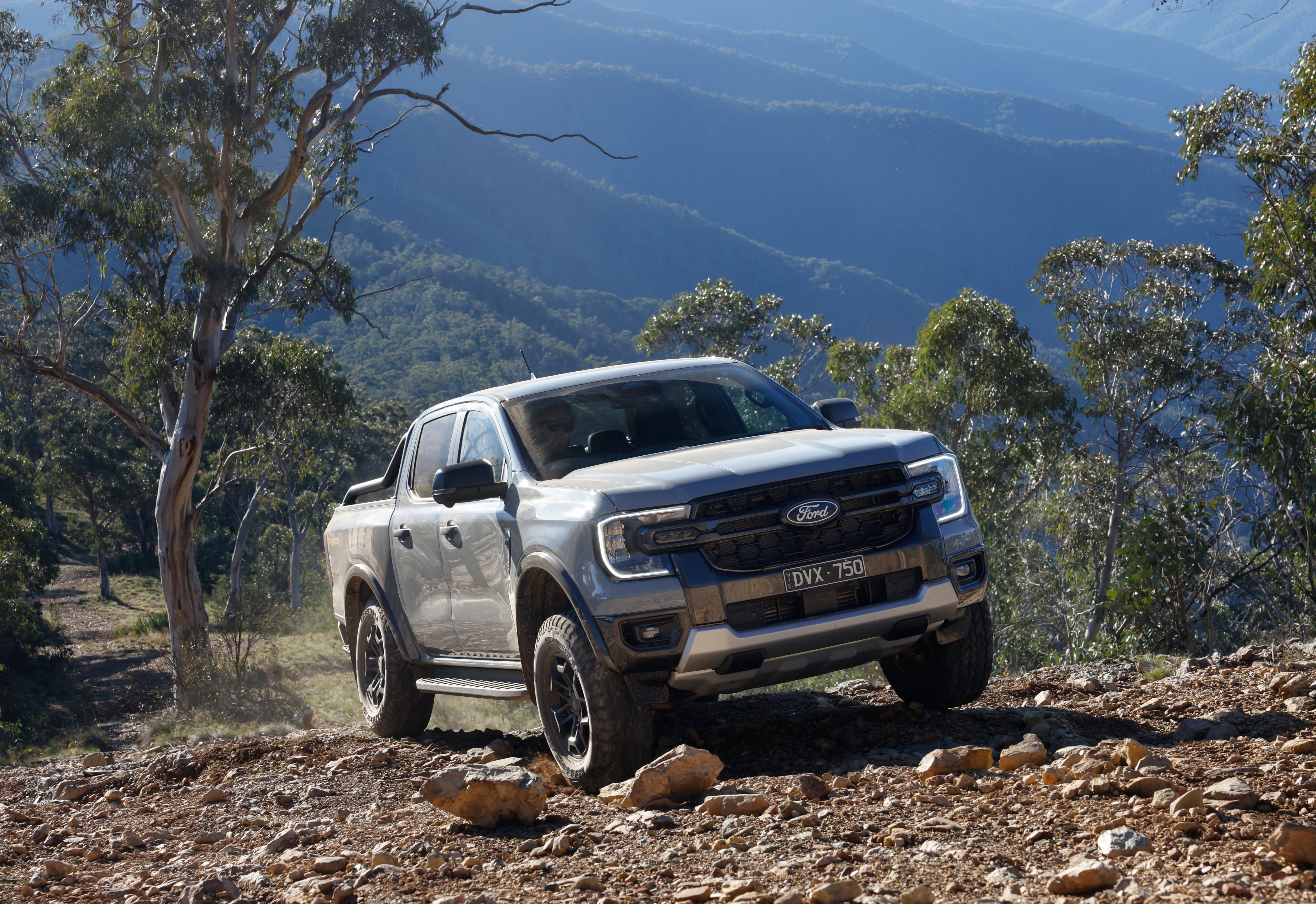
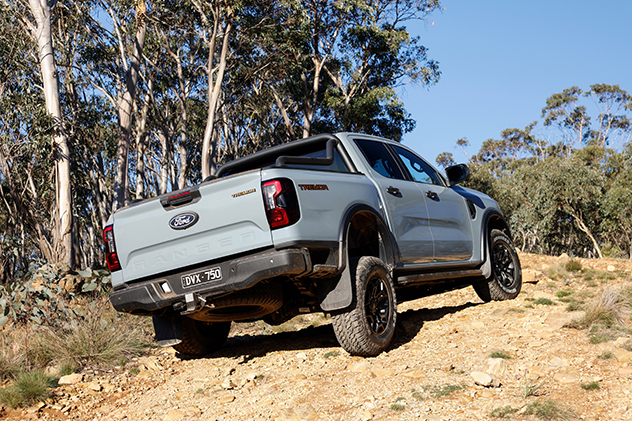
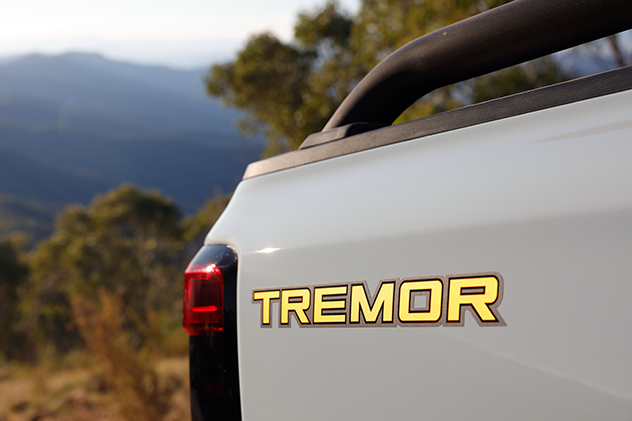
Tremor $75,090
Wildtrak $75,090
Platinum $80,890
Raptor $90,690
*Denotes drive away price, all other prices listed are before on-road costs.
Until fairly recently there were perhaps half a dozen serious players in the commercial ute space, but the influx of Chinese models over the past few years has reshaped the market.
At the budget 4x2 end the Isuzu D-Max continues to enjoy the lion’s share, with prices starting at $36,200 before on-road costs. Other key players include the GWM Cannon ($34,490), Mitsubishi Triton ($37,090), Mazda BT-50 ($38,400), KGM Musso ($40,140), and Toyota HiLux ($47,990).
Move into the 4x4 arena and things get more interesting, with a bewildering array of options including the GWM Cannon ($37,490), JAC T9 ($41,162), Isuzu D-Max ($46,200), LDV T60 ($45,253), Kia Tasman ($49,990) and BYD Shark 6 ($57,900).
These are in addition to the Ranger’s traditional rivals such as the Toyota HiLux ($54,990), Mazda BT-50 ($53,620), and Volkswagen Amarok ($55,490).
Ford Ranger PHEV
Ford has slashed prices and tweaked the model lineup for its plug-in hybrid (PHEV) Ranger. The XLT and Stormtrak – $71,990 and $86,990 respectively at launch – are gone, making way for the entry-level XL (available for $59,900 drive away).
The Sport falls from $75,990 before on-roads to $66,000 drive away, while the Wildtrak drops from $79,990 before on-roads to $70,000 drive away.
These price cuts make the Ford Ranger PHEV much more competitive on price against plug-in hybrid rivals such as the BYD Shark 6 and GWM Cannon Alpha.
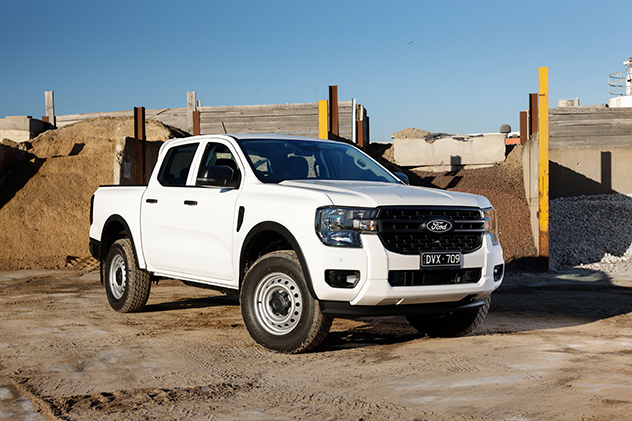
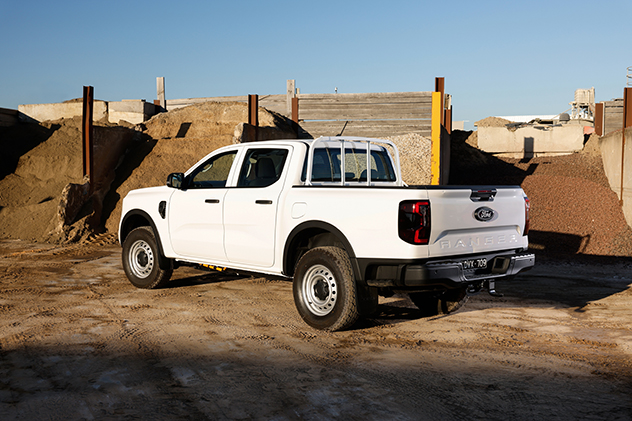
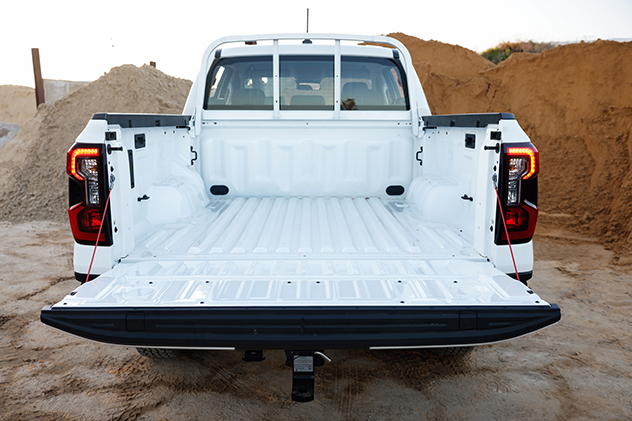
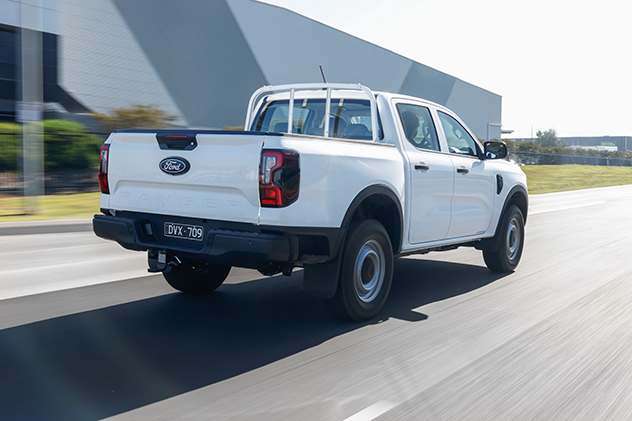
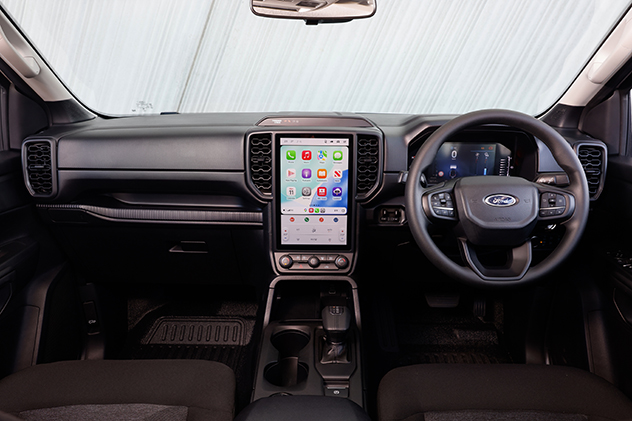
What is the 2026 Ford Ranger like inside?
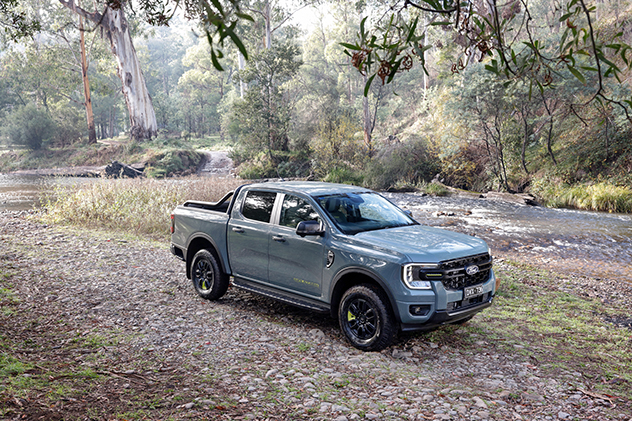
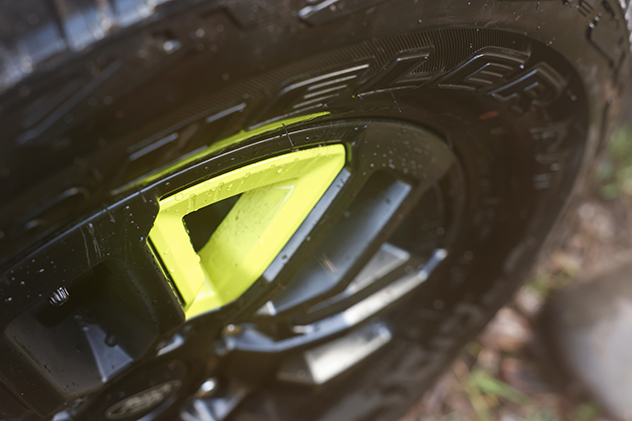
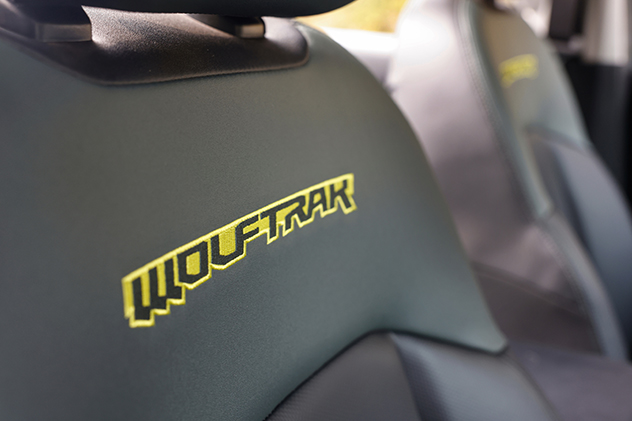
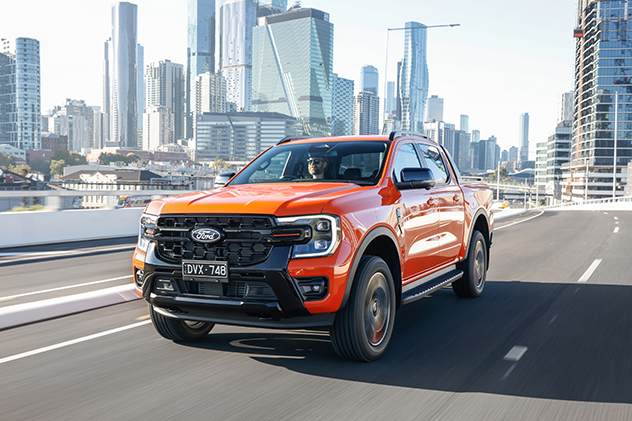
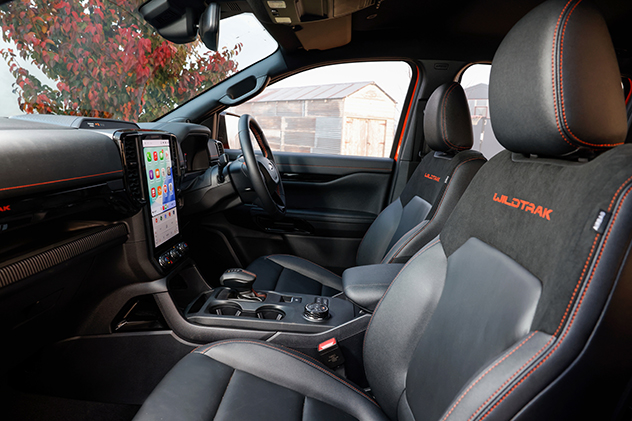
As well as being the big tech change for lower-grade Rangers, the 12-inch touchscreen is also the most notable aesthetic difference in this update.Many of the visual differences inside and out for MY26.5 are minor or optional cosmetic changes on higher-grade Rangers, such as new paint colours, black rather than chrome trim, seat stitching, wheel inserts and so forth.
Otherwise, it’s business as usual for the Ranger – comfortable, spacious, well laid out and stylish in a sort of squared-off, upright way.
What equipment does the 2026 Ford Ranger come with?
With a $50,000 price disparity between the base 4x2 cab chassis and halo Ranger models, there are many answers to this question.All 4x2 XL models are available only with the 2.0-litre four-cylinder turbo diesel engine.
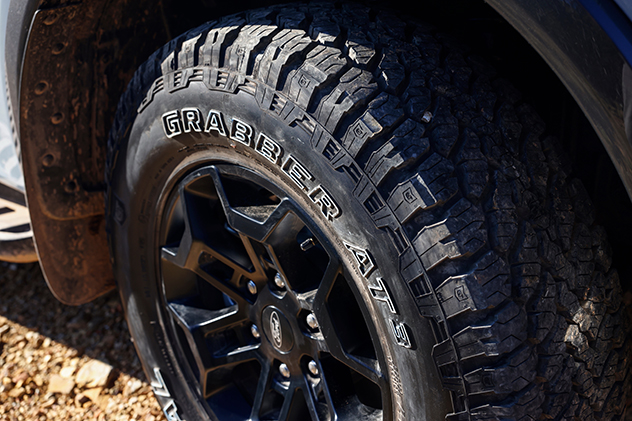
The 4x2 XL Ranger cab chassis models come standard with 16-inch steel wheels (and a full-size steel spare), halogen headlights, power adjustable side mirrors, cloth seat upholstery, two USB connections, automatic headlights, an eight-inch digital instrument cluster, 12-inch central infotainment display, and wireless Apple CarPlay/Android Auto connection. Basic workhorse trim with a few nice-to-haves, in other words.
Inclusions are more generous in the 4x2 XL double cab pick-up models, adding LED taillights, power folding mirrors, a rear box step (for easier access to the tray), tie down rails, load box illumination, as well has cargo clamps, a ruler, cup holders, and gas struts for the tailgate. Child seat anchor points also make an appearance, while the double cab gets four USB ports rather than two and power windows for rear passengers.
The XLT 4x2 model steps things up another notch with 17-inch alloy wheels (and a steel spare), keyless entry and start, LED headlights/taillights and front fog lamps, sidesteps, a sports bar, drop-in bed liner, 230-volt power socket in the bed liner, power locking tailgate, towbar receiver, tow/haul mode, premium cloth upholstery, carpet and floor mats, a wireless phone charger, privacy glass, rain sensing wipers, digital radio and satellite navigation, perimeter alarm and trailer connection alarm, intelligent adaptive cruise control, and a tyre pressure monitoring system.
Opting for the 3.0-litre V6 turbo diesel engine on the 4x4 XL variant also brings luxury touches such as a leather-wrapped gear knob, digital gear shifter, electric parking brake, selectable drive modes including tow/haul mode, full-time 4WD, and front and rear ventilated disc brakes with booster.
From the Wolftrak up it’s really about what you need, how you want to customise your Ranger, and how much you’re prepared to spend. Leather seat upholstery, Matrix LED headlights and a premium Bang and Olufsen sound system are standard gear on Wildtrak and above.
How safe is the 2026 Ford Ranger?
ANCAP awarded the Ford Ranger a five-star safety rating in 2022 and, due to subsequent additional tests for the PHEV Ranger, that rating remains current for all variants except the Raptor.Standard safety equipment on the base model cab chassis includes nine airbags, adaptive cruise control, traffic sign recognition, blind spot monitoring with cross traffic assistance, evasive steering assistance, lane keeping assistance, parking sensors front and rear, and a rear-view camera.
Move further up the range and the list entails emergency braking assistance, hill start assistance, roll over mitigation, trailer sway control and a 360-degree camera.
What powers the 2026 Ford Ranger?
Even though Ford has retired its 2.0-litre twin turbo diesel engine, the Ranger doesn’t lack powertrain options.On the lowest rung is a single turbo diesel 2.0-litre engine – the same one that has powered base-model Rangers for years, albeit with a new timing chain and fuel injection system. Power and torque outputs remain at 125kW and 405Nm, but for the first time the base model gets a ten-speed automatic transmission, which according to Ford results in the “most responsive diesel engine” it has released.
Continuing on unchanged is the most popular engine among Ranger buyers, the 3.0-litre turbo diesel V6, which produces 184kW and 600Nm. In fact, its popularity was reportedly a deciding factor in the discontinuation of the bi-turbo 2.0-litre diesel variant.
There’s also Ford’s plug-in hybrid (PHEV) alternative, launched in 2025, which combines a 2.3-litre turbocharged petrol engine and a 75kW electric motor. Total output from the hybrid system is 207kW and 697Nm and it has a theoretical pure electric range of 49km.
Those wanting a Ranger more for show than tow can also get the Raptor model, fitted with a twin-turbo V6 petrol engine that puts out 292kW/583Nm. It is only rated to pull 2500kg rather than 3500kg like the rest of the Ranger powertrains.
— Kris Ashton
What is the 2026 Ford Ranger like to drive?
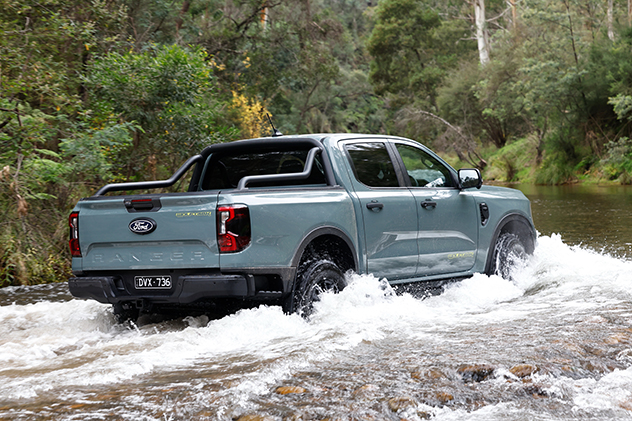
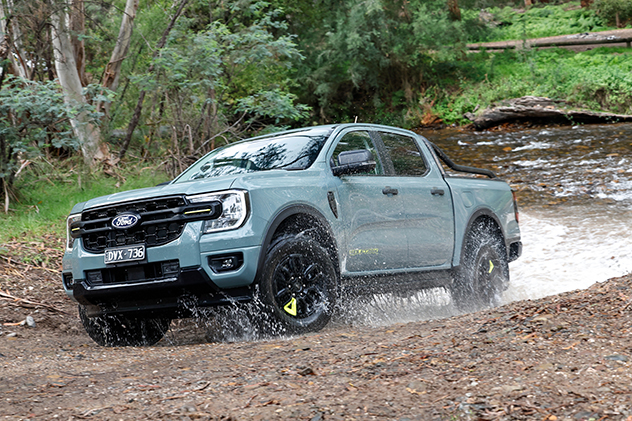
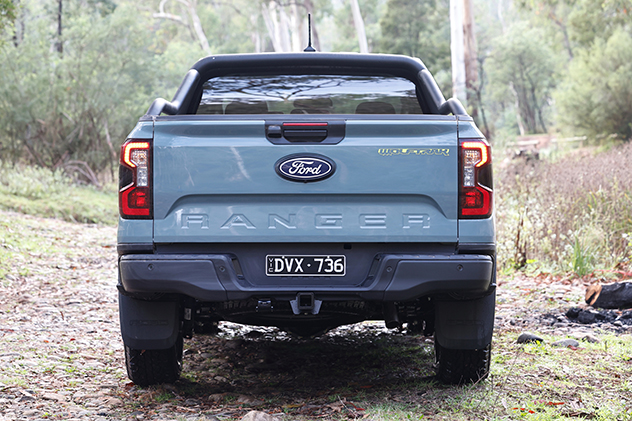
The V6 and PHEV powertrains remain unchanged for this MY26.5 update, so our focus is on the revised 2.0-litre single-turbo four-cylinder diesel engine.At the launch outside Melbourne, Ford called the revised 2.0-litre the “most responsive diesel engine we’ve released” and that’s possibly true to a point, with the 10-speed automatic transmission showing once again that it deserves all its plaudits.
Initial pickup and acceleration are sound and the gearbox keeps the engine where it needs to be for smooth and economical driving around the suburbs. On a run between Melbourne Airport and Ford’s storied proving grounds out at the YouYangs, the onboard trip meter showed a commendable 7.2L/100km.
The simple truth, however, is that compared to both the bi-turbo four and the V6 diesel engines, the single-turbo 2.0-litre lacks broader on-road performance. It gives up 50kW and nearly 200Nm to the V6, and this was plainly evident when we attempted to pursue a V6 around the YouYangs road track – throttle response was strong and immediate off the mark, but the V6 soon pulled away effortlessly.
That’s all by the by, though, because straight line speed aside the 2.0-litre turbo diesel is more than capable. It still offers a 3500kg braked towing capacity and a claimed combined fuel economy of precisely what we got from our public road drive: 7.2L/100km (compared to 7.6 for the bi-turbo, 8.3 for the V6 diesel, and 11.5 for the Raptor’s petrol V6).
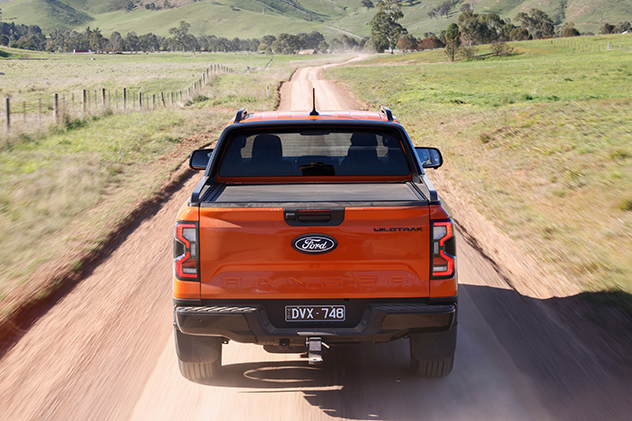
Most importantly, nothing else about the drive experience has changed – the Ford Ranger continues to have some of the best handling and dynamics of any ute on the market, it has genuine off-road capability, the seats are comfortable, and the overall cabin layout and tech are user-friendly. Excessive wind noise at highway speeds is one of its few notable flaws.
Open Road’s take on the 2026 Ford Ranger
The 2.0-litre bi-turbo engine in the Ford Ranger was a lot like the 2.3-litre EcoBoost engine in the Ford Mustang – a superb feat of engineering that pretty much no one wanted. While the single-turbo engine offers nothing like the same straight-line performance, the Ranger’s revised powertrain mix makes more commercial sense in 2026, offering something for everyone.
Including the 10-speed transmission and 12-inch touchscreen across the board in this update improves the overall value proposition of a tried-and-true product which, reliability concerns notwithstanding, remains the benchmark for a commercial ute.
What we liked
- Updated transmission in base models
- 12-inch touchscreen now standard
- Big price cuts on PHEV variants
What could be better?
- Bi-turbo engine option gone for good
- Pure EV capability in PHEV models
- Wind noise at highway speeds