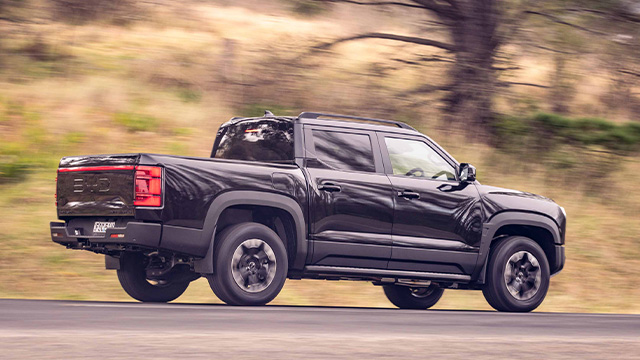
2026 Denza B5 Australian first drive review

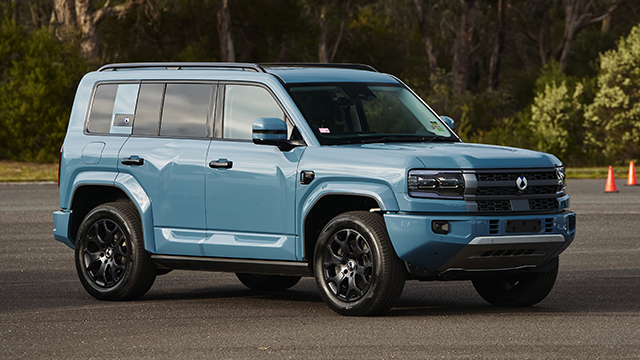
It's almost impossible to exaggerate the mountain-sized challenge new Chinese brand Denza faces in Australia.
It's really the first premium brand from China to have a proper crack at our market, as opposed to a sub-brand like Chery's Omoda or MG's IM. I mean a proper, standalone premium offering with its own dealership network.
That alone is often a boulevard of broken dreams. Look at Infiniti, which vanished from Australia without trace, or even Genesis, which – six years into its run in Australia – sold just 1600 cars here last year, a fraction of the 10,000 sales Denza says it wants to secure in 2026.
To add another layer of pressure, Denza's first two products (the three-row beast that is the B8, and the smaller B5 reviewed here) are coming up against some of the most unshakeable icons of the off-road 4WD space, including the Toyota LandCruiser 300 Series and Prado, Lexus GX, and Nissan Patrol.
But Denza has an ace up its changshan sleeve. The B5’s ladder-frame plug-in hybrid powertrain made its debut here in the BYD Shark 6 – that sales-storming dual-cab ute which achieve the impossible and pulled drivers out of their Toyota HiLuxes and Ford Rangers and into an electrified Chinese ute.
That tells Denza's executives it can happen again.
How much does the 2026 Denza B5 cost?
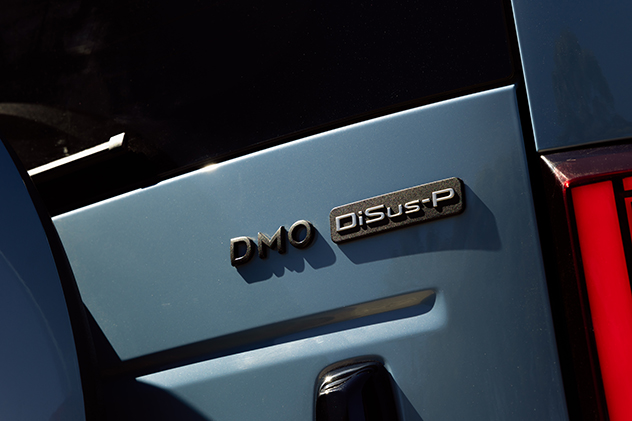
It starts at $74,990 plus on-road costs for the standard model, named simply the B5, but some 80 per cent of early buyers are opting for the better-equipped $79,990 B5 Leopard, which deploys clever and self-levelling DiSus-P hydraulic suspension.
Two models, one powertain, lots of kit. Pretty simple. It’s also something of a bargain no matter whether you think the B5 competes with its mainstream rivals, or whether it can take on more luxurious options.
Mainstream? You’re really looking at a Toyota LandCruiser Prado, with its 2.8-litre turbo diesel engine, in which only the GX and GXL trims are cheaper. You’d have to dig deeper to climb into a VX or Altitude model, and the flagship Kakadu tips over $100k. In premium land, you’re probably looking at a Lexus GX, which starts north of $100,000.
Cheaper options that can deliver a similar off-road experience (sans some of the luxury) would include ute-based SUVs like the Ford Everest or Isuzu MU-X.
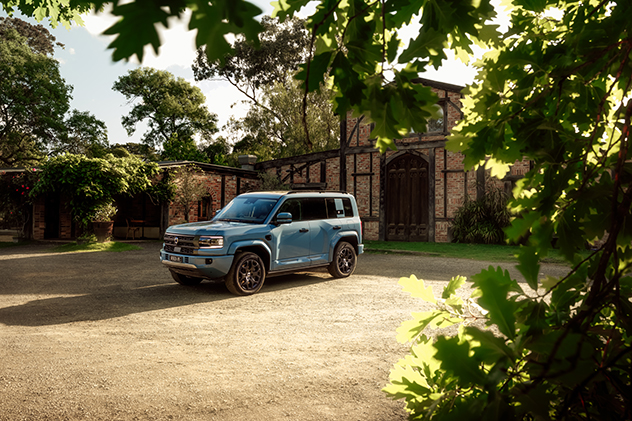
What is the 2026 Denza B5 like inside?
We’re talking premium plush here, but with an off-road edge. Some of it we like, some of it we’re less sure about.
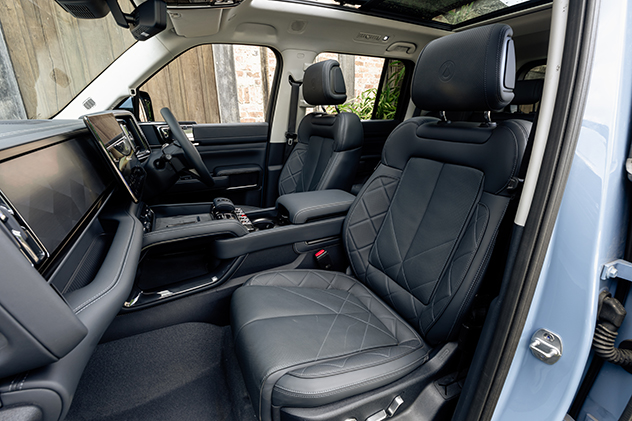
We’ve so far only tested the Leopard variant, which means the best of the equipment list, but the first thing you’re confronted with is space, and lots of it.
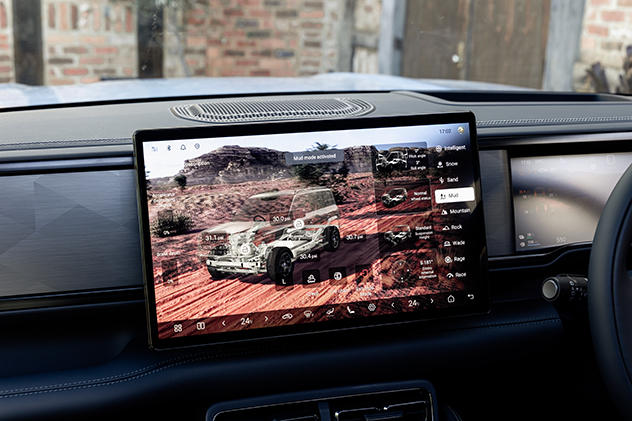
Up front, the heated, cooled and massaging seats are wide and comfortable, the giant central screen is fast and easy to use, and there’s quality and heft to the interior materials.
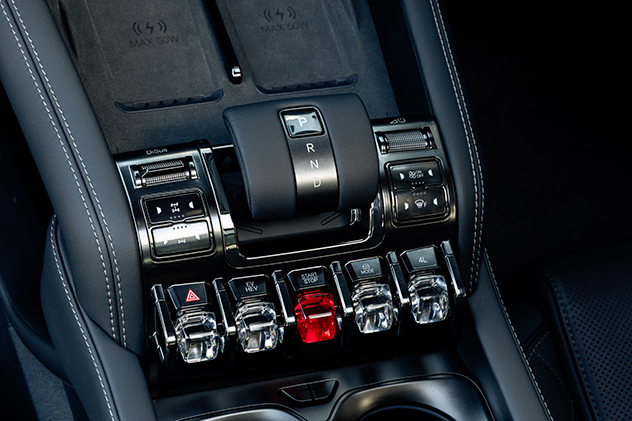
We’re less sold on the row of plasticky-feeling switches below the gear selector, and especially by the red one that starts the vehicle and looks worryingly like one of those Ring Pop lollies from when you were a kid. In an otherwise premium and grown-up-feeling cabin, it feels over the top.
Still, kudos to the good ship Denza for including switches at all (increasingly a rarity), with the B5 serving up buttons for everything from the diff locks to the audio volume and demisters, while fast shortcuts at the base of the centre screen control your key climate settings.
The other touch points all feel buff and bulky, with exposed lever-style door handles and chunky grab bars for driver and passenger. Storage and technology also abound up front, with dual wireless charging pads, thoughtfully placed USB-C connections and even a fridge between the two front seats.
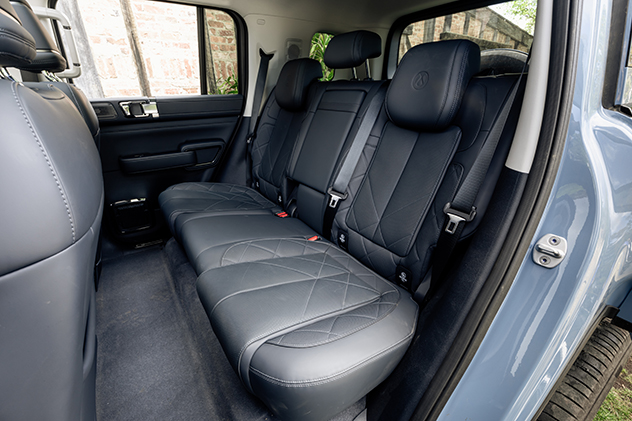
Space in the back seat is good, too, with a broad, bench-style second row, and ample leg and head room for my 175cm to sit behind my own driving position.
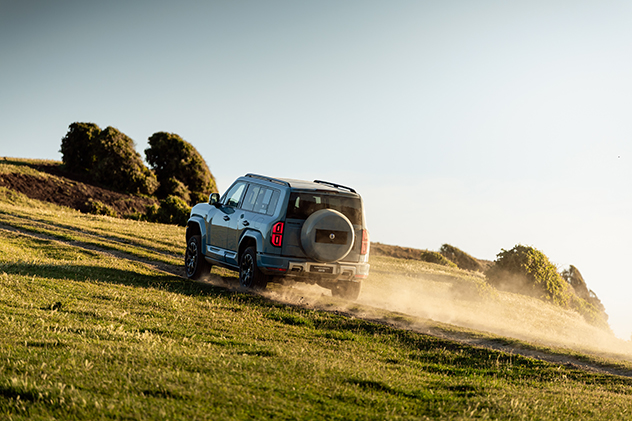
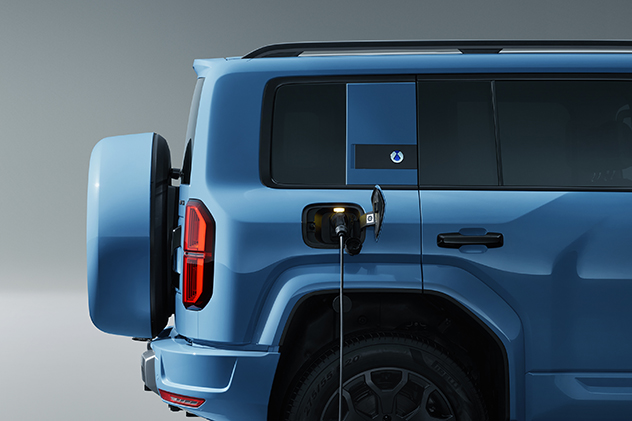
As for the boot, there’s a side-hinged opening (which will make opening it in a Westfield carpark a nightmare), which reveals a 470-litre storage space. That more than doubles to 1064 litres with the rear seats folded flat. And because your full-size spare is mounted on the outside of the door, there’s no space penalty for that either.
What equipment does the 2026 Denza B5 come with?
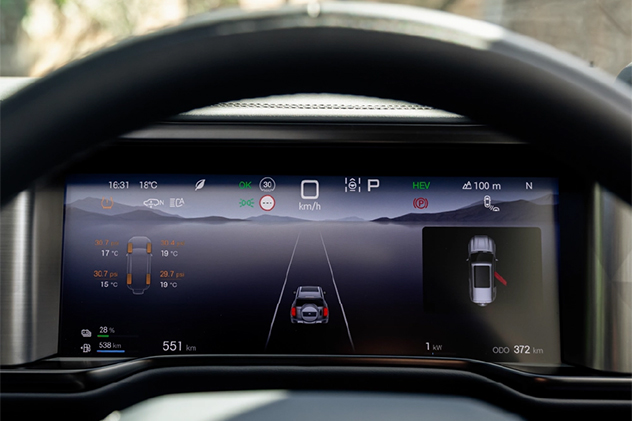
Both trims promise huge levels of kit, with 18- or 20-inch alloys, LED lighting front and rear, a big 15.6-inch central screen, a 16-speaker stereo, wireless Apple CarPlay and Android Auto, another 12.3-inch display for the driver, wireless charge pad, and heated/ventilated/massaging front seats.
Springing for the Leopard over the standard B5 gets you a second wireless charging pad, Nappa leather seats, the active hydraulic suspension, a digital rear-view mirror, and ventilation for the rear seats.
There are mechanical diff locks front and rear, 3000kg towing, up to 790mm wading depth, and a full-size spare.
How safe is the 2026 Denza B5?
The B5 scored the full five stars from ANCAP, and under the tough 2025 protocols no less. The B5 rated 86 per cent in Adult Occupant Protection, 95 per cent in Child Occupant Protection, 74 per cent in Vulnerable Road User Protection, and 78 per cent for its Safety Assist systems.
On that last point, there’s no shortage of active safety tech, but – if you’re like me – you’ll quickly become familiar with how to switch them off. The driver monitor is especially frustrating, as is the speed sign recognition.
There's a total of 11 airbags, including a centre airbag, as well as a host of more modern kit: AEB front and rear, lane keeping assistance, blind-spot monitoring and a 360-degree camera.
A little more unique to the B5 is its rollover protection – the brand says the roof has been tested to 12 tonnes.
What powers the 2026 Denza B5?
The 2026 Denza B5 makes use of parent company BYD’s advanced battery tech by way of a plug-in hybrid powertrain.
A 145kW 1.5-litre turbocharged petrol four-cylinder engine is connected to – and can drive – the front wheels, but its primary purpose is to provide charge for the hybrid system’s two beefy electric motors.
These motors, mounted on the front and rear axles, provide 200kW and 285kW respectively, adding up to total outputs of 505kW and 760Nm. For comparison, this represents a 160Nm jump over the Ford Everest’s 600Nm diesel V6 and almost triples its 184kW. Madness.
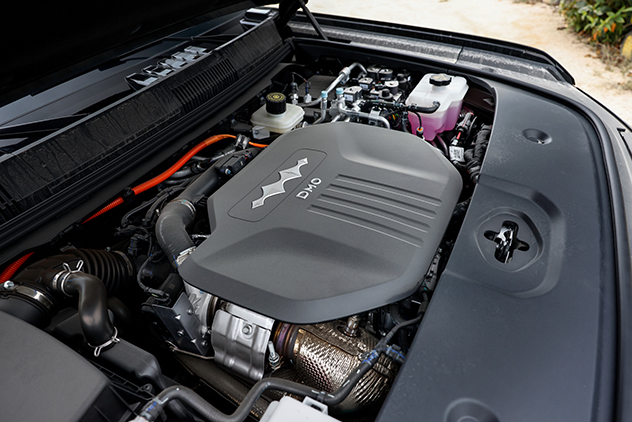
Energy is stored in a 31.8kWh lithium iron phosphate (LFP) battery – possessing an impressive 100kW DC charge rate (6.6kW for AC) – with BYD stating an all-electric driving range of 100km via the WLTP standard. Total hybrid driving range is claimed at 1200km, although this has been calculated on the generous NEDC standard and is unlikely to be achieved in real-world scenarios.
The Denza B5’s power is sent through an e-CVT, balancing speed and torque outputs between its axles without use of a front-to-rear driveshaft. Torque can be vectored with e-diffs (able to be directed front, centre and rear), with a simulated four-low mode (that mimics shorter gearing and reduces roll speed) added to help the B5 negotiate rough terrain.
The Denza B5 shares the BYD Shark 6’s 2500kg tow rating.
— Andrew Chesterton
What powers the 2026 Denza B5?
There’s only one powertrain on board, and it’s the brand’s DMO (dual mode off road) plug-in powertrain, which – in the B5 – pairs a 1.5-litre turbo-petrol engine with an electric motor at each axle to produce a total 400kW and 760Nm. That's enough, says Denza, to push the circa-3000kg B5 to 100km/h in a physics-defying 4.8 seconds.
Also critical to the pitch is the B5's 83-litre fuel tank and 31.8kWh Blade battery, which combine to unlock a claimed total driving range of around 985km under NEDC test conditions.
Real world? We were averaging around 7.5L/100km (ferociously good for a vehicle this size), and so with regular charging it seems 1000km per tank is possible.
What is the 2026 Denza B5 like to drive?
There’s simply no escaping it – the B5 is a big beast. We’re talking almost five metres long, two metres wide and two metres tall, with a kerb weight of up to 3007kg. So if you’re expecting lithe athleticism, you’ve come to the wrong place.
Instead, you get on-road dynamics that lean into comfort over all else. In a huge plus for Denza, the B5 doesn’t feel at all agricultural behind the wheel, despite its rugged ladder-frame underpinnings, with our several-hundred-kilometre trip from the Adelaide CBD to the Flinders Ranges revealing a 4WD that feels built for long-distance touring.
On tighter corners you can feel the B5’s weight shifting, and the softness of the suspension translates to some lateral movement in the cabin, but none of it feels unruly and it really matches the ethos of a big, luxury-soaked 4WD.
Of the seemingly infinite Drive and Terrain modes, the weirdest might be 'Race', which feels a bit like fitting a helicopter with an ejector seat — who on earth would use it? Engage it, and the B5 tightens up, but that leads to some question marks over the claimed zero to 100km/h time. On our (entirely unofficial and untimed) test run, we flattened the accelerator and the B5 took a long beat or two as it tried to work out how best to digest all that power.
Rolling acceleration, though, is excellent, and you’ll have no problem nipping past caravans on the overtake (unless, of course, you’re towing one yourself, using the B5’s three-tonne braked capacity).
Curiously, the B5 Leopard’s suspension is less complex than that in its B8 big brother (with two levels of stiffening rather than three), but it is the more comfortable of the two B5s on the road, ironing out imperfections easily and smoothing even Australia's most pock-marked bitumen.
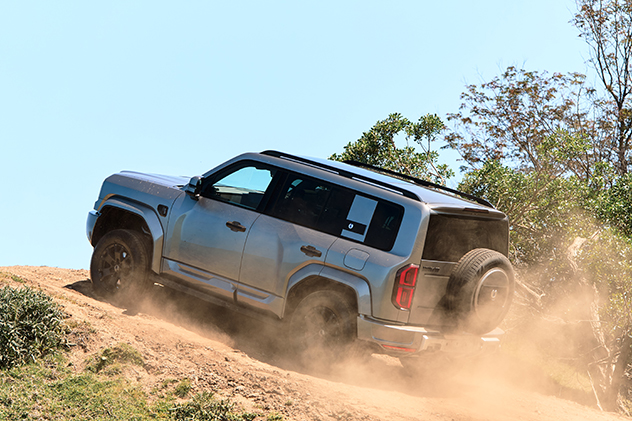
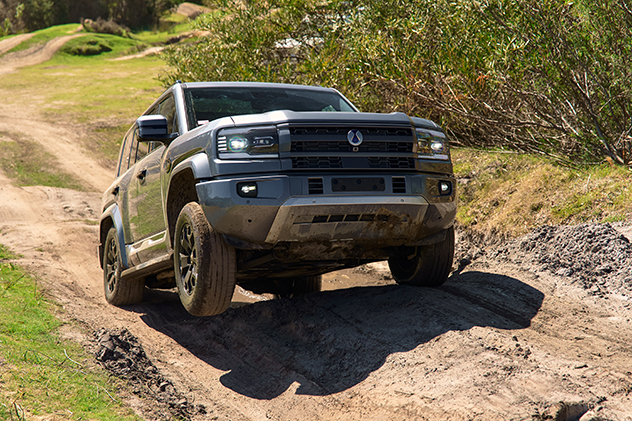
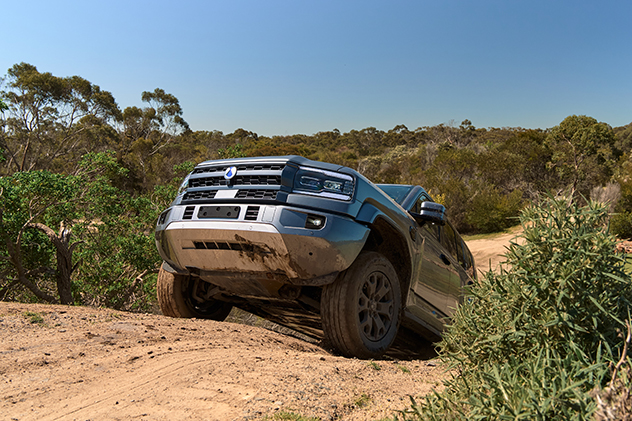
Off-road, however, it feels like a heavyweight fighter rather than a featherweight. It is immensely capable, and tackled everything we threw at it, but you can feel the weight and complexity as you bounce over rocks, as if the B5 is beating the earth beneath it into submission rather than gliding over it.
But beat it the B5 does. In fact, Denza’s executives will soon be announcing the B5 has conquered the infamous Beer O’Clock hill with only a tyre change, which is impressive stuff.
Open Road’s take on the 2026 Denza B5
Think a Chinese plug-in hybrid SUV can’t shake up Australia’s rusted-on 4WD market? We all thought that about the BYD Shark 6, right?
The Denza B5 is a potent mix of price, luxury and capability, and I think we’ll be seeing a lot more of these on Australia’s red-dirt tracks in the months to come.