2026 Kia Stonic review
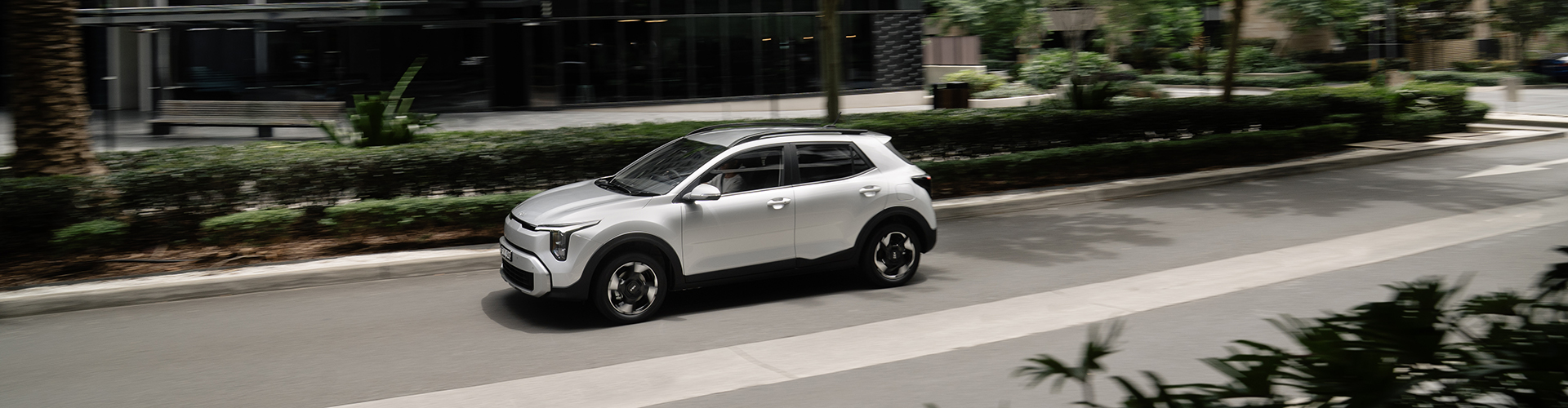
The Kia Stonic entered the Australian market at a seemingly inauspicious time. Not only were the economic effects of COVID still in full swing, the Stonic was midway through its life cycle and the motoring press were justifiably fawning over the new Ford Puma instead.
But the car-buying public voted with their wallets and, while the pricey Puma floundered, the Stonic has been a consistent seller for Kia ever since (558 sold in November 2025 alone).
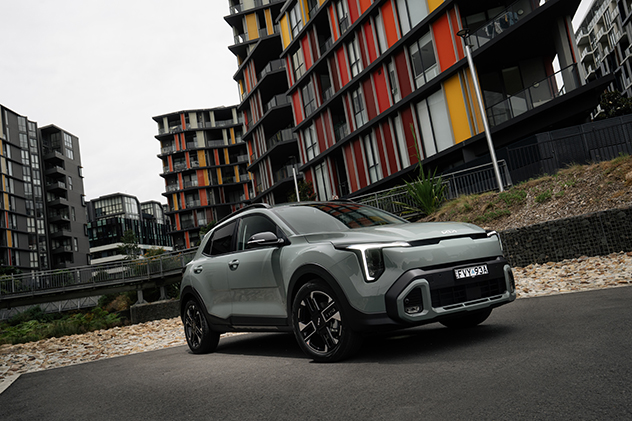
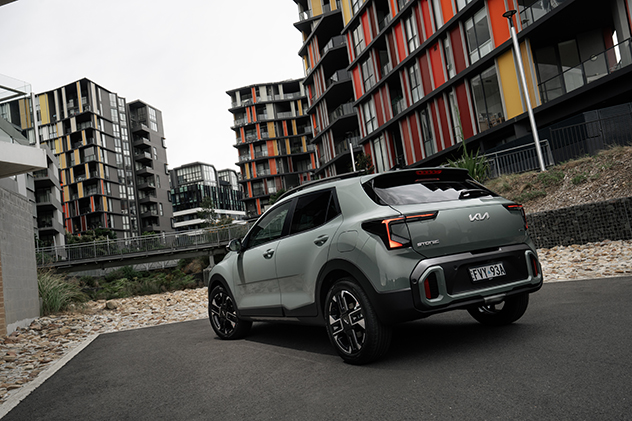
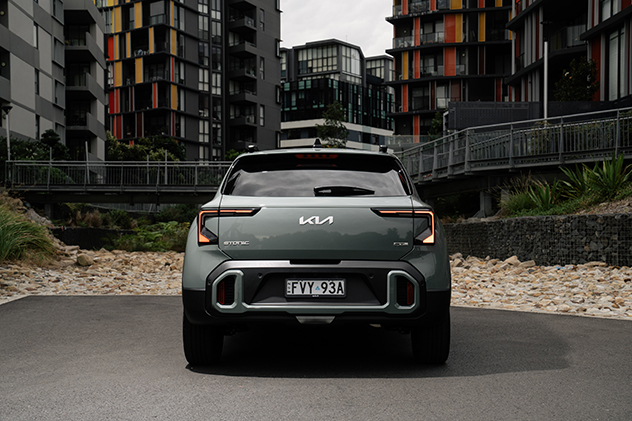
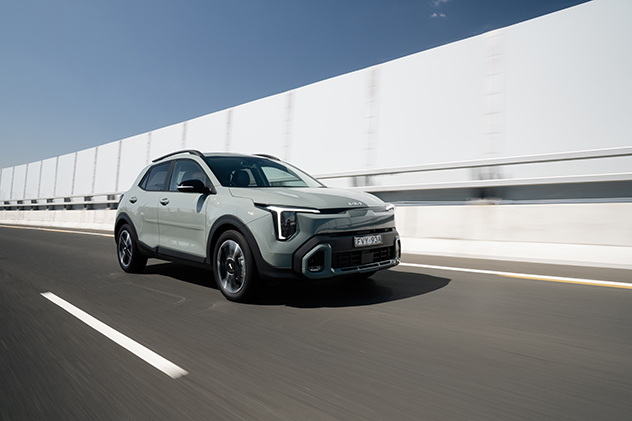
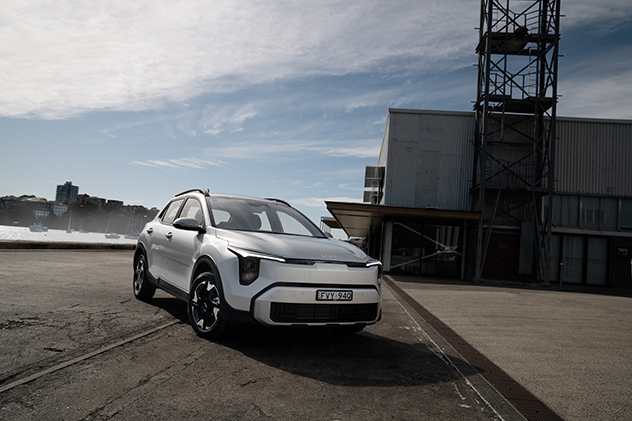
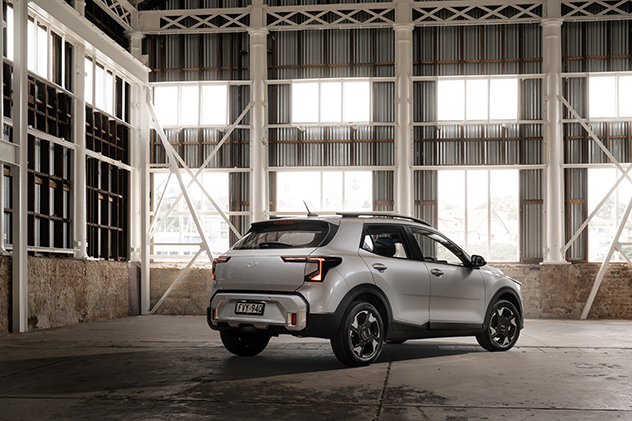
For this year, the updated 2026 Kia Stonic has been treated to a new mild hybrid engine and a raft of tech and cosmetic upgrades.
How much does the Kia Stonic cost?
If you want to get a sense of how much car prices have ballooned in the past five years, look no further than the 2026 Kia Stonic.
When the range first launched in Australia late 2020, the manual base model S kicked things off at $21,990 before on-road costs. The updated 2026 Kia Stonic range starts at $28,180 – although in fairness, the new S isn’t available in manual and nor is it lumped with steel wheels and a key for the ignition (see more below).
The mid-spec Sport comes next at $32,990, while the top-grade GT-Line is priced at $35,740.
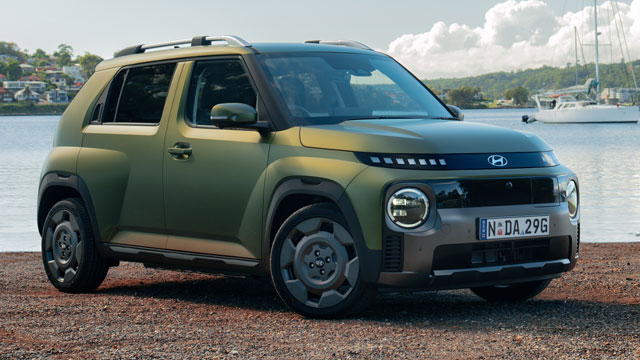
This means that, despite its increased costs, the new Stonic still remains toward the cheaper end of the compact SUV market’s major players, among them the Hyundai Venue ($27,250), Suzuki Fronx ($29,990), Mazda CX-3 ($30,370) and Toyota Yaris Cross ($31,790).
The 2026 Kia Stonic comes with a seven-year, unlimited-kilometre warranty. Servicing is conducted every 12 months/10,000km, with a total cost over seven years of $3780.
What is the Kia Stonic like inside?
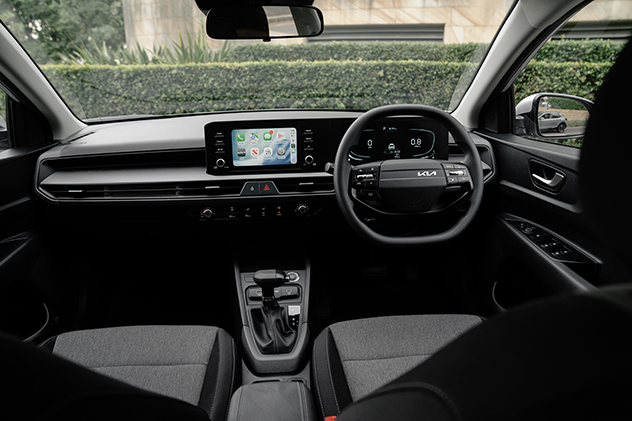
Across all grades of the 2026 Kia Stonic, the interior is a bit plasticky (a criticism we also levelled at the latest Kia K4) and the S has no centre armrest – acceptable in a circa-$21k vehicle, much less so at a $28k asking price.
The hard plastics don’t look quite as cheap as those in the K4, though, and in the GT-Line, a light-grey and black colour palette along with artificial leather on the steering wheel give it a more upmarket feel.
The seats are comfortable (this is a Kia, after all) and the cabin is fairly quiet, although we did notice some vibration when the car was in motion. While the car’s exterior is now 25mm longer, interior space remains unchanged – as does a 352-litre cargo space, which is middle of the road for light SUVs.
The base model Stonic finally gets push-button start, and the higher grades are also treated to an electronic parking brake. Kia Connect has made its way into the Sport and GT-Line models, opening up a world of additional functionality, including being able to start the engine and control the air conditioning remotely.
— Kris Ashton


How safe is the Kia Stonic?
The 2026 Kia Stonic has not been ANCAP crash-tested and therefore has no rating.
It doesn’t want for active and passive safety equipment, however, with the S model boasting six airbags, anti-lock braking, electronic stability control, blind spot collision avoidance, AEB with forward collision warning, and lane-keeping assistance.
What powers the Kia Stonic?
When the Stonic first launched in Australia, only the GT-Line got a 1.0-litre three-cylinder turbo engine, while the lower grades had to make do with a raucous and aging 1.4-litre four-cylinder unit.
For 2026, the turbo 1.0-litre is standard across the range, and it has become a mild hybrid (there’s a 48-volt battery under the boot). The result is reduced load on the engine, which helps to improve fuel economy.
Outputs are up from 74kW and 172Nm to 88kW and 172Nm over its predecessor, while claimed fuel consumption drops from 5.4L/100km to 5.0L/100km. Exterior revisions have also improved the Stonic’s aerodynamics for a slight drop in its drag coefficient.
What is the Kia Stonic like to drive?
The hybrid engine in the 2026 Kia Stonic has an agreeable level of pep during general driving, something enhanced by the perky seven-speed dual-clutch transmission, which doesn’t leave it hanging when acceleration is required.
It’s only if you really put your foot down at speed that its modest power and torque figures become noticeable and the engine sounds a bit thrashy.
The Stonic is quite high riding for a light SUV, and the torsion beam rear axle does allow some wobble in corners. The ride is comfortable, to be sure, but in concert with rather light and loose steering it means the Stonic isn’t the sharpest handling SUV on Aussie roads. Provided you’re not expecting sporty driving dynamics, however, it’s pleasant and well-suited to the urban streets for which it’s intended.
Kia’s notorious speed alert bongs and over-eager lane-keeping assistance have been dialled right back in the new Stonic – a joyous development indeed.
The layout of controls and instruments in the base model S are practical and sensible, with loads of physical buttons on offer. Up-to-the-minute tech in the GT-Line, however, means the physical buttons are replaced in favour of a touch sensitive screen: high-tech, minimalist, and visually pleasing, but a pain to operate on the go, especially when you’re new to the vehicle.
The claimed 5.0L/100km fuel consumption seems decidedly optimistic in the real world – during our drive between Sydney and the Central Coast, the Stonic’s own fuel economy meter was reading above 8.0L/100km.
Open Road’s take on the Kia Stonic
While its interior presentation isn’t best in class, the 2026 Kia Stonic retains all the traits that have made it a popular choice and adds a helping of tech, which goes a long way to justifying the higher starting price.
Real-world fuel consumption is the only real concern – if it can’t get near its 5.0L/100km claim, that and the higher price point will cruel its appeal among budget-conscious buyers.
What we liked
- Agreeable exterior styling revisions
- Base model finally gets a starter button
- New technology is mostly an improvement
What could be better?
- Interior still speaks to the car’s budget origins
- Not the sharpest handling light SUV
- May struggle to achieve claimed fuel consumption