2026 Skoda Kodiaq PHEV review

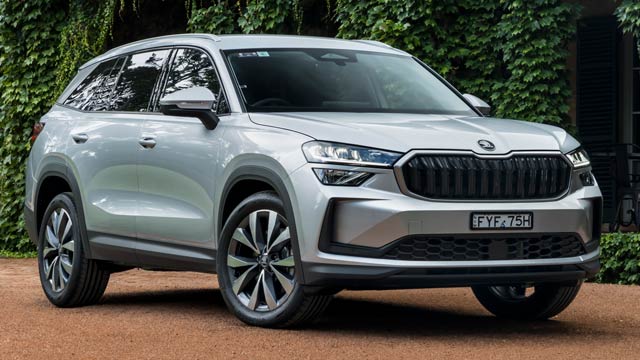
It’s already regarded as something of a Swiss army knife in the SUV world. Now the Skoda Kodiaq has extended its utility once more.
Following years of chatter, the evergreen SUV finally introduces hybrid power for 2026 with the introduction of new mild-hybrid and plug-in hybrid variants.
In doing so, the Czech brand offers a more efficient sales pitch against existing hybrid vehicles including the Toyota Kluger Hybrid (from $62,410 plus ORCs), Hyundai Santa Fe Hybrid ($57,650 plus ORCs) and Kia Sorento Hybrid ($56,630 plus ORCs).
The timing is uncanny, too, lobbing into the market during a fuel crisis.
For all its on-paper merit though, the Kodiaq PHEV is partly undone by some real-world foibles. Is it a worthy candidate nonetheless?
How much does the 2026 Skoda Kodiaq PHEV cost?
The Skoda Kodiaq PHEV starts at $63,490 (plus on-road costs) in Australia.
That puts it $13,000 upstream from the most basic Kodiaq MHEV model (which is also new, at $49,990 plus on-road costs). Unlike that model, the PHEV can be plugged into a power point to provide more than 100km in electric range – in theory, anyway; more on that soon.
The Kodiaq is positioned favourably among other plug-in hybrid rivals. The closest on paper is the Kia Sorento PHEV, priced at $71,130 (plus ORCs).
What is the 2026 Skoda Kodiaq PHEV like inside?
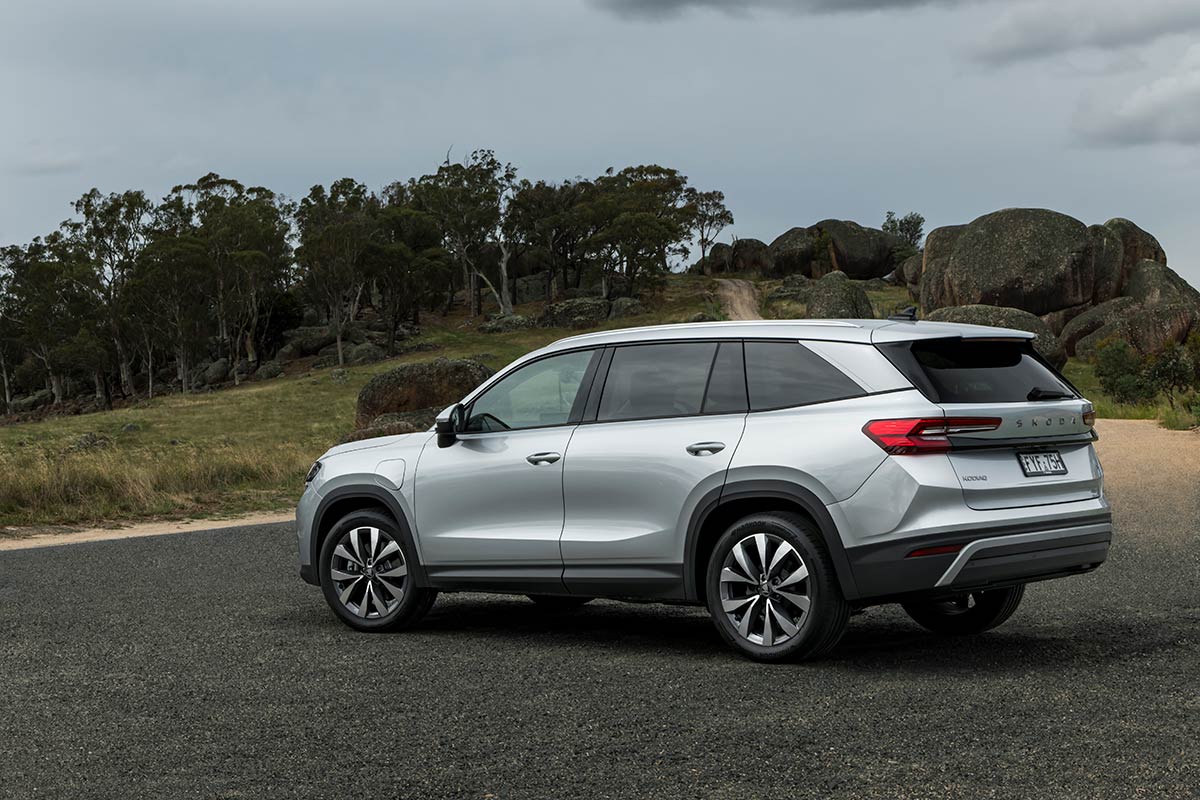
It’s much like the regular Kodiaq when it comes to finish and space – which is great news. However, the Kodiaq PHEV does without the donor’s sixth and seventh seats, and also loses its spare tyre to make way for a big battery under the boot floor.
Additionally, the PHEV reverts from all-wheel drive to front-wheel drive to accommodate the battery and revised drivetrain.
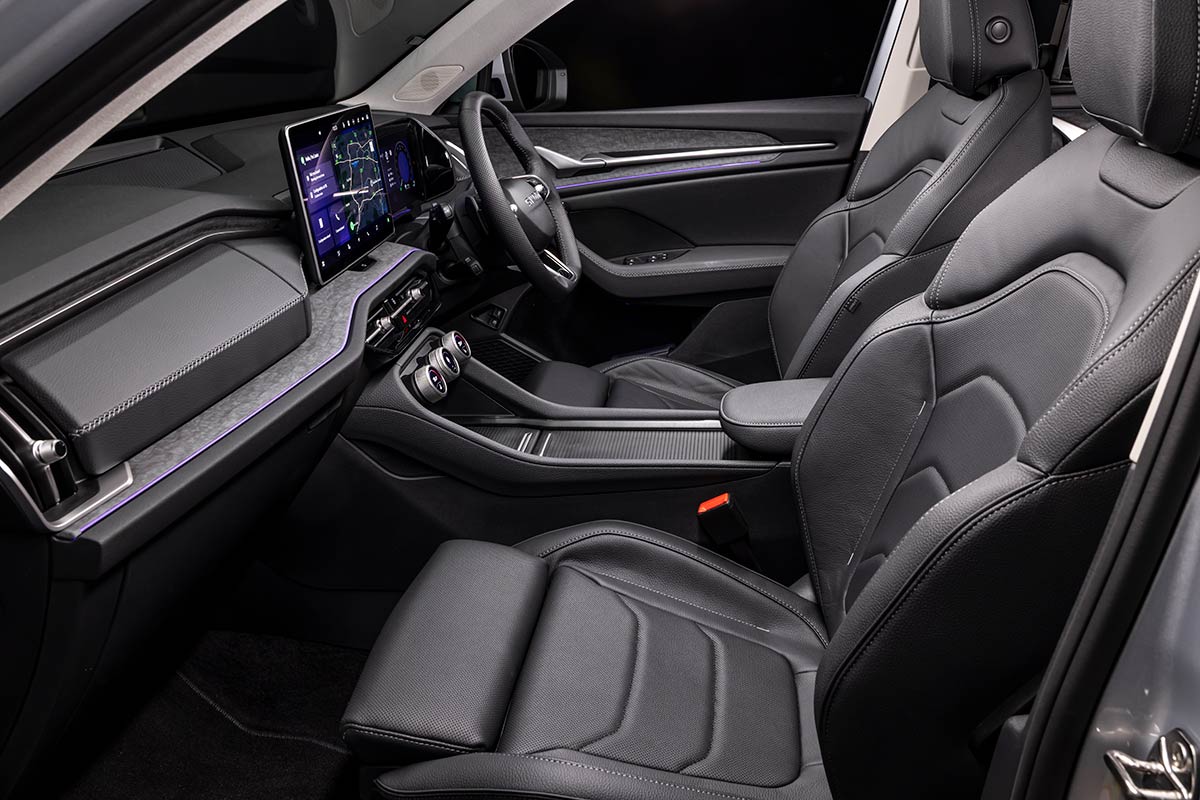
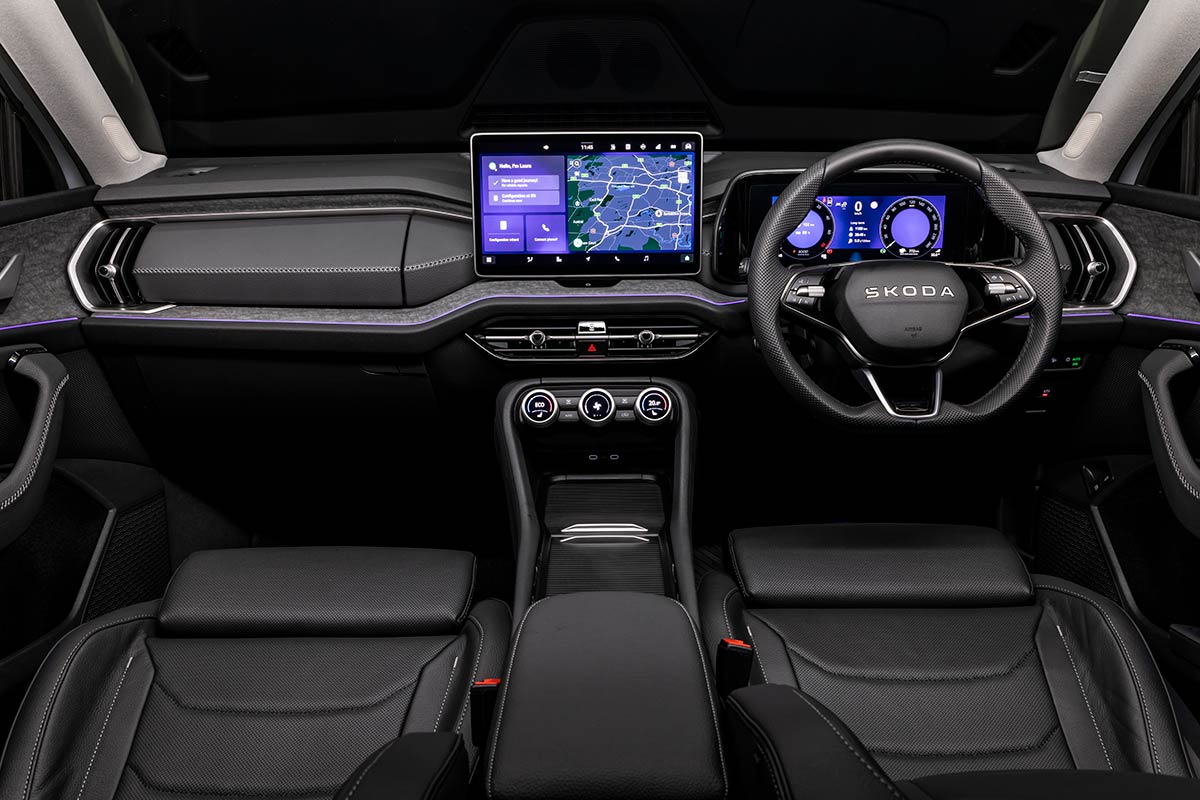
Otherwise, the PHEV does very little to advertise its electric pretentions, with a carryover interior scheme offering excellent seat comfort, soft-touch contact points, and excellent outward vision.
The lack of obvious electric links is largely a positive, but there are drawbacks. There are no obvious buttons to switch between battery mode and hybrid mode. This is the case for most PHEVs, but for the Kodiaq PHEV, you have to navigate through needless screen menus to make the choice.
Infotainment is otherwise a strong talking point. The Kodiaq isn’t afflicted with the same digitised bent as other Volkswagen-derived models; you still get a helpful offering of buttons and switchgear to operate the 13-inch touchscreen and separate 10-inch digital instrument cluster.
Furthermore, the centre fascia offers excellent navigation of key climate controls and drive modes, employing ‘smart dials’ that toggle between a choice of four features.
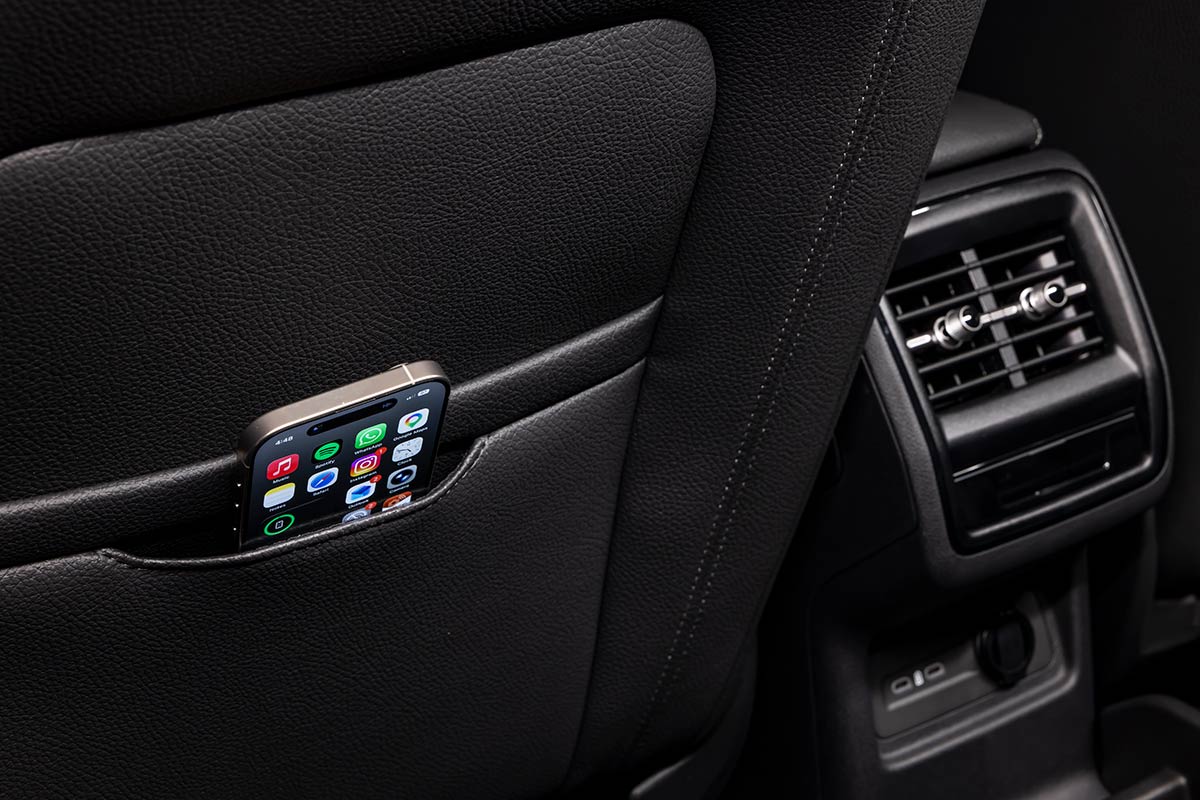
Then there’s the clever additions we’ve become accustomed to from Skoda: the umbrella in door, the waste bins, the incidental storage, and door protectors – not to mention the front-seat mounted phone holders and door shades. It’s extremely amenable to everyday life.
Second row space is well considered given the 4758mm length, accessed via large door openings and with separate access to air vents, charging points and incidental storage. The in-built sunshades for the second row are another handy inclusion for little ones.
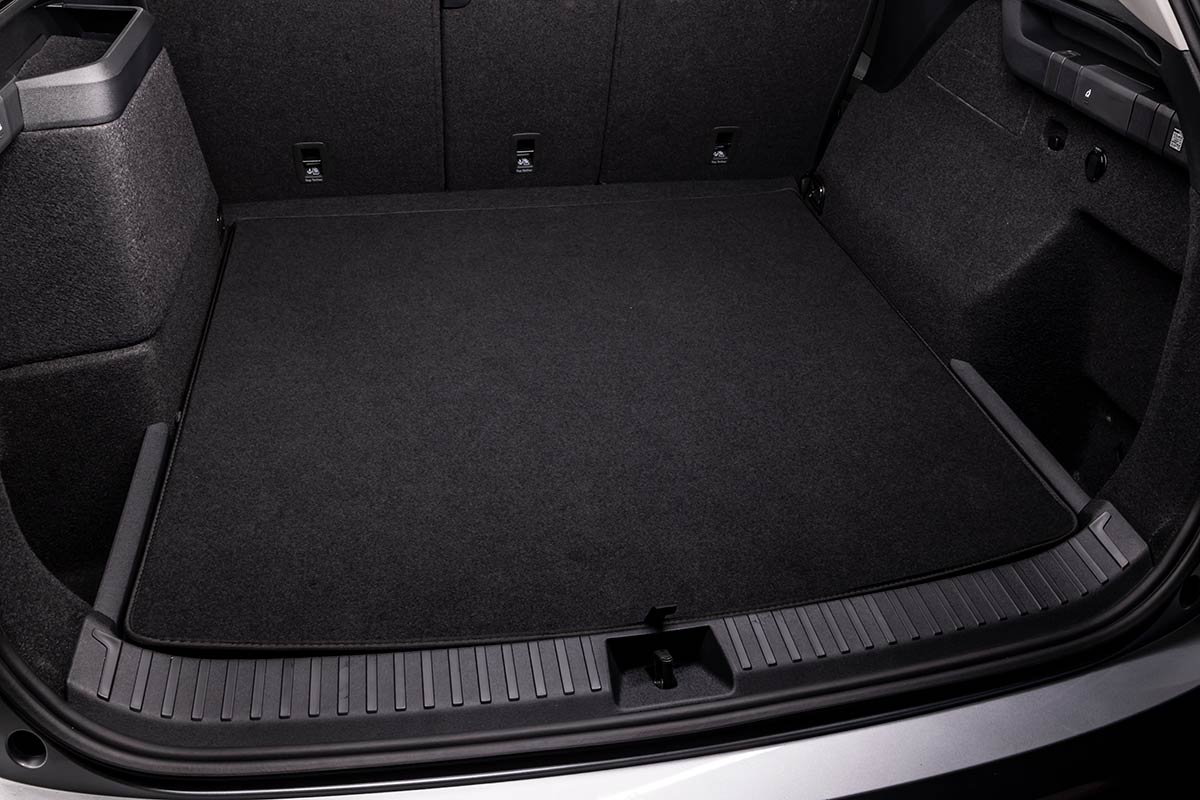
While the third row has lost its bleachers (which, let’s be honest, are more a temporary fixture than dedicated seats in regular Skoda models), boot space is more or less carryover from the donor car (745 litres). An electric tailgate, baggage hooks, and a 12-volt outlet also remain. What doesn’t is the space saver spare tyre, which is replaced by a tyre inflation kit.
What equipment does the 2026 Skoda Kodiaq PHEV come with?
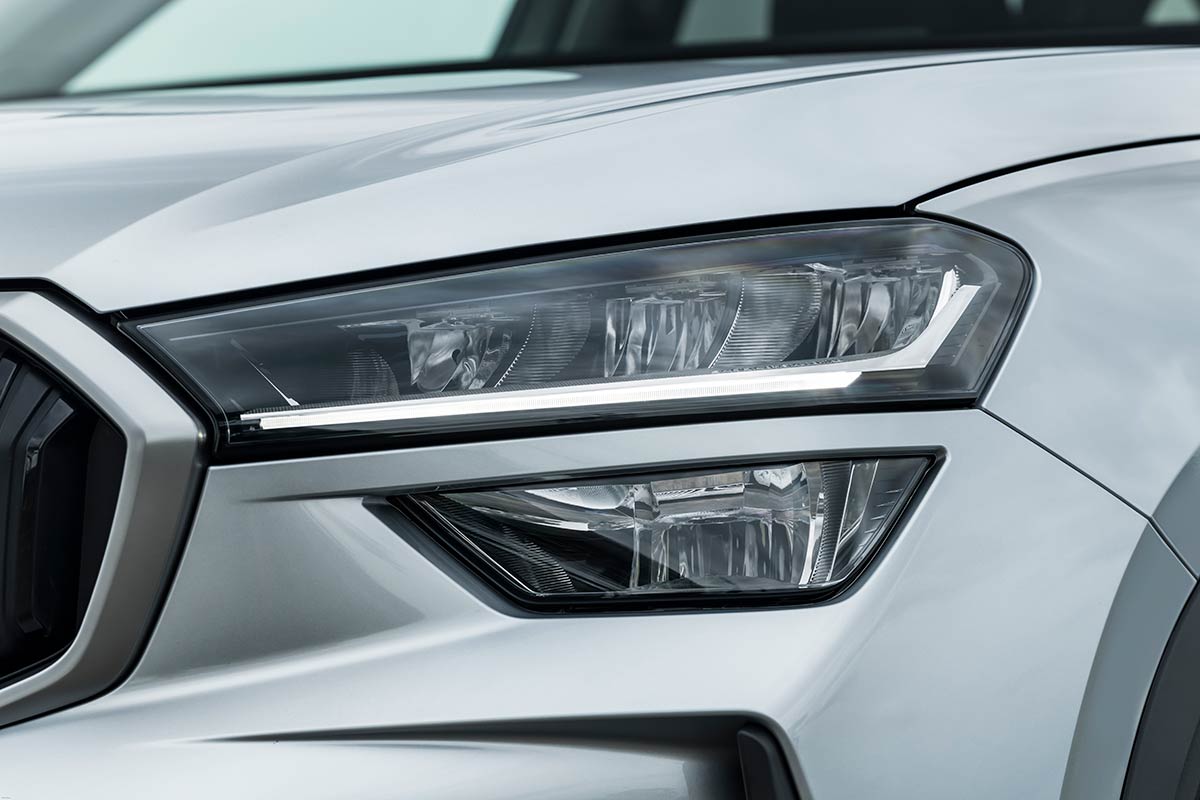
Standard equipment on the Kodiaq PHEV includes 19-inch alloy wheels, tri-zone climate control, keyless entry and start, LED headlights, electric tailgate, black perforated leather seats (heated up front) and metallic paint.
On the infotainment front there’s the aforementioned 13-inch centre touchscreen display and 10-inch digital instrument cluster. Two wireless charging pads, digital radio, Apple CarPlay and Android Auto are also included.
A $6500 optional Signature package brings additional niceties including ventilated front seats with eight massage programs, memory function for the driver’s seat, superior Matrix LED headlights, a head-up display, 13-speaker audio system, and more.
The Kodiaq PHEV is covered by a seven-year/unlimited kilometre vehicle warranty in Australia. Additionally, the high-voltage battery is covered by a specialised eight-year/160,000km warranty.
How safe is the 2026 Skoda Kodiaq PHEV?
The Skoda Kodiaq is equipped with the latest safety and driver aids, corresponding with a five-star ANCAP safety rating.
Standard safety items include autonomous emergency braking (AEB), adaptive cruise control, blind spot monitoring, traffic sign recognition, lane assistance, rear cross traffic alert, and advanced driver fatigue recognition.
Even better, the Kodiaq PHEV isn’t onerous with the way it handles said systems; there’s no needless beeping and bonging, and the lane assistance function isn’t overly aggressive with its interventions.
What powers the 2026 Skoda Kodiaq PHEV?
So here’s where the Kodiaq PHEV gets interesting – and makes a strong case, especially in light of the ongoing Middle East conflict and subsequent fuel crisis.
Under the bonnet is a 110kW 1.5-litre turbo-petrol engine combined with an 85kW/330Nm electric motor which draws power from a 25.7kWh lithium-ion battery. Total system outputs are rated at 150kW/350Nm.
Unlike other Kodiaq models, the PHEV sends drive to the front wheels only and utilises an older style six-speed dual-clutch transmission.
The electric motor and battery offer an electric driving range of 110km, according to Skoda. Meanwhile, fuel use is pegged at 1.9L/100km going off the standardised industry testing measures – a frugal claim, yet one that is largely academic depending on your driving habits. More on that shortly.
The PHEV’s battery pack offers a maximum 11kW AC charging capacity, and a maximum 50kW DC charging capacity. When using the latter – at a public charger, for instance – Skoda says the Kodiaq PHEV will charge from 10 per cent to 80 per cent in 25 minutes. Using a household power point, expect a full charge in about 11 hours.
On the petrol side of the ledger, the PHEV offers a 45-litre fuel capacity, which is about 10 litres less than regular Kodiaq models. It also requires minimum 95 RON premium unleaded fuel.
Towing capacity also dips to 1800kg on the PHEV model, compared to 2500kg on non-hybrid petrol variants.
What is the 2026 Skoda Kodiaq PHEV like to drive?
On face value, the Skoda Kodiaq extends all the positive virtues of its donor vehicle, together with some added complementary benefits.
There’s a newfound sereneness to the driving experience from a standstill, with the electric motor doing all the heavy lifting. Light low speed steering and meaningful weighting to the key controls endow the PHEV with a sophisticated bent in regular conveyance. Quiet, expedient and refined.
Similarly, the petrol-electric drivetrain zips up to signposted speeds with ease. We burrowed through the different touchscreen menus to eventually discover how to switch the vehicle to its hybrid setting, and were able to use a combination of petrol and electric power on open country roads.
The switch between the two is relatively effortless and refined, usually sounded by a heightened thrum from the petrol engine before it resumes regular proceedings.
But – and there’s usually a but with these things – the PHEV has made some concessions in order to do what it does.
The first one is weight. At approximately two tonnes, the PHEV adds about 10 per cent in weight over its lightest donor. While that might not sound like a lot, the carryover MacPherson Strut front-multi-link rear suspension does suffer a little in managing that additional heft, particularly over pockmarked surfaces.
On rougher country back roads, the PHEV can occasionally feel floaty and disconnected from the surface underneath. It’s not disconcerting, but it’s not as refined as other variants within the Kodiaq range.
Otherwise, the steering continues to weigh up nicely through corners, and the body control is on point for an SUV.
The other caveat is the older style six-speed dual-clutch automatic transmission. Having one ratio fewer means the engine tends to spin a little higher in the RPM range at highway speeds.
As with other Kodiaq models, it is also prone to occasionally hesitating from a standstill, but happily cuts through the ratios once on the move.
That brings us to all-important fuel use. All told, we managed 4.0L/100km on a short 50km test loop – using the prescribed combination of battery and petrol power.
The digital reading on our test car predicted 87km of range at 91 per cent charge.
It is worth noting the PHEV 1.9L/100km fuel claim is theoretical in some ways. Once the battery has run out, you’re effectively driving around in a heavier combustion vehicle.
There’s no doubt the Kodiaq PHEV can live up to its billing as an ultra-frugal fuel miser. We will reserve judgement on its long-term efficiency after a proper week-long loan in the coming weeks.
Open Road’s take on the 2026 Skoda Kodiaq PHEV
The Skoda Kodiaq PHEV is in many ways the right car at the right time for Australian buyers, offering the convenience of a petrol SUV together with the ability to run purely on electric charge depending on your commute. Or a combination of both.
However, its pricing premium over other Kodiaq models, plus the concessions it makes to deliver plug-in hybrid power, waters down the argument slightly.
Do your due diligence on whether the plug-in hybrid equation is right for you. In any case, the Kodiaq PHEV extends the popular SUV’s bandwidth once more.
What we liked
- Clever interior scheme and refined touchpoints
- Strong real-world electric range based on our first drive
- Quiet and refined driving experience, excellent family amenity
What could be better?
- Misses out on sixth and seventh seats due to PHEV layout
- Front drive only, older six-speed automatic transmission, no spare wheel
- Automatic transmission is prone to some low-speed hesitation