Same mission, cleaner future: Driving sustainability at the NRMA

The NRMA was founded more than a century ago with the mission to help Australians make the major transition from horse and cart to the motor car.
Today, our organisation is embracing the shift toward a greener, lower-emissions Australia, applying a multi-faceted strategy to work towards the goal of net zero.
Take a look at our sustainability agenda and the changes being applied to our fleet as we move towards 2030 and beyond.
A clear sustainability agenda
Sustainability is a core ESG pillar for the NRMA. We have committed to a reduction in Scope 1 (fuel) and Scope 2 (electricity) emissions by FY30, with net zero as the longer-term goal.
Progress in Scope 2 is already complete thanks to a full transition to 100% renewably sourced electricity across the business. This milestone was achieved a year ahead of schedule and is a win that reflects how serious we are about our environmental commitments.
The NRMA fleet's role in a more sustainable future
With Scope 2 addressed, the NRMA’s focus has shifted to Scope 1 emissions that are generated directly through fuel combustion, and the fleet is the single biggest contributor. We see ourselves as having an important role in helping our members to transition to electric vehicles, but also in demonstrating how we do it ourselves.
There are multiple vehicle fleets across our organisation, including approximately 250 roadside patrol vehicles operating across NSW, a fleet of around 15,000 vehicles through rental partner Sixt and 7,000 corporate vehicles. Improving the fuel efficiency of those fleets is now central to meeting 2030 targets.
For the patrol fleet, the goal is ambitious: switch at least half of all vehicles to be powered by electricity by 2030 (more about this transition shortly). For the rental fleet, the path looks somewhat different.
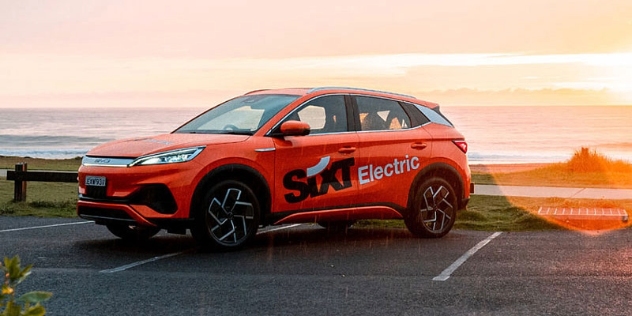
Electric vehicles (EVs) were introduced to Sixt several years ago, but feedback showed the market wasn’t quite ready. With electric-powered vehicles still representing only a small percentage of cars on Australian roads, many customers, particularly those on holiday or travelling for work, weren’t willing to take the risk of driving an EV for the first time. The focus has since shifted to hybrids as a practical bridge, giving customers a lower-emissions option without the ‘range anxiety’ that continues to put a dampener on uptake.
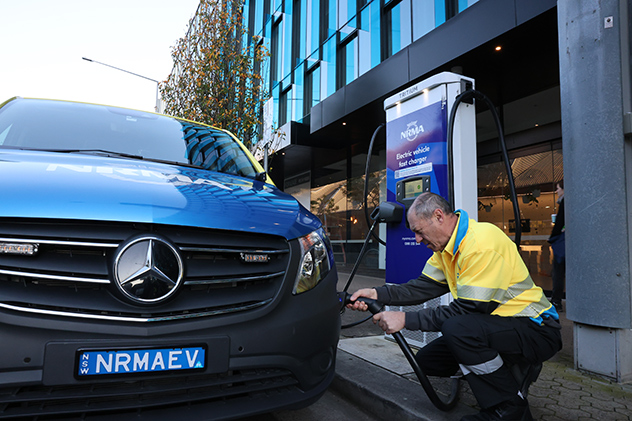
That range anxiety is one of the most consistent barriers the NRMA encounters among rental customers, patrol staff and fleet managers across the industry, who fear running out of battery or being forced to hunt for a charger at inconvenient times. It’s also one of the reasons the NRMA has invested in public charging infrastructure; we are working to deliver 250 publicly available EV fast-charging sites by 2027, with around 180 located in regional NSW.
The aim is straightforward: to remove one of the last remaining reasons not to go electric by ensuring that wherever Australians drive, they can find a place to charge.
Infrastructure is catching up, and so is consumer confidence. Go back a few years and EVs were a rare sight on the road. In May 2026, the Tesla Model Y topped Australia’s monthly vehicle sales chart, with 5,605 examples reported as sold. This was the first time an EV was the top-selling model, and the ratio of electric to fuel-powered vehicles being sold is now around one in five.
Learning on the job: The patrol fleet story
The path to a more sustainable roadside patrol fleet for the NRMA is exciting but not straightforward.
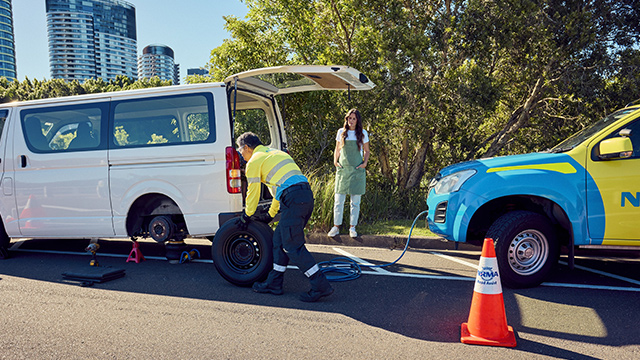
Our specialist vehicles need to carry up to 500 kilograms of equipment, be mostly stationed at patrols’ homes rather than central depots, cover full shifts driving across suburbs all day without recharging and be ready to assist members in all conditions and locations, from underground car parks to outer metro locations.
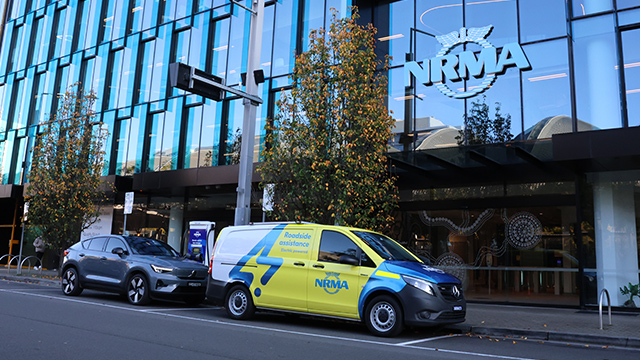
The fleet has grown from a single electric trial vehicle to more than 20 EVs either on the road or in the pipeline, spanning LDV eDeliver 7s, Ford eTransits and a Verizon van. The introduction of electric vehicles has been a step forward, but has also created a new set of problems to solve.
One of the most significant trade-offs has been the shift from patrol utes to vans. With no electric ute currently on the market that meets the high vehicle load requirements of an NRMA patrol vehicle, that transition has meant rethinking the fit-out from the ground up: replacing air compressors with electric alternatives, removing dual battery systems in favour of lithium-ion jump-starters and adding solar panels to roof-mounted auxiliary battery systems.
Some of those changes were immediately workable, while others required further iteration. The air compressor, for example, was removed in early builds and has since been brought back after the electric jack replacement proved unsuitable for certain terrain.
There are also practical questions with the transition to an electric fleet of patrol vehicles that don’t have simple answers. For example:
-
How do NRMA patrol drivers charge vehicles at home if they live in apartments, share driveways or rent their home?
-
How does the fleet manage charging logistics across 250 vehicles spread across metropolitan and regional areas, none of which return to a depot at the end of a shift?
These are problems the NRMA is actively working through, exploring creative options, including access to idle chargers at locations like bus depots and commercial car parks during off-peak hours.
From our perspective, the transition requires a period of trial and error. There needs to be an element of experimentation so we can identify what works and keep moving forward. Our philosophy of testing, adapting and iterating is what has allowed the patrol fleet to grow, and what we believe will carry it to fifty per cent electrification by 2030.
Some discoveries have been positive ones. For example, patrols have reported feeling less fatigued after shifts, partly because they are no longer spending hours working around diesel exhaust fumes. Vehicles are quieter, smoother to drive and increasingly well-equipped. These unplanned wins have become genuine selling points in the ongoing effort to bring a long-tenured workforce along on the journey.
Practical takeaways for electric fleet transitions
There are practical lessons from the NRMA experience for any organisation navigating its own fleet sustainability transition.
1. Know your fleet
The first is to know your fleet in detail, not just the number of vehicles, but how they are actually used. Kilometres per shift, payload requirements, charging logistics, and driver circumstances all shape what’s possible and the order in which it's achieved.
2. Don't wait for perfection
The second is to resist the expectancy of a ‘perfect’ solution. For fleet operators running mixed or specialist vehicles, full electrification may still be years away, but that doesn’t mean standing still.
An alternative if you have requirements beyond standard passenger vehicles is to explore hybrid as an option. Even within internal combustion vehicles, there are significant differences in fuel efficiency that can help to reduce carbon impact. By taking an analytical approach and focusing on where you can have impact, you can make changes without completely disrupting the business.
3. Challenge assumptions
The third is to challenge assumptions about what fit-for-purpose actually means. Equipment that has been standard-issue for decades may not be essential. Operational patterns that seem fixed in place may have workarounds. One workaround the NRMA has had to adopt is recognising that electric patrol vehicles won’t fit in car parks with a 1.8-metre height limit; the workaround is for the operator to park outside, which requires some back-and-forth and time loss, but makes using EVs possible.
For the NRMA, the journey toward a sustainable fleet has a clear direction, with set targets but lots of lessons along the way. The same organisation that helped Australians take to the road more than a century ago is now helping to reimagine what those roads, and the vehicles on them, should look like for the next hundred years.
In short:
- The NRMA has committed to reducing Scope 1 and 2 emissions by 30% by 2030, with net zero as its longer-term goal, and has already achieved 100% renewably sourced electricity across the business, a full year ahead of schedule.
- The NRMA has an ambitious target to electrify at least 50% of its 250 roadside patrol vehicles by 2030.
- Range anxiety is being tackled by contributing to the rollout of 250 public fast-charging sites by 2027, with around 180 in regional NSW.
- Transitioning a specialist fleet to electric is complex: patrol vehicles must carry up to 500kg of equipment, operate across wide areas without returning to a depot, and serve drivers who may not have reliable home-charging access.
- Fleet electrification requires trial and error: lessons from early EV builds, including equipment trade-offs and driver feedback, are actively shaping what comes next.
The NRMA offers roadside assistance for fleets across Australia, including electric vehicles. Apply online or call 1300 750 633 to explore tailored options for your fleet.