Car sales May 2026: an EV has topped Australia's sales charts for the first time

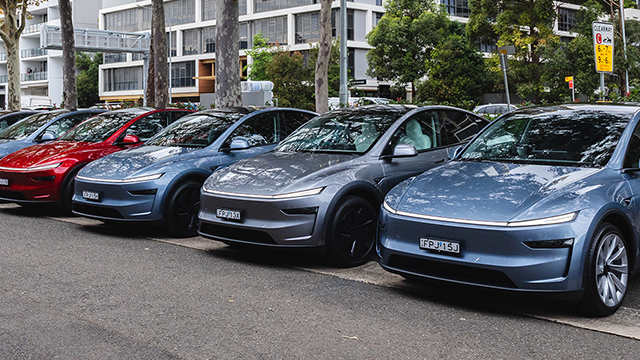
Australian new vehicle sales fell to 106,887 in May 2026, a contraction of 3.3 per cent over the same time in 2025, but consumer demand for electrified vehicles continues to increase rapidly thanks to high fuel prices.
New data released by the Federal Chamber of Automotive Industries (FCAI) and the Electric Vehicle Council reveals almost half of all Australian new vehicle sales last month featured some form of electrification.
This includes hybrids, plug-in hybrids and battery-electric vehicles, with the latter making up 20 per cent of the market. As an illustration as how quickly the situation has shifted, in January battery-electric vehicles had an eight per cent market share.
Sales were down in all states and territories bar Tasmania and across most market segments, medium SUVs bucking the trend with 25.6 per cent growth year-on-year, with buyers moving to electrified vehicles at a rapid rate.
Compared with May 2025, plug-in hybrid SUV sales increased by 377 per cent and battery-electric SUV sales increased by 167 per cent, thanks in part to the Tesla Model Y taking the number one overall spot.
China was once again Australia’s biggest vehicle importer with almost one in three vehicles, ahead of Japan and Thailand, and many new brands to the Australian market continue to post huge increases, while many traditional brands are experiencing steep declines.
Let’s take a more detailed look at the numbers
Top-selling car models in Australia in May 2026
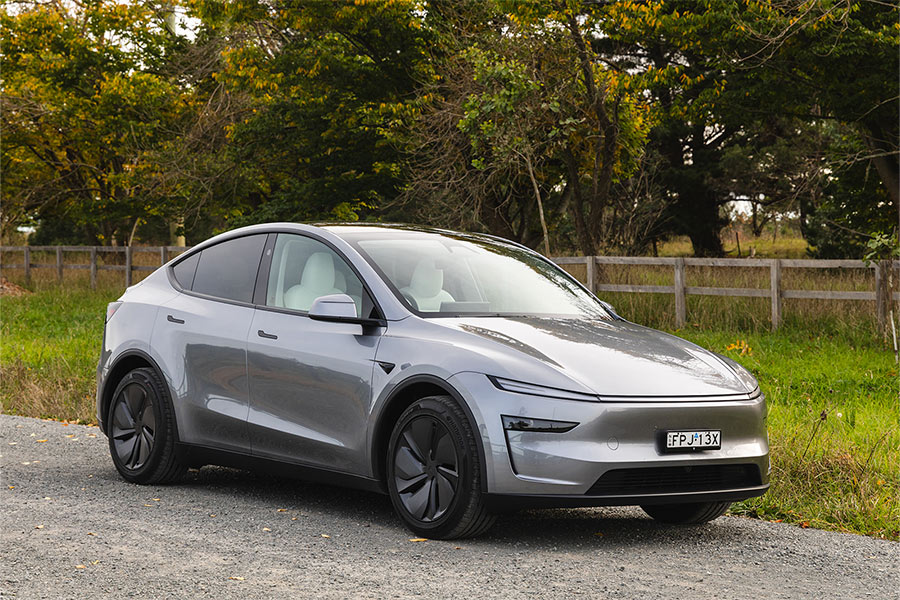
The Tesla Model Y has topped the Australian sales charts for the first time, in the process becoming the first electric vehicle to do so. It recorded a whopping 5605 sales, a 56.6 per cent increase on May 2025, while its sales are up 76.7 per cent year-to-date.
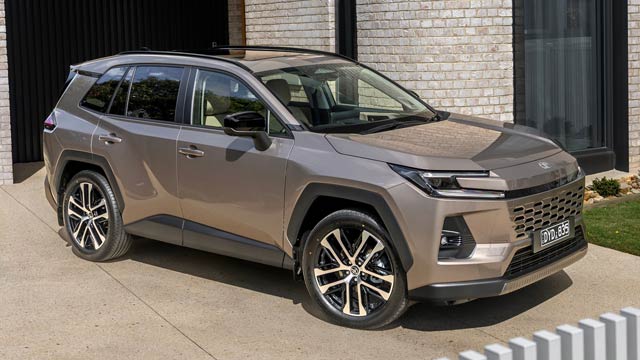
Behind it are some more familiar names, the Ford Ranger and Toyota HiLux continuing to be popular, while the arrival of the new-generation Toyota RAV4 has helped it return to the leaderboard in fourth.
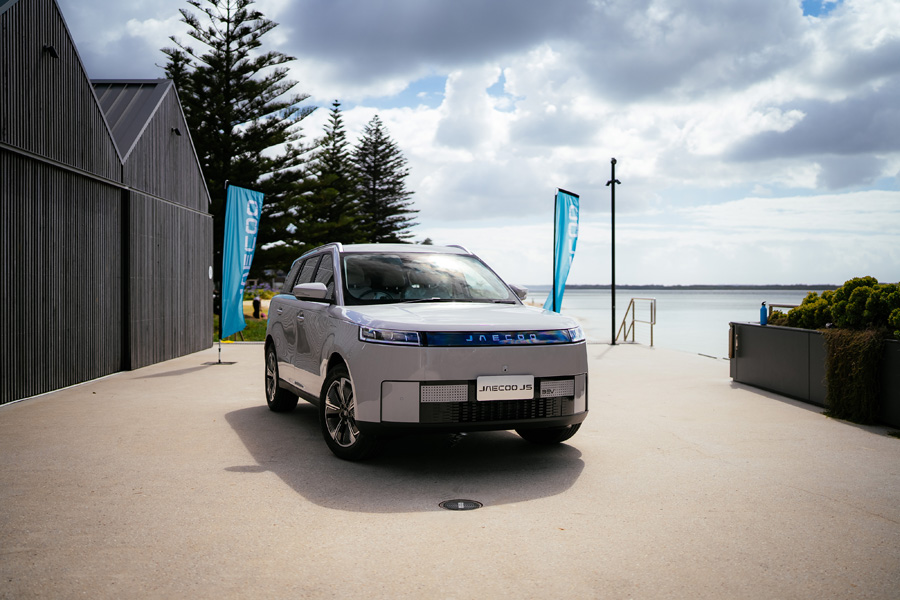
Hyundai had a strong month courtesy of the Kona and Tucson being in fifth and sixth respectively, but the Omoda Jaecoo J5 has vaulted into the top 10, an incredible result for a vehicle that has only been on-sale since the start of 2026.
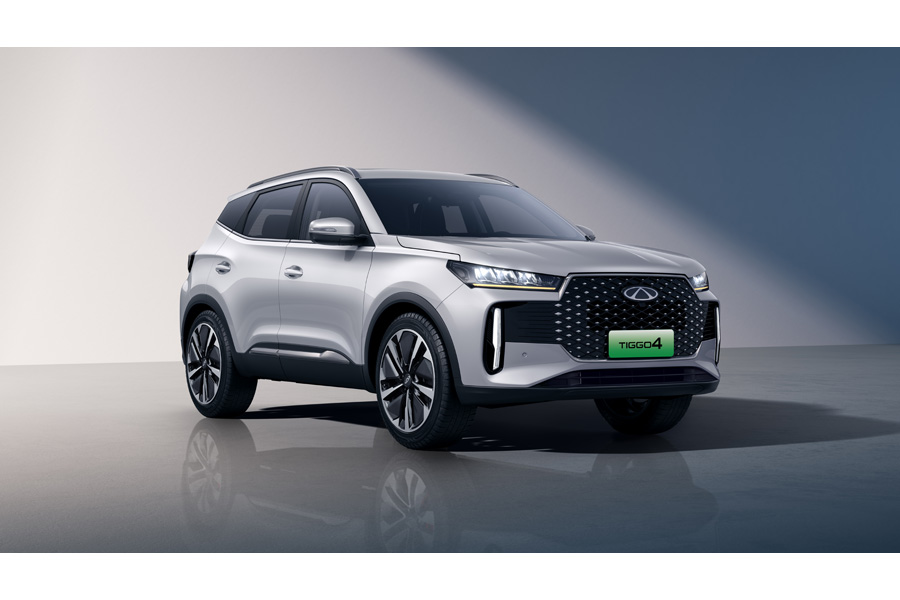
It’s now the country’s second-best selling small SUV, just edging out its Chery Tiggo 4 Pro compatriot, while the Isuzu D-Max and Ford Everest round out the top 10 despite sizeable falls year-on-year.
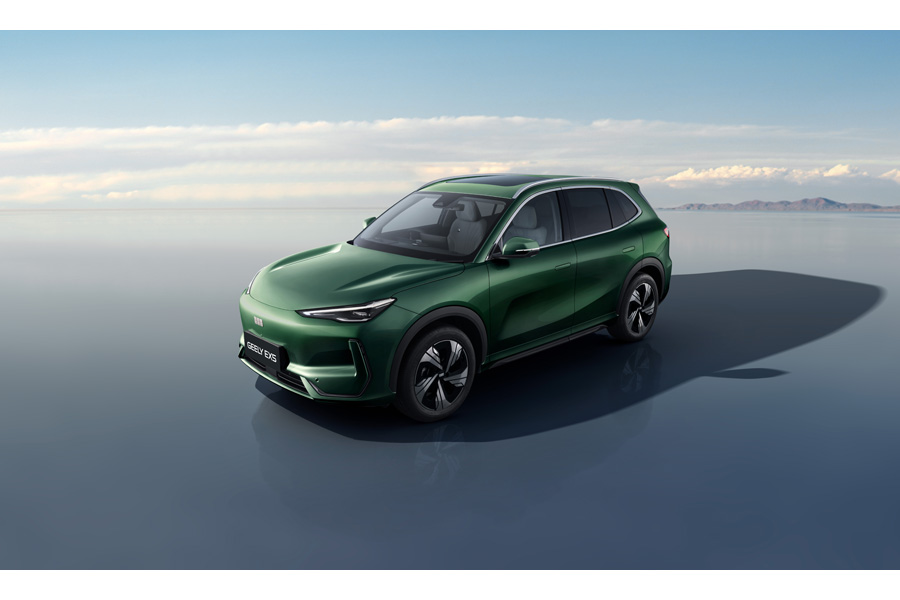
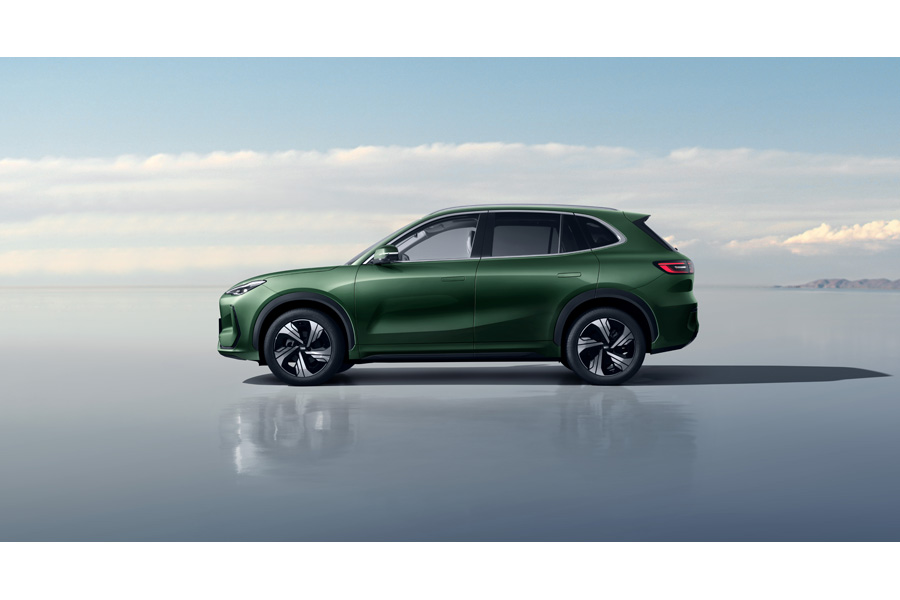
Missing the cut were the Geely EX5, (1814 sales) ahead of the Kia Sportage (1797) and Haval Jolion (1674). Vehicles that have fallen off this month include the Toyota Prado (seventh in April) and BYD Sealion 7 (eighth).
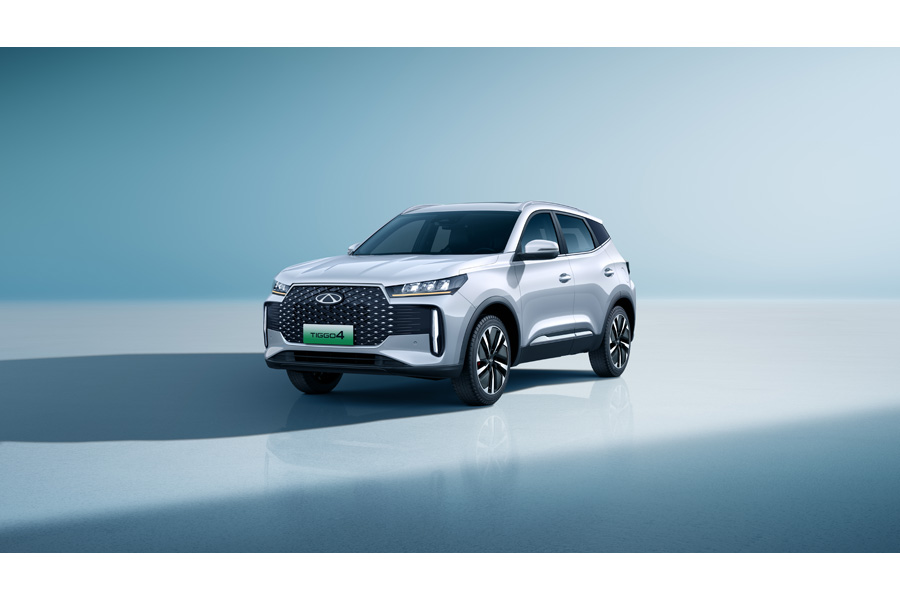
Top 10 best-sellers May 2026
|
Make & Model |
May 26 sales |
May 25 sales |
Month % Diff |
YTD % Diff |
| Tesla Model Y | 5,605 | 3,580 | +56.6 | +76.7 |
| Ford Ranger | 4,474 | 4,761 | -6.0 | -7.8 |
| Toyota HiLux | 4,005 | 4,952 | -19.1 | -13.8 |
| Toyota RAV4 | 3,685 | 4,003 | -3.4 | -47.1 |
| Hyundai Kona | 2,291 | 1,951 | +17.4 | +21.4 |
| Hyundai Tucson | 2,287 | 1,794 | +27.5 | +15.0 |
| Omoda Jaecoo J5 | 2,172 | N/A | N/A | +1346 |
| Chery Tiggo 4 Pro | 2,123 | 1,725 | +23.1 | +81.6 |
| Isuzu D-Max | 1,916 | 2,643 | -27.5 | -7.1 |
| Ford Everest | 1,891 | 2,369 | -20.8 | -6.6 |
Sales by segment: the most popular types of cars in Australia in May 2026
With the overall market in decline, it should come as no surprise that most segments were also down, but the strong result for medium SUVs (+25.6 per cent) hides a sea of red ink almost across the board.
In terms of overall volume, the 4x4 ute and large SUV segments – the staples of the Australian market in recent years – posted the biggest declines with 18 per cent and 23.9 per cent respectively, while small cars fell 15.1 per cent, light SUVs 25.7 per cent and Upper Larger SUVs by 24.4 per cent.
Sports cars were decimated, falling 43.5 per cent compared to May 2025, the only bright light being the arrival of the Honda Prelude, which managed to take top spot in its first month on-sale.
The light (+5.4 per cent) and medium (+8.4 per cent) passenger car segments were joined by small SUVs (+2.2 per cent) in posting modest growth, but medium SUVs aside the big winners were large utes, the segment increasing by 44.2 per cent.
Best-selling SUVs and utes in May 2026
The Ford Ranger and Toyota HiLux continue to lead the ute pack, though the former’s overall result was bolstered by an unusually strong month for its 4x2 model, sales increasing 51.1 per cent over May 2025.
Should Toyota be concerned that its new-generation HiLux isn’t selling as well as the old one? Sales are down 12.4 per cent compared to the same month last year and 10.6 per cent so far year-to-date.
The BYD Shark 6 is chomping at the heels of the Isuzu D-Max for fourth place in the 4x4 segment, with the new Performance and cab-chassis variants set to hit showrooms.
In contrast to the SUV segment, higher fuel prices aren’t hurting full-size ute demand, with the Chevrolet Silverado HD, RAM 2500 and Toyota Tundra also posting strong year-to-date increases, but the facelifted F-150 is the start performer, with sales up 625 per cent over May 2025 and 61.8 per cent for 2026.
If you had an electric SUV in May 2026 the news was almost certainly good. The increased EV demand helped Kia’s EV3 jump 71.3 per cent and while the Renault Megane E-Tech only found 47 buyers, that was a 327.3 per cent increase over May 2025.
BYD’s Atto 3 and Sealion 7 posted huge uplifts (+85.8 and 215.2 per cent respectively), while in the more premium space the VW ID.4 and ID.5 proved popular, though the Zeekr 7X is a clear second place to the Tesla Model Y in the Medium SUV >$65K segment.
This has come at the expense of some traditionally popular nameplates in all sizes, such as the Subaru Crosstrek (-43.2 per cent) and Forester (-34.2 per cent), Mazda CX-5 (-39.6 per cent), Ford Everest (-20.8 per cent), Isuzu MU-X (-35.4 per cent) and Toyota Kluger (-70.7 per cent).
Which car brands performed best in May 2026
It might still have a substantial lead in the Australian new-car sales race, but Toyota is having a tough 2026 so far. While its current -24.6 per cent year-to-date decrease is in part due to the changeover in RAV4 and HiLux generations, both models are yet to match the numbers of their predecessors.
Furthermore, the Prado is down 45 per cent, the Yaris Cross is down 31.7 per cent, the C-HR is down 51.4 per cent and the Corolla is down 20.6 per cent, though the bZ4X (+311.3 per cent), Camry (+48.3 per cent) and LandCruiser (+29.3 per cent) are helping steady the ship.
In such a challenging market, even small growth can be a win and Hyundai (+5.1 per cent) and Kia (+2.7 per cent) continue to hold their own, the latter a particularly impressive result given it has no vehicles in the top 10.
That said, as mentioned earlier new Chinese brands are showing spectacular growth, including Geely (+629.5 per cent year-to-date), Zeekr (+1145 per cent) and Omoda Jaecoo (+2021 per cent). Obviously, being new entrants mean a low initial base, hence the remarkable percentage increases.
Having firmly established their presences, BYD (+120.1 per cent) and Chery (+84. 3 per cent) continue to surge, while Tesla is also enjoying the increased demand for electric vehicles (+56.1 per cent).
This contrasts with many legacy brands who are struggling to attracts buyers in 2026, including Nissan (-32.8 per cent), Porsche (-29.2 per cent), Mitsubishi (-26.4 per cent), Subaru (-22.1 per cent) and Volkswagen (-17 per cent).
| Make | May 26 sales | Market share % | YTD % |
| Toyota | 16,342 | 15.2 | -24.6 |
| BYD | 8,221 | 7.7 | 120.1 |
| Ford | 7,195 | 6.7 | -11.0 |
| Hyundai | 7,007 | 6.6 | 5.1 |
| Kia | 6,761 | 6.3 | 2.7 |
| Tesla | 6,433 | 6.0 | 56.1 |
| Mazda | 5,698 | 5.3 | 16.0 |
| GWM | 4,660 | 4.4 | 23.0 |
| Chery | 4,401 | 4.1 | 84.3 |
| MG | 3,872 | 3.6 | 2.1 |
EV and hybrid car sales in May 2026
Recent uncertainty around Australia’s fuel supply and the resultant high prices has turned the tide for electrified vehicle demand in Australia.
Combined with greater choice and affordability, driven in part by the need to comply with the increasingly stringent New Vehicle Efficiency Standards, electrified vehicles now comprise 46.4 per cent of the market.
Battery electric sales account for 19.9 per cent of this, hybrids are 17.8 per cent and are 8.7 per cent.
It remains to be seen whether this demand will continue to increase, but FCAI Chief Executive says it’s crucial that Australia’s public charging infrastructure keeps pace with EV uptake.
“As the number of EVs on the road continues to grow, charging infrastructure must become more of a priority,” said Weber in a statement. “Charging infrastructure rollout must accelerate if Australia is to maintain consumer confidence and support continued uptake.”