Car sales January 2026: market matches last year’s start, electrified cars make up third of sales

- Ford Ranger back on top as Toyota only records one entrant in top nine
- Chery Tiggo 4 bursts into top four best-sellers
- Chinese brands double in the top 10 as market dilutes
- Hybrid and EV sales make up one third of overall sales in January
New-car sales in Australia are off to a respectable start in 2026, with January sales data supplied by the Federal Chamber of Automotive Industries (FCAI) and the Electric Vehicle Council (EVC) providing some insights into the country’s changing buying attitudes.
Overall car sales in January 2026 totalled 85,284 units across passenger, SUV and light commercial vehicles, up just 0.1 per cent year-on-year from January 2025. While last January was also in the red, it did set the foundation for 2025’s all-time highest-selling year record, so things may not be dire as they appear.
Despite many recurring staples in the top makes and models, some of the biggest-selling brands are down markedly, with more slices of the pie being taken by smaller names in Australia’s increasingly saturated market.
Among this dilution, Chinese brands now comprise four of the top 10 brands. For context, this time last year they made up just two.
RELATED: 2025 Australian new-car sales wrapped
Top-selling car models in Australia in January 2026
A common sight atop best-selling model lists, the Ford Ranger ute takes the number one spot in January with 3403 sold (down 20 per cent). Lagging it in second place is its main adversary, the Toyota HiLux ute, with 2800 sold (down 15 per cent).
Taking bronze in January 2026 is the soon-to-be-updated Mazda CX-5 SUV with 2289 sold (up 22.3 per cent), and the only model in the top three to have exceeded last January’s sales numbers.
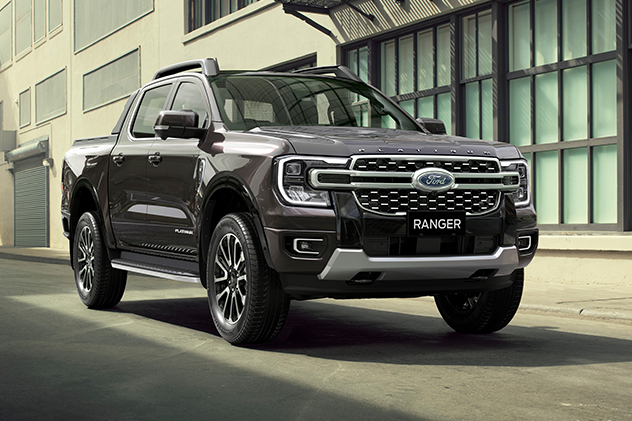
Above: Ford Ranger
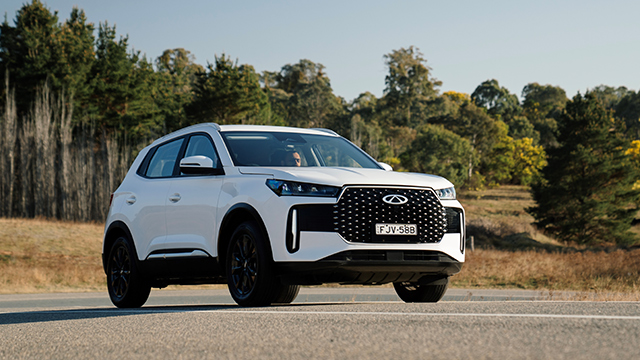
The biggest grower in the top 10 was the Chery Tiggo 4 SUV, up a whopping 119.4 per cent year-on-year with 2234 sold.
Fifth through seventh comprises the Mitsubishi Outlander (1975 sold, down 5.5 per cent), Ford Everest (1913 sold, up 13.9 per cent) and Hyundai Kona (1839, up 41.4 per cent) respectively.
In eighth, 1798 Isuzu D-Max utes found new homes, down 13.8 per cent. Haval cracks the top 10 with its Jolion in ninth place (1789 sold, up 39.1 per cent).
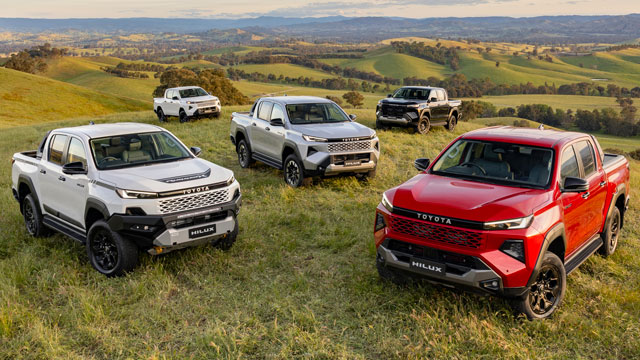
Above: 2026 Toyota HiLux
Notably, last year’s overall second-highest seller, the Toyota RAV4 just scrapes into the top 10 with 1757 units sold (down 65.4 per cent). Perhaps even more odd, it is the only other Toyota to join the HiLux in the top 10 – three of the brand's models comprised the top four alone this time last year.
|
Make & Model |
Jan 26 sales |
Jan 25 sales |
% Diff |
|
Ford Ranger |
3403 | 4,254 | -20.0% |
|
Toyota HiLux |
2800 | 3,302 | -15.2% |
|
Mazda CX-5 |
2289 | 1,872 | 22.3% |
|
Chery Tiggo 4 Pro |
2234 | 1,018 | 119.4% |
|
Mitsubishi Outlander |
1975 | 2,090 | -5.5% |
|
Ford Everest |
1913 | 1,679 | 13.9% |
|
Hyundai Kona |
1839 | 1,301 | 41.4% |
|
Isuzu Ute D-Max |
1798 | 2,086 | -13.8% |
| Haval Jolion | 1789 | 1,286 | 39.1% |
| Toyota RAV4 | 1757 | 5,076 | -65.4% |
Sales by segment: the most popular types of cars in Australia in January 2026
Retaining the lion’s share, SUVs led Australian sales for vehicle types in January with a sizeable 62.4 per cent market share, representing 53,263 sold (up 1.0 per cent).
Light commercial vehicles (including the best-selling Ford Ranger and Toyota HiLux) saw a sales drop of 2.5 per cent, with 17,995 sold (21 per cent market share).
The passenger segment (comprising hatches, sedans and wagons) saw growth of 4.5 per cent, totalling 13,365 sold – now representing 16 per cent market share and closing in on the light commercial class.
Best-selling SUVs and utes in January 2026
In the light SUV segment, Mazda’s CX-3 took the crown with 1218 sales (down 24 per cent), tailed by the Toyota Yaris Cross (909, up 24 per cent) and Suzuki Jimny (570, up 15 per cent).
Small SUVs were led, unsurprisingly, by the Chery Tiggo 4, with the Hyundai Kona and Haval Jolion taking second and third.

Above: Mazda CX-3
The Mazda CX-5 took gold in the medium SUV segment, with the Mitsubishi Outlander not too far behind, and the Toyota RAV4 closing out the top three.
The Ford Everest took the top spot among large SUVs, with the popular Toyota Prado (1392, down 51 per cent) and Isuzu MU-X (1131, up 11.6 per cent) coming second and third, but both failing to crack the top 10 overall.
As mentioned earlier, the Ford Ranger muscled its way to the top of the ute segment (and overall sales), with the Toyota HiLux settling for second and the Isuzu D-Max nabbing third.
Which car brands performed best in Australia in January 2026?
Despite only having one car in the top nine, Toyota still stands atop the podium for total sales in January 2026.
The Japanese outfit moved 14,310 cars in total, representing a 16 per cent market share and almost doubling second place’s numbers.
Second place belongs to Mazda, with 7692 cars sold to carve an 8.8 per cent slice of the market. Third belongs to Kia, claiming 6600 sales and 7.6 per cent of all sales.
Relegated to fourth in January, 6116 cars wearing Ford badges left showrooms for a 7.0 per cent market share. This goes to show exactly how important the Ranger is for the Blue Oval, with just over 50 per cent of its sales made up by the popular ute.
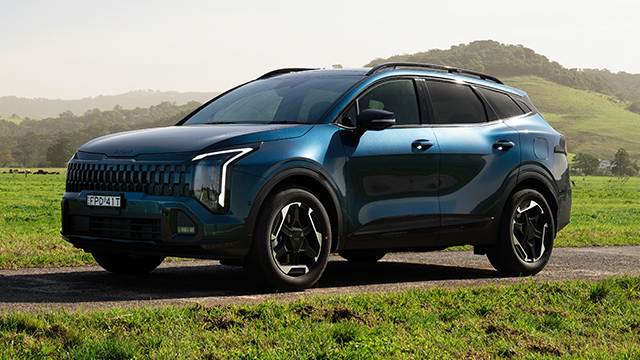
Above: Kia Sportage
The remainder of the top 10 include four Chinese brands (BYD, GWM, Chery and MG) – up from just two this time last year.
Hyundai takes sixth with 5856 sales (6.7 per cent market share) and BYD moved 5001 cars (5.7 per cent market share), while GWM moved 4509 cars for a 5.2 per cent market share and Mitsubishi took 5.0 per cent of the market, recording 4347 sales.
Rounding out the list, Chery sold 3780 (4.3 per cent market share) and 3123 MGs ended up in Aussie driveways for a 3.6 per cent market share.
|
Make |
Volume |
Market share |
|
Toyota |
14,310 |
16.4% |
|
Mazda |
7692 |
8.6% |
| Kia |
6600 |
7.6% |
| Ford |
6116 |
7.0% |
|
Hyundai |
5856 |
6.7% |
| BYD |
5001 |
5.7% |
|
GWM |
4509 |
5.2% |
| Mitsubishi |
4327 |
5.0% |
| Chery |
3780 |
4.3% |
|
MG |
3123 |
3.6% |
EV and hybrid car sales in Australia in January 2026
Electrified cars have started 2026 with some impressive growth, taking up the majority of slack left by a 15 per cent decline in sales of petrol-only powertrains during the month.
Plug-in hybrid electric vehicles (PHEVs) were the real standout, with 5161 of the powertrain being sold, representing growth of 171 per cent and 5.9 per cent of total sales.
Hybrid electric vehicles (HEVs) made up 17 per cent of overall sales with 15,131 sold (up 2.0 per cent), while battery electric vehicles (BEVs) comprised 8.4 per cent with 7409 sold (up 124 per cent).
RELATED: What are the different types of EVs?
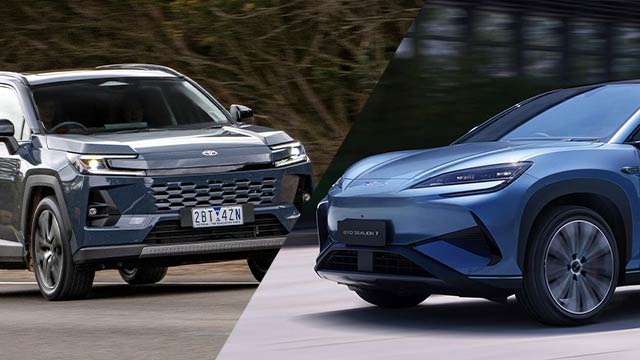
BYD was a big winner, recording 812 sales and growth of a whopping 493 per cent year-on-year across its PHEV and BEV line-up, which now includes the popular BYD Shark 6 ute (1108 sold), Sealion 7 (1171 sold) and new Atto 2 (562 sold).
Tesla sales fell further at the start of 2026, with 501 cars from its two-model line-up moving out the door, representing a 32 per cent decline.
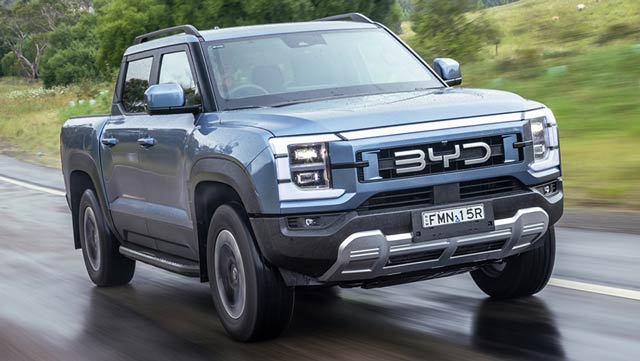
Above: BYD Shark 6 ute
Polestar was a quiet success story among EV-only brands as it continues to gain a foothold in Australia. Sales for the Swedish carmaker were up 95 per cent, with 160 models sold.
Newcomer Zeekr recorded 440 sales in January, while Geely moved 720 and Jaecoo 691 (these brands all entered the market after January 2025).
Overall, 27,701 examples of HEV, PHEV and BEV models were sold in January, representing a total market share of 32 per cent.