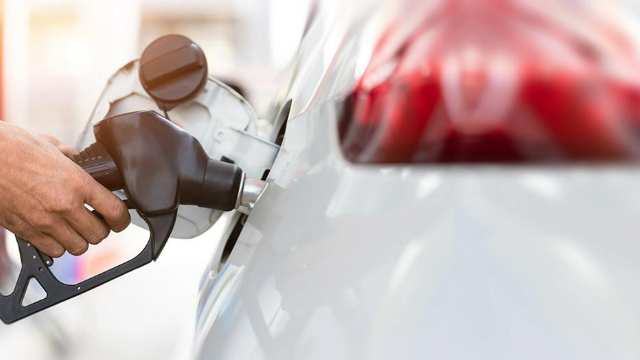
Why is diesel more expensive than petrol in Australia?


The ongoing Middle East conflict is hurting the hip pockets of most Australians in some capacity – but it’s especially the case if you’re regularly purchasing diesel.
Diesel was a cheaper alternative to petrol not so long ago, a factor that made it quite popular in passenger cars, and a lifeblood for the trucking and transport industries.
In 2026, the price of diesel has spiked significantly against petrol, even with the fuel excise being halved across the board earlier this month. At the time of writing, the average diesel price in Sydney was 309 cents per litre, while regular unleaded sat at 225 cents per litre.
So why is diesel more expensive than petrol? Any why is demand for diesel so high?
Read on as we answer all the important questions.
What factors determine diesel prices in Australia?
There are many factors influencing diesel prices in Australia and abroad.
Part of the long-term uplift in diesel prices – and a potential reason why it has overtaken petrol at the bowser – is that diesel has become cleaner, offering less sulphur content than in the past in a bid to meet stricter emissions standards.
In doing so, this has added an additional step in the refinement process, and as a result, cost.
The other unequivocal factor is the global demand for diesel in shipping, generators, transport and trucking – particularly with the aggressive expansions of economies such as India and China over the past two decades.
Why do diesel prices fluctuate differently from petrol prices?
Within those two main points, there are many smaller variables influencing the price of diesel compared to petrol.
The Middle East conflict has affected diesel prices more because global refineries prioritise different cuts of crude oil – from which diesel is refined.
Middle Eastern crudes are the deemed the most efficient for producing high-quality diesel, so just as we saw in the initial stages of the Russia-Ukraine conflict in 2022, diesel has become hardest hit in this latest fallout.
Another reason diesel prices differ from petrol on a global scale is that the two are based on separate international benchmarks – ‘Gasoil’ for diesel and ‘Mogas 95’ for regular unleaded petrol.
Since the Middle East conflict started, Mogas 95 has risen $US 50 per barrel, while Gasoil has risen $US124 per barrel – $US74 more.
Unlike petrol, there is no typical pricing cycle for diesel in Australia. This is because the two compete in vastly different markets.
For example, two-thirds of diesel sold is to commercial buyers (miners, farmers etc.) under forward contracts. As such, only 31.4 per cent of diesel sold in the 12 months to January 2026 went into the retail market: 10.6 billion out of 33.6 billion litres.
Conversely, 76 per cent of petrol sales go into retail, a 15.8 billion litre market.
Why is diesel so expensive in Australia right now?
The easiest way to answer this is to keep things simple: supply and demand.
Diesel prices have simply spiked in Australia because demand is driving the surge. Panic-buying household supplies and petrol, resulting in increased truck movements, plus annual high-production phases in mining and agriculture – all of these factors have conspired to create a perfect storm for diesel prices at the bowser.
As an NRMA member you can save up to 13 cents per litre every time you fill up at participating Ampol Foodary locations. Simply download the My NRMA app and show the QR code when you pay to receive your member discount.
When will diesel prices come down in Australia?
This is the $64,000 question, and one that will ultimately be answered in the coming weeks.The oil industry received a much-needed shot in the arm on April 8, when a two-week ceasefire between the US and Iran was announced. Responding to hopes that transit through the all-important Strait of Hormuz could resume, the price of Brent crude fell by up to 17 per cent before trading near $US95 a barrel. Should the ceasefire hold, lower prices should continue through to the Asian markets, leading to lower wholesale prices here in Australia.
“If the ceasefire holds and becomes permanent then we will see significant falls, but certainly in the short term what we have seen today we hope will flow on to the Asian markets and if that is the case wholesale prices will obviously fall here in Australia,” NRMA spokesman, Peter Khoury, told assembled media.
“It will take some days so we don’t expect to see those significant falls at the terminal gate price this week. If anything, it might be the end of the week but certainly early next week if the ceasefire holds and those falls continue.”
Then, there will be some time before that reduction in price is passed onto consumers.
Ceasefire negotiations between the US and Iran are scheduled to begin in Pakistan on Friday. Fears remain about the ceasefire holding as Iran vows to retaliate for Israeli strikes in Lebanon. For now, the Strait of Hormuz remains closed.