2026 Ford Everest review

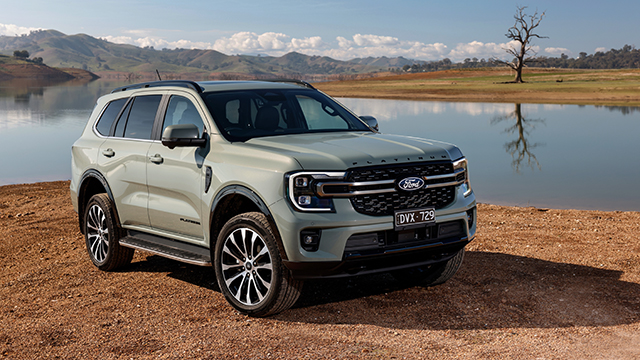
Riding on the same platform as the uber-popular Ford Ranger, the Everest brought together style, family-friendliness and diesel engines that were equally adept at the suburban school run or a muddy hill climb.
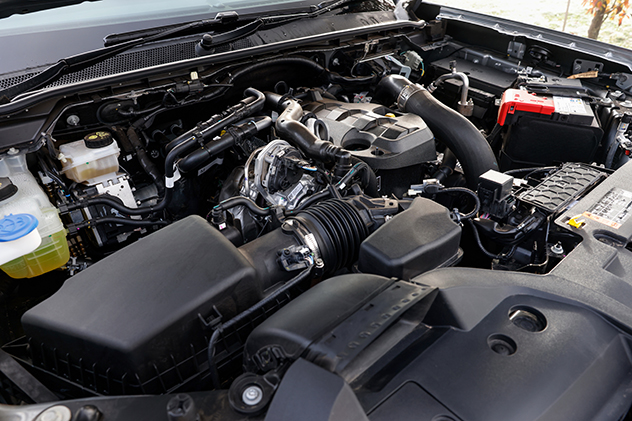
But global market forces have come to bear on Ford Australia and that’s had a knock-on effect for the MY26.5 Everest update, with the lauded bi-turbo 2.0-litre diesel engine making way for a single-turbo variant that previously only saw duty in the base-spec Ranger.
How much does the 2026 Ford Everest cost?
Ford has completely revised the Everest specification schedule and the price of entry has jumped from $54,490 for the RWD Ambiente in the 2025 range to $58,990 for the part-time 4x4 Active (both prices are before on-road costs – Ford has a launch offer of $60k drive-away on the Active).
From there the range steps up to the Active armed with Ford’s 3.0-litre turbo diesel V6 ($66,990), Sport 2.0-litre ($68,990), and Sport 3.0-litre ($76,990).
Above those are the halo models, which all come with the V6 engine – the Tremor ($79,990), Wildtrak ($79,990) and Platinum ($83,490).
In addition to the aforementioned Toyota Prado (starting at $74,200 before on-road costs), the Everest’s key competitors include the Isuzu MU-X ($49,900) and Mitsubishi Pajero ($51,540). Less off-road focused SUVs that could also be cross-shopped with the Everest include the Chery Tiggo 8 Pro ($36,990), Subaru Outback ($48,990), Hyundai Santa Fe ($54,400), Mazda CX-80 ($55,700) and BYD Sealion 8 ($56,990).
The MY26.5 Ford Everest comes with a five-year/75,000km warranty and Ford offers a prepaid plan for $1596, which covers the five years of services (or 75,000km, whichever comes first).
What is the 2026 Ford Everest like inside?
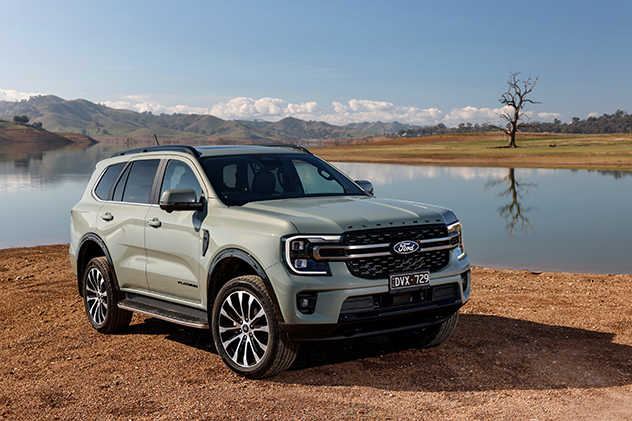
Not a lot has changed inside the Everest – and to be fair it didn’t need to, as styling inside and out has been one of its major attractions over the years.
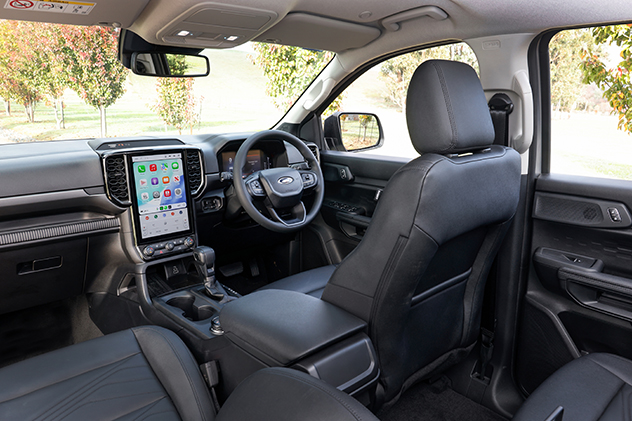
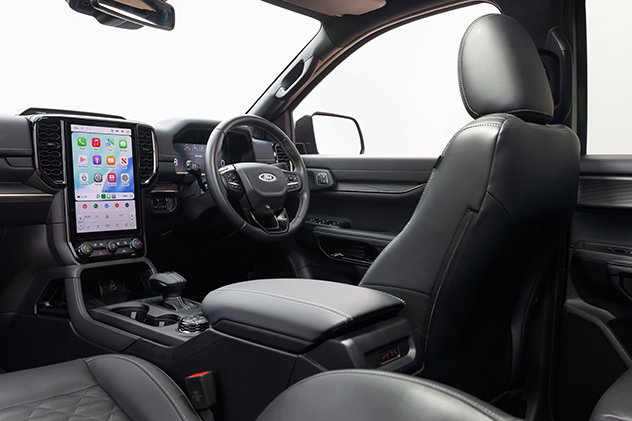
The most notable differences are in the Active entry-level model, which has new leather-appointed seat upholstery and a 12-inch touchscreen (now standard across the Everest range).
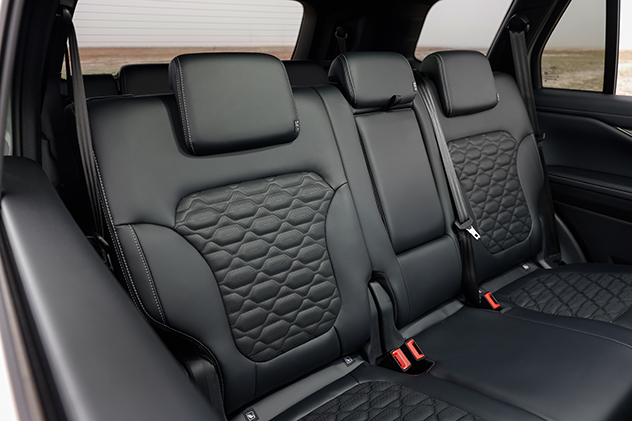
Beyond that it’s the familiar Everest – comfortable seats, roomy, and stylish in a utilitarian way with its upright dashboard and honeycomb-look air conditioning vents. A plastic steering wheel remains standard on the Active variants, though, which seems a little mean in a $60,000 vehicle.
What equipment does the 2026 Ford Everest come with?
The key thing to note is the old Everest base model came with the 2.0-litre bi-turbo engine (154kW/500Nm) and rear-wheel drive, whereas the new one must make do with Ford’s revised single turbo unit (125kW/405Nm), although it does have part-time 4x4 – read on for more analysis of this.Ford goes a long way to justifying the jump in starting price by equipping the Active as standard with black 18-inch alloy wheels (and alloy spare), LED headlights and taillights, power-adjustable and folding mirrors, black roof rails, leather accented seats, a 12-inch infotainment screen, eight-inch digital instrument cluster, eight-speaker sound system, digital radio, Apple CarPlay/Android auto, wireless phone charger, native satellite navigation, dual-zone climate control, rain-sensing wipers, rear privacy glass, adaptive cruise control, a tyre pressure monitoring system and six selectable drive modes.
The V6 Active has the same specification as the 2.0-litre four-cylinder but comes with full-time 4WD and an electronic gear shifter.
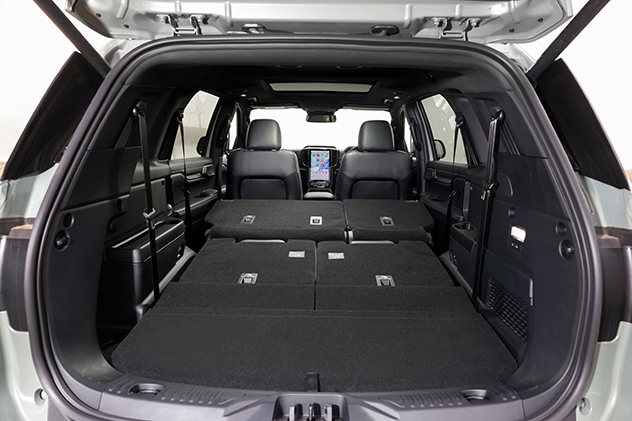
The 2.0-litre turbo diesel Sport steps up to 20-inch alloy wheels, heated, ventilated and power-adjustable front seats, zone lighting, puddle lamps under the wing mirrors, a button-operated powered tailgate, stand-off roof rails, seven seats with 50-50 split-fold, vinyl wrapped steering wheel, floor mats, a USB-A port behind the rear view mirror, intelligent adaptive cruise control, and a 230-volt power point in the back of the centre console.
The V6 Sport has the same kit but comes with full-time 4WD and an electronic gear shifter.
With its focus on ruggedness the Tremor comes with 17-inch alloy wheels and General Grabber all-terrain tyres, a front steel bash plate, off-road suspension with Bilstein position-sensitive dampers, rock crawl mode, auxiliary grille LED headlamps, heavy duty side steps, leather accented seats embossed with the Tremor logo, and all-weather floor mats.
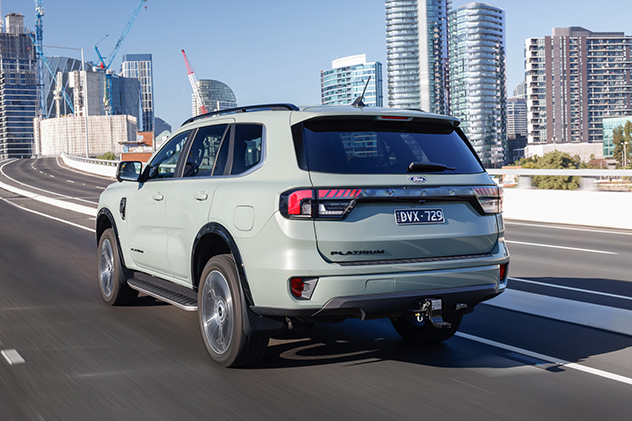
Topping things off is the Premium with 21-inch alloys, dynamic headlamps, side steps with finished steel inserts, power folding seats in the third row, a heated leather steering wheel, quilted leather upholstery, 12.4-inch digital instrument cluster, Bang & Olufsen audio system, ambient lighting and premium floor mats.
How safe is the 2026 Ford Everest?
In 2022, ANCAP awarded the Ford Everest a five-star safety rating and that remains effective for the updated model.The Active comes standard with nine airbags and the expected array of ADAS features including dynamic stability control, lane keeping assistance, evasive steering assistance, blind spot monitoring, cross-traffic alert and much more.
What powers the 2026 Ford Everest?
One of two options: a 2.0-litre turbo diesel four-cylinder engine (125kW/405Nm) or a 3.0-litre turbo diesel V6 (184kW/600Nm).Ford’s ten-speed transmission continues to service all Everest models.
The 2.0-litre bi-turbo four-cylinder engine seen in past Everests has been discontinued.
Claimed fuel consumption is 7.1L/100km for the 2.0-litre Everest and 8.5L/100km for the V6 (except the Tremor, which is 9.3L/100km).
— Kris Ashton
What is the 2026 Ford Everest like to drive?
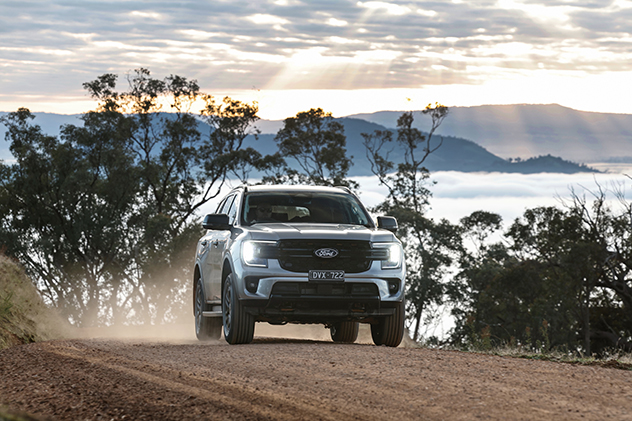
Aside from some minor cosmetic changes, such as darker accents around the grille, there’s not much to distinguish this updated Everest from its predecessors and the same goes for the V6 drive experience. It’s punchy off the line for a diesel engine (peak torque arrives at just 1750rpm) and as musclebound as its output figures suggest. There’s a reason it’s been the most popular engine choice for Everest buyers.But what about the updated 2.0-litre four-cylinder? Even though Ford claims it’s the “most responsive diesel engine we’ve released”, with a new timing chain and fuel injection system to improve reliability, the truth is it can’t match either the V6 or the bi-turbo four (154kW/500Nm) it replaces on performance.
Plenty of low-range torque and Ford’s snappy transmission do ensure the 2.0-litre is quick off the mark, but whereas the bi-turbo gave up very little to the V6 in a straight line the single-turbo four eats its dust – something we experienced first-hand during a real-world test at Ford’s proving grounds at the YouYangs outside Melbourne.
Speed is only one measure of an engine, however, and on other fronts the single-turbo four has its merits. It’s more frugal than both the bi-turbo and V6, with a claimed 7.1L/100km compared to 7.6 for the bi-turbo and 8.5 for the V6 diesel. It also has the same 3500kg braked tow rating as the V6 and develops its torque at just 1750rpm.
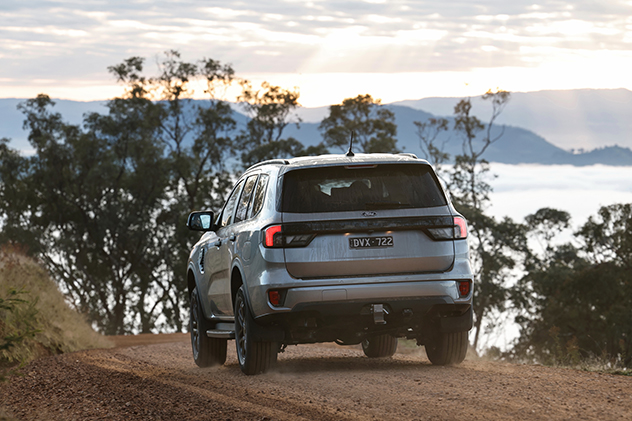
The Everest’s handling has always been a trump card against its more off-road focused competitors and that remains a stand-out feature, with good stability and ride comfort on the tarmac and more than enough off-roading capability to satisfy urban adventurers. Those who seldom or never hit anything more rugged than a gravel road would be better served with one of the numerous urban-focused large SUVs now available for a similar price.
Open Road’s take on the 2026 Ford Everest
The deletion of the bi-turbo engine is a disappointing if understandable development, but it does simplify a prospective Everest buyer’s choice – four-cylinder for better urban economy or the V6 for superior all-round performance.Beyond the bonnet, the addition of the 12-inch touchscreen only improves the Everest’s already appealing value proposition. Aside from that it’s business as usual which, in the Everest’s case, is good business indeed.
What we liked
- 12-inch touchscreen now standard
- Leather appointed seats in base model
- Still leads the 4x4 pack in ride and handling
What could be better?
- Single-turbo four not as good as bi-turbo
- No rear-drive option means higher entry price
- Plastic steering wheel in Active models