2026 Mitsubishi Triton Raider review

The popular ute segment seemingly knows no bounds in Australia. From humble workhorse origins to family friendly dual-cabs and electrification, the segment has broadened immensely in the past 10 years – and the Mitsubishi Triton is a perfect case in point.
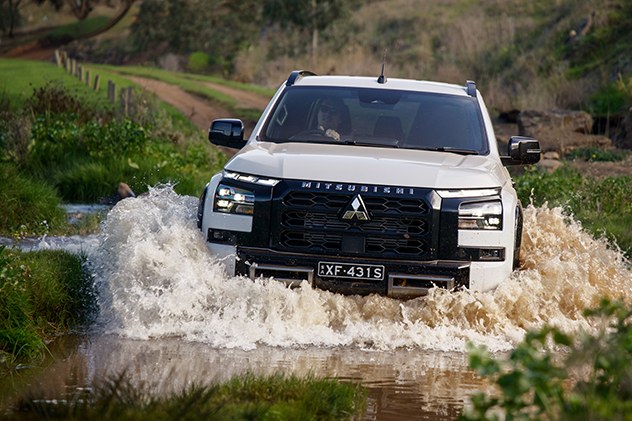
The new Mitsubishi Triton Raider takes the brand’s affordable ute to new heights and adds a true sports model to the lineup for the first time.
How much does the 2026 Mitsubishi Triton Raider cost?
Brace yourself.
The Triton Raider is not cheap. In fact, there’s an argument to say that, at $74,990 plus on-road costs, it immediately prices itself out of contention for many prospective buyers.
That’s not a dig at Mitsubishi, but it’s hard to fathom paying this much for a car with the same basic foundations (albeit enhanced), the same engine, and the same running gear as its donor, which can be had for as little as $47,590 (plus ORCs) in 4x4 guise without all the tinsel. Even less as a rear-wheel drive.
The similarly-themed Ford Ranger Raptor ($90,690 plus ORCs) is dearer again, yes, but at least it employs wholesale engineering and powertrain changes to help justify the cost.
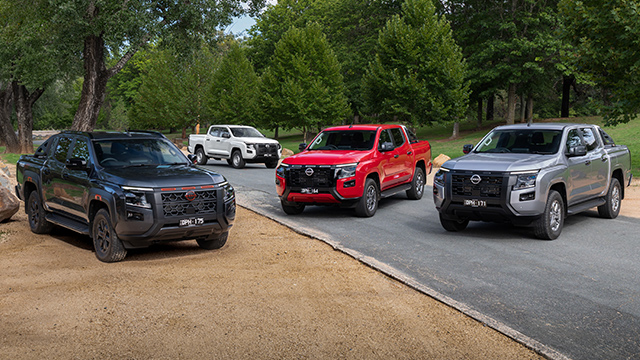
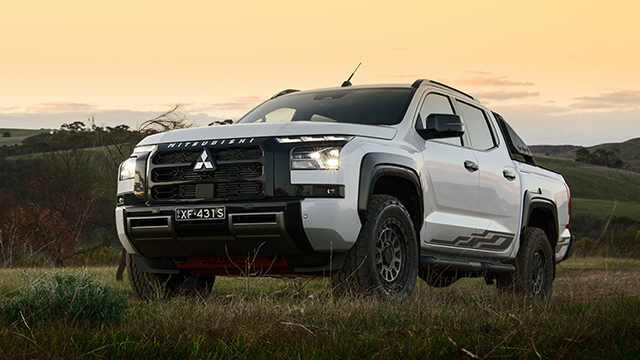
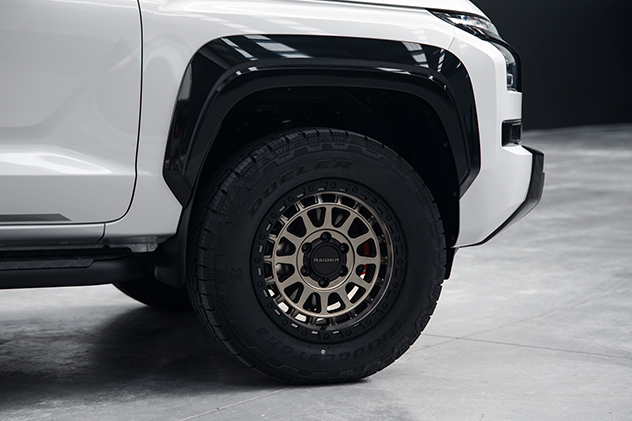
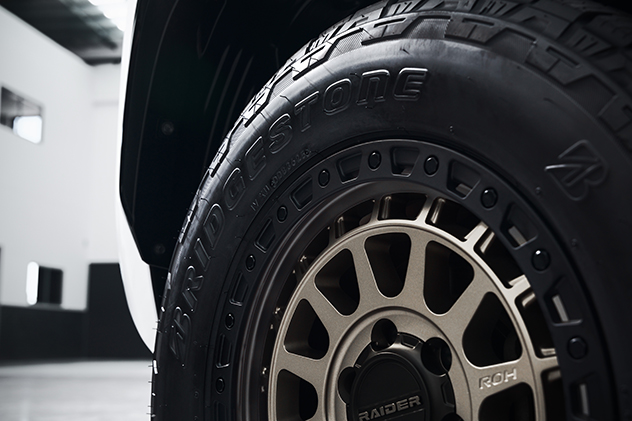
What the Triton Raider does offer is some cool add-ons – it is based on the top-spec Triton GSR, and changes include suspension tweaks, cosmetic enhancements and ROH wheels and Bridgestone tyres. More on that shortly.
The associated development work has been undertaken by ever-thorough Australian outfit, Premcar.
Of course, the Triton Raider isn’t the only expensive halo ute doing the rounds. Comparative examples include the Isuzu D-Max Blade ($80,900 plus ORCs), Mazda BT-50 Thunder ($79,490 plus ORCs), Ford Ranger Tremor ($75,090 plus ORCs) and Toyota HiLux Rogue ($71,990 plus ORCs).
For comparison, the fast-moving BYD Shark 6 Performance is priced at $62,900 (plus ORCs).
What is the 2026 Mitsubishi Triton Raider like inside?
The Raider theme is by no means overdone on the inside, which we’d argue is a good thing.
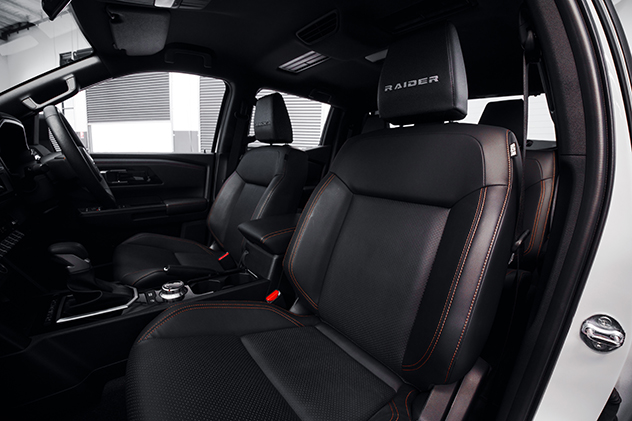
Designers have added enough tinsel around the cabin to make the Raider feel different enough from the donor: ‘Raider’ embroidered on the front head rests, contrasting orange stitching on the seats, doors and dashboard, and a Raider badge on the transmission cladding.
Not that the recently updated Triton donor cabin really needed much of a fillip to begin with.
Sure, it’s not as polished as others in the segment, but it is inherently practical, with decent odds and ends storage, cavernous door pockets, hidey holes, and cupholders that slide out from underneath the outboard air vents.
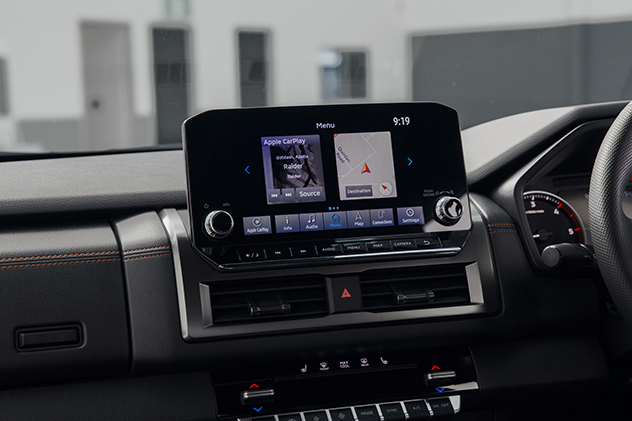
The nine-inch infotainment screen is accentuated by a bank of physical dials and switchgear for seamless access to functions, and the instrument cluster offers clear, legible reading with its analogue gauges and seven-inch digital screen in between. A combination of a wireless phone charger and USB-A and USB-C charging ports has the electronics side of things sorted.
The car’s infotainment system isn’t the most intuitive going. For example, it will prevent you accessing simple functions when you’re on a phone call.
The dashboard is furnished in softer materials, but otherwise the contact points are premised more around durability, meaning they’re a little less comfortable on longer journeys but will stand up to everyday punishment. Even the driver’s door card has the cosiness of a Tupperware container.
We found the leather-appointed front seats comfortable on a long driver, with ample adjustment and positioning within the cabin.
Loft yourself into the second row via generous side steps and you’ll find the Triton offers reasonable dimensions and passenger amenity, with enough room for a couple of adults on longer journeys, or children. An open glasshouse design, roof-mounted air vents, two USB ports, pockets in the front seatbacks and a flip down armrest with cup holders bolsters the package. Unfortunately, there is no backrest adjustability whatsoever, and lots of hard plastics.
There are Isofix attachment points on the outboard seats, together with a shared top tether ‘ring’ point in the middle – a bit fiddly compared to dedicated anchors for each pew.
What equipment does the 2026 Mitsubishi Triton Raider come with?
The Triton Raider uses the existing GSR variant as its base and comes out of the box with keyless entry and start, two-zone climate control, automatic LED headlights, LED taillights and daytime running lights, leather-look seats, carpeted floors, heated front seats, and a power-adjustable driver’s seat.
Infotainment comprises the aforementioned nine-inch centre touchscreen and partially digital seven-inch instrument cluster, accessed by switchgear on the steering wheel. There’s also wireless phone charging, wireless Apple CarPlay and Android Auto, digital radio and Mitsubishi connected services.
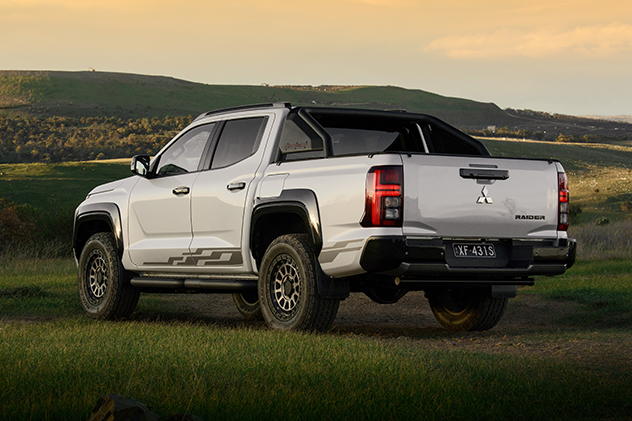
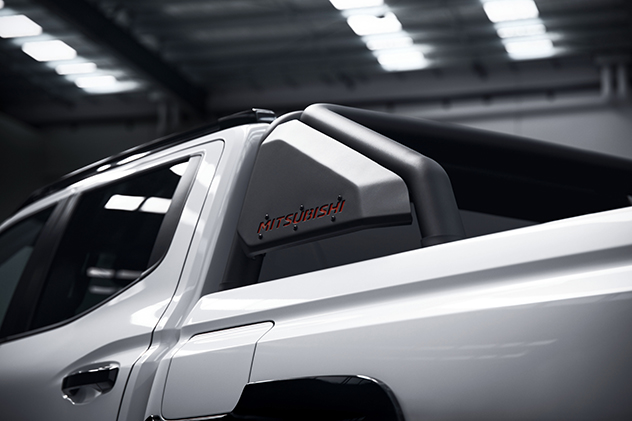
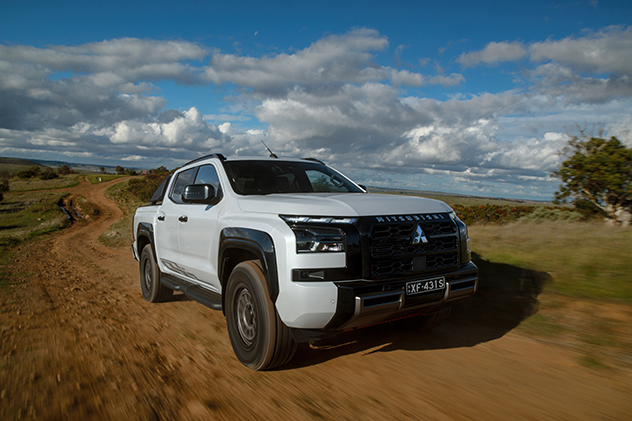
Raider-specific changes include Monroe shock absorbers, 18-inch ROH alloy wheels with Bridgestone all-terrain tyres, improved underbody protection, a red-accented sports bar, and requisite Raider livery.
Wheel track width has increased by 20mm in total (10mm each side), complemented by a 25mm suspension raise in the front and 15mm raise in the rear. Victoria-based Premcar said it undertook 40,000km in road tests for the new hardware and suspension changes.
Importantly, the Raider continues with Mitsubishi’s conditional 10 year/200,000km warranty (provided you keep servicing at an authorised Mitsubishi dealer after the five-year mark), while servicing costs resemble the donor, with intervals spaced at every 12 months/15,000km – an average of $675 for the life of the warranty.
How safe is the 2026 Mitsubishi Triton Raider?
It’s very safe, but its suite of driver ‘aids’ come with some caveats.
A five-star safety rating is assured, with eight airbags, autonomous emergency braking with pedestrian, cyclist and junction assistance, adaptive cruise control, blind spot monitoring, front and rear cross-traffic alert, emergency lane-keeping, lane-keeping assistance, reversing camera, 360-degree camera, trailer sway assistance, tyre pressure monitoring, and front and rear parking sensors.
The Raider also comes with driver attention monitoring so over-eager with its interventions that it is easier to switch it off – plain and simple. If you so much as cast your eye to the corner of the road, pretend to yawn, turn around briefly to check on your sleeping children, the system will feel the need to beep and bong. It is annoying and distracting, and not an ‘aid’ in any sense of the word.
— Sam Charlwood
What powers the 2026 Mitsubishi Triton Raider?
The Raider employs the same 2.4-litre twin-turbo diesel engine from the rest of the Triton range.
You get 150kW/470Nm, with a six-speed torque converter automatic taking care of shifting.
Drive is channelled via Mitsubishi’s signature ‘Super Select II’ system, which gives the option of permanent 4H (4WD high-range) mode, 2H (2WD high-range) and a 4L (4WD low-range) mode. There’s also a rear differential lock as standard.
The Raider rides on a ladder frame chassis with a coil sprung front and leaf sprung rear – as is the case on the donor. But it adopts new dampers fitted to the front and rear frame rails, designed to remove some of the on-road ‘jiggle’.
The Triton also uses electrically assisted power steering and offers a 3500kg braked towing capacity.
Its payload reduces slightly against comparable Triton grades, owing to the weight of the additional equipment on board, but it’s still a credible 990kg.
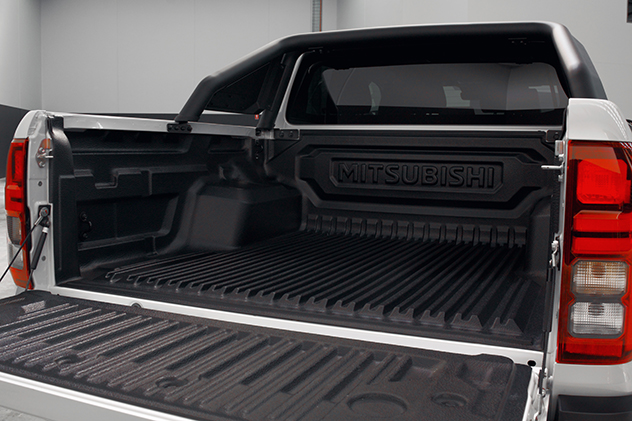
That brings us to the tray area. The Raider’s tray is lined with plastic as standard and gets four tie-down points – one in each corner – plus a big chunky sports bar. However, a tonneau cover is optional, there is no rear tray lighting, no power outlet, and the tailgate offers hydraulic assistance on the way down but not the way back up.
That said, tray dimensions are fairly generous: 1550mm long, 1540mm wide and 526mm deep.
What is the 2026 Mitsubishi Triton Raider like to drive?
It would be easy to cast off the Triton Raider as a simple sticker special. Happily, it’s not – and the drive experience shows it.
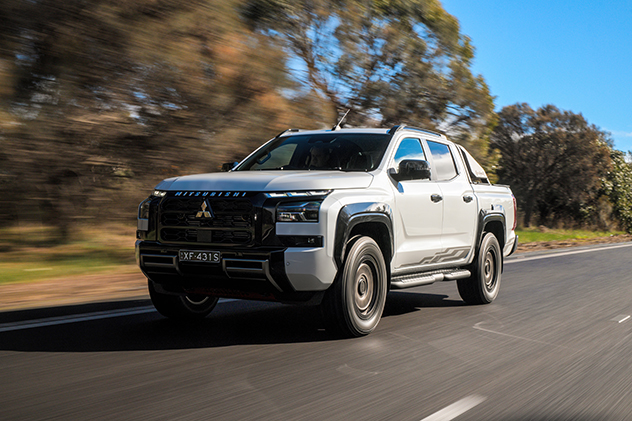
The Premcar changes have created a Triton that is more confident on the road. The steering has considered weighting, the suspension shakes off imperfections with more alacrity, and it’s more composed during direction changes with far less jiggle and roll than we remember in other grades.
These virtues became apparent during an impromptu dash from Sydney to Thredbo during peak snow season this year. The Triton didn’t put a foot wrong along open stretches of the Hume Highway, through the alpine region, and in the darkness of night.
Occupants are cosseted adequately across both rows of the cabin, and while the tyre noise from those chunky Bridgestones is a factor, the cabin feels appropriately insulated from the outside elements.
We also emerged from the circa five-hour journey feeling quite refreshed, a positive reflection on the seats front and rear.
The engine proved very efficient in open road settings, averaging 8.4L/100km over 1800km of testing – no mean feat and just above the official claim.
The engine/transmission naturally pushes for efficiency, making the most amicable combination in lower to middle revs, and offers enough torque to gently arrive at signposted speeds.
With that said, there’s no hiding its occasional tendency to flare in the upper reaches of the rev range. With the traditional six-speed automatic, the Triton is hardly the latest word in refinements, but all things considered it does the job nicely.
Open Road’s take on the 2026 Mitsubishi Triton Raider
The Raider is by far the best executed example of Mitsubishi’s longstanding Triton ute range.
It looks the part, its on-road manners are a tangible improvement on the donor, and to our mind it doesn’t give away anything in load-carrying characteristics (albeit without a dedicated tow test component in this review).
The tipping point for many buyers is the car’s lofty price. Against established competition like the Ranger Raptor, and a host of other new and incoming players, the Raider might not get the attention it deserves.
It’s a shame, because it is quite a convincing product when experienced first-hand.
What we liked
-
Looks, drives and feels like a halo Triton (albeit with a price to match)
-
Tactile interior with proper dials and switchgear, subtle interior enhancements
-
Retains 3500kg towing capacity and 990kg payload
What could be better?
-
Onerous safety systems, especially driver attention monitor
-
No manual transmission available, ageing diesel drivetrain
-
Sparse tray area with no lighting, power outlet or tailgate lift assistance