ADVERTISEMENT
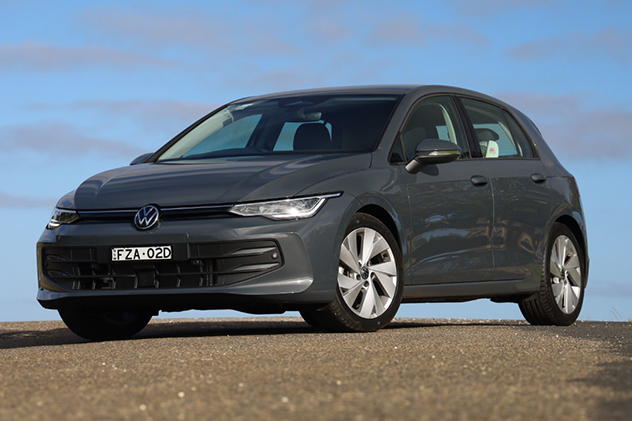
2026 Volkswagen Golf Review
The entry-level Volkswagen Golf proves that less can sometimes be more in the ever-changing new car world.


Despite its diminutive stature, car icons don’t come much bigger than the Volkswagen Golf. In production across 52 years and eight generations, there have been millions of Golf owners around the world.
Much has changed in the new car landscape since the original Golf lobbed in 1974, initially charged with replacing another big name – the Volkswagen Beetle.
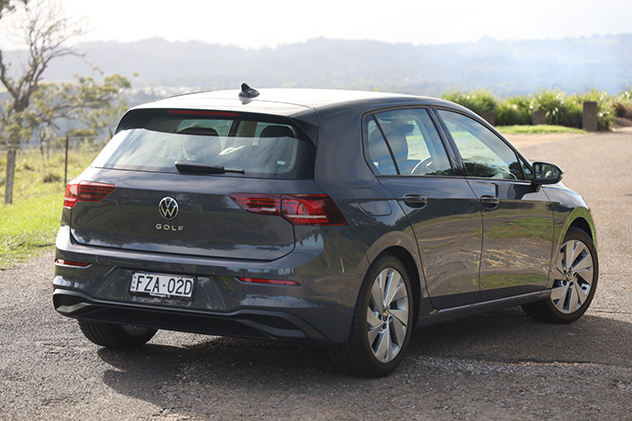
In this era of increased electrification and complex new technologies, however, the entry-level Golf 110 TSI demonstrates the beauty of simplicity. It’s a palate cleanser, especially with the most recent Mark 8.5 update.
No matter which way you spin it, that’s extremely expensive for a small car, especially when the equivalent model could be purchased for $25,790 (plus on-road costs) back in 2020.
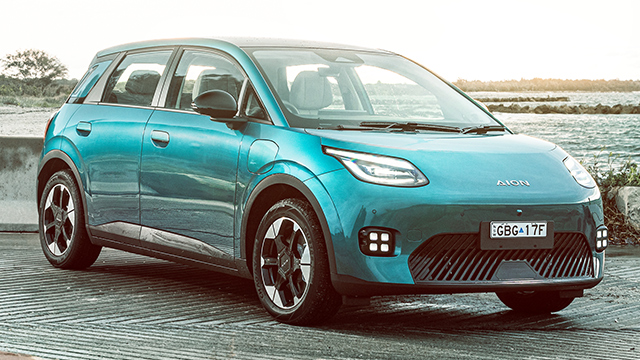
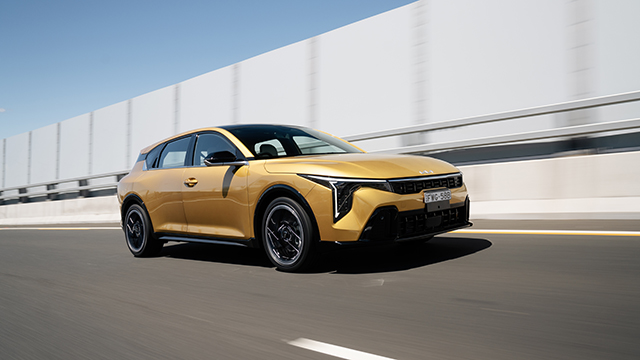
Against rivals, the Golf is also on the more expensive side of the ledger – even if they too have undergone big increases over the past six years. There’s the Hyundai i30 sedan (from $30,000 plus ORCs), Kia K4 (from $32,090 plus ORCs), Mazda3 (from $31,610 plus ORCs), Toyota Corolla Hybrid (from $32,110 plus on-road costs), or for something a little higher brow, the Audi A3 (from $54,800 plus ORCs).
Much has changed in the new car landscape since the original Golf lobbed in 1974, initially charged with replacing another big name – the Volkswagen Beetle.
In this era of increased electrification and complex new technologies, however, the entry-level Golf 110 TSI demonstrates the beauty of simplicity. It’s a palate cleanser, especially with the most recent Mark 8.5 update.
How much does the 2026 Volkswagen Golf cost?
The Volkswagen Golf range opens at $39,290 (plus on-road costs) for the entry Golf 110TSI Life variant driven here.No matter which way you spin it, that’s extremely expensive for a small car, especially when the equivalent model could be purchased for $25,790 (plus on-road costs) back in 2020.
Against rivals, the Golf is also on the more expensive side of the ledger – even if they too have undergone big increases over the past six years. There’s the Hyundai i30 sedan (from $30,000 plus ORCs), Kia K4 (from $32,090 plus ORCs), Mazda3 (from $31,610 plus ORCs), Toyota Corolla Hybrid (from $32,110 plus on-road costs), or for something a little higher brow, the Audi A3 (from $54,800 plus ORCs).
1/4
What is the 2026 Volkswagen Golf like inside?
Charming.The base Golf trades leatherette seats and electric adjustment for old school cloth and manual levers.
While that goes against the grain of its lofty price tag, it feels fitting for a car of this size and positioning while also playing into the Golf’s humble runabout roots. The carpets aren’t as lush as you might expect and some of the contact points are built more around durability than outright comfort.
With all that said, there’s a sense of solidity and build quality to the Golf’s construction – with consistent panel gaps, sufficient use of soft-to-touch materials where necessary, comfortable front buckets, and a low-slung driver positioning.
The vehicle’s 10.3-inch centre touchscreen display is legible and easy to use, while the matching 10.2-inch digital instrument cluster is easy to navigate and likewise concise in how it presents information.
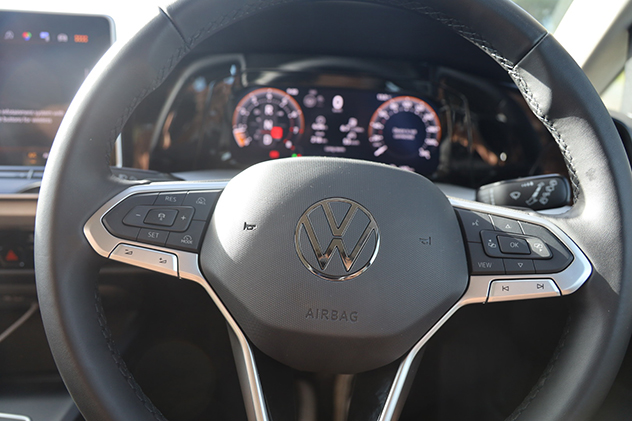
Volkswagen’s decision to return to physical buttons on the steering wheel is a boon – the Golf’s predecessor was finicky to use at best. While there are now more hard-wired buttons underneath the centre screen, including a temperature slider and front and rear demister, most basic functions are still confined within touchscreen menus.
Space is generous up front, while an assortment of open cubbies and deep door pockets ensure anple storage for odds and ends.
The rear seat offers enough space for little ones or adults on shorter journeys. Passengers are treated to air vents and thoughtful storage, although there's no privacy glass as standard and the high-set transmission tunnel and middle pew limit rear passenger amenity. Isofix attachment points service the outboard seats.
There are four USB-C ports in total – two in the front and two in the back – plus 12-volt outlets in the cabin and the boot.
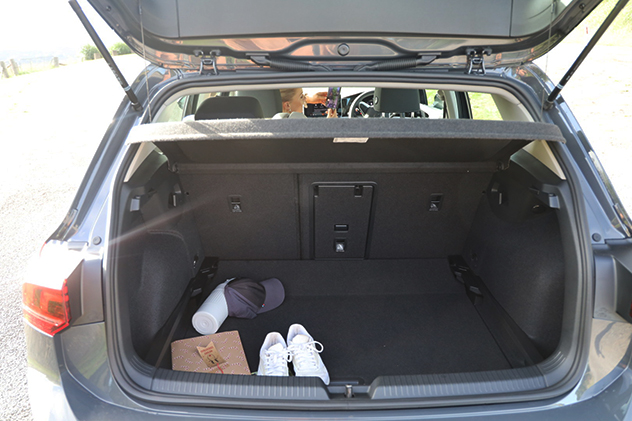
Speaking of, the 374-litre boot area offers enough space for a designer pram (just) or a couple of full-size suitcases, with the area extending to 1230 litres when the second-row seats are folded flat. This offers enough room for golf clubs, or if you’re creative, a mountain bike.
What equipment does the 2026 Volkswagen Golf come with?
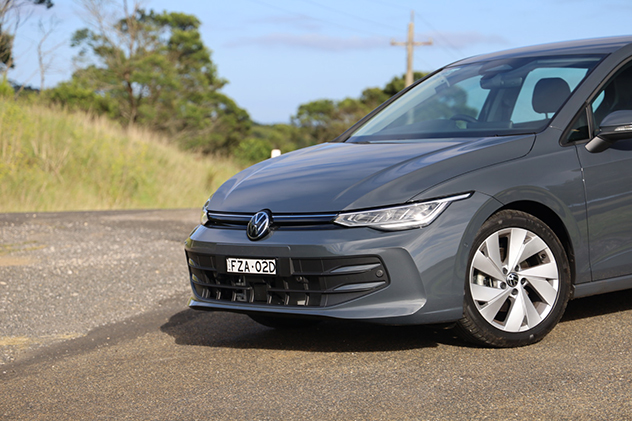
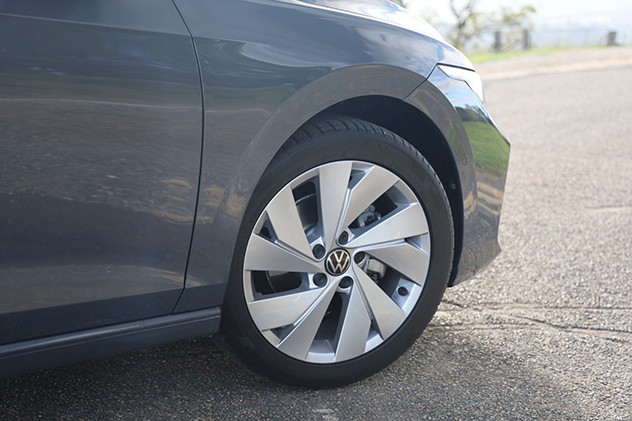
The base grade Golf Life 110TSI wants for little, fitted standard with 17-inch alloy wheels, LED headlights and taillights, keyless entry and start, Bluetooth, single zone climate control and heated and electrically adjustable side mirrors.It goes without an electric tailgate, native sat-nav or electric seat adjustment, but there’s an argument to say none of that stuff is truly deal breaking. If anything, an overhead 360-degree camera at this price point would be nice.
The Golf is backed by Volkswagen’s five-year/unlimited kilometre warranty. Servicing intervals are every 12 months or 15,000km and, according to the manufacturer, the first three years will set buyers back $1623, while five years cost $2940 – which is again on the expensive side of the ledger.
How safe is the 2026 Volkswagen Golf?
It’s very safe, backed by a five-star ANCAP safety rating backdated to the car’s global introduction in 2022.There’s a full suite of airbags, the usual electronic aids, plus driver assistance technology including adaptive cruise control, autonomous emergency braking with pedestrian and cyclist detection, rear cross-traffic alert, lane departure warning and more.
The Golf hasn’t yet inherited all of Volkswagen’s safety items, and in some respects that’s a good thing: no needless beeping and bonging or distracting the driver from the road ahead.
1/3
The connection to the road, the nuanced feeling of the steering and pedals, the lightness and feedback of the chassis – the Golf feels like an analogue anachronism in a digitised world.
— Sam Charlwood
What powers the 2026 Volkswagen Golf?
A 1.4-litre turbo petrol four-cylinder services the entry Golf 110 TSI, and as the name suggests, it outputs 110kW and 250Nm.Those aren’t figures to crow about in a pub conversation, but they’re adequate enough when you take into consideration the Golf’s 1350kg kerb mass.
The peak torque figure arrives at a lowly 1500rpm, and with a quick thinking eight-speed torque converter automatic swapping ratios, it makes for a nought to 100km/h claim of about eight seconds.
The base Golf claims a fuel consumption average of 6.3L/100km. Read on to find out whether it’s achievable.
What is the 2026 Volkswagen Golf like to drive?
The Golf offers the equivalent of a palate cleanser between courses, so neutral and balanced are its driving characteristics.In fact, your correspondent found himself simply smiling and taking it all in silently during the opening 15 minutes of a week-long road test of Volkswagen’s evergreen hatch.
The connection to the road, the nuanced feeling of the steering and pedals, the lightness and feedback of the chassis – the Golf feels like an analogue anachronism in a digitised world.
This is especially the case in an era of increasingly electrified rivals, which simply don’t match the authentic feel and feedback that the German offers – a trait underpinned by its quality McPherson strut front/multi-link rear suspension and Euro underpinnings.
The 1.4-litre does just as advertised on the box, with a broad torque and power curve and a refined, endearing demeanour in daily conveyance. The eight-speed torque converter feels smoother off the line than the long-standing seven-speed dual-clutch automatic it has replaced, while offering similarly proficient upshifts and downshifts.
The drivetrain proves to be fruity when called upon, yet efficient and restrained when doddling about – both in around-town passage and on the highway. After 700km in the hot seat, we arrived at a combined fuel claim of 6.7L/100km – marginally above the claim and only marginally more than an equivalent hybrid rival.
The base Golf foregoes driving modes including Volkswagen’s handy ‘efficient’ setting, which would undoubtedly lower that figure further by effectively uncoupling the gearbox during coasting scenarios to make the car feel as though it’s in ‘angel gear’.
There’s an air of refinement in the way the Golf dispatches bumps, isolates outside noise and holds its composure between corners – an air that most rivals in this space simply cannot match.
The base front-drive positioning of our test car feels like a throwback to a time when the car world was simpler, and we’re here for it.
Open Road’s take on the 2026 Volkswagen Golf
The Volkswagen Golf remains an icon in the new car landscape and we’re glad that it’s still possible to get a simple, undiluted base version in 2026.That said, the pricing of the ‘entry’ Golf is a bit too much to bear even withstanding its driving and refinement hallmarks. The reality is that $40k is a lot of freight, especially for family buyers.
It means the Golf won’t hold the same relevance that it once did in Australia, even if the formula inside is as good as it’s ever been.
What we liked
- This is how a small car should feel and drive
- Quality construction, sophisticated steering and suspension
- Ample interior dimensions and boot space
What could be better?
- Arguably too expensive in today’s new car climate
- No manual transmission, lack of hardwired buttons
- Misses out on different driving modes, including a handy efficiency setting
Share this article