2027 Chery ‘KP31’ ute to have Australia-first diesel PHEV powertrain


Chery has pulled the covers off its first ute ahead of the model’s slated Australian arrival in Q4 2026, highlighting its diesel plug-in hybrid electric vehicle (PHEV) powertrain.
The yet-unnamed ute (codenamed KP31 in concept form) will measure 5450mm long, 1920mm wide and 1925mm tall in production trim, placing it close in stature to segment leaders such as the Ford Ranger and Toyota HiLux.
In an Australian first, the PHEV newcomer ute will pair a 2.5-litre turbocharged diesel engine with an electric motor and large battery pack for reduced fuel consumption and improved smoothness.
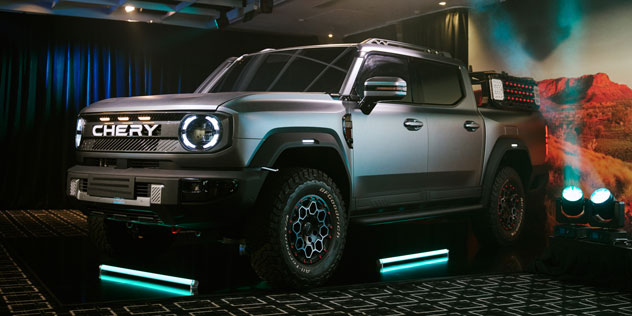
Chery claims the powertrain will be 10 per cent more efficient, and produce 30 per cent less vibration, than “the average” diesel engine – but has yet to quote consumption figures, battery capacity, or system power and torque.
Looking elsewhere in the brand’s stable, the Rely P3X – which rides on the same platform as the KP31 and uses the world’s first 2.5-litre turbo diesel PHEV to appear in a ute – outputs 210kW and 650Nm and provides 170km of electric-only range (on the generous NEDC standard). Logic suggests these figures will most likely transfer to the ute that makes its way to Australia.
While local cost and final specification are far from locked down, we expect the Chery ute to come in close to the wildly popular petrol PHEV BYD Shark 6 ute’s $57,900 drive-away price, with a Chery Australia spokesperson telling Open Road they “would very much expect [the KP31] to be in [the BYD Shark’s] price bracket”.
Chery Australia has confirmed a 1000kg payload and 3500kg braked towing rating are non-negotiables if the model is to compete in Australia’s fierce ute market. Rear, centre and front differential locks are also likely to feature.
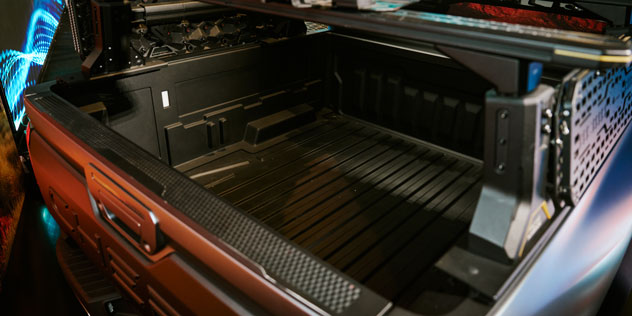
At launch, it’s expected the KP31 will be available only in dual-cab chassis configuration, although the brand has said the rear tub is completely removable and has not ruled out a cab chassis variant down the track.
Development has been led by an ‘Australia-first’ attitude, with Chinese engineers visiting Australia and benchmarking key segment rivals for ride, handling and durability during the KP31’s development. Further local tuning is expected to take place for the KP31’s advanced driver assistance systems (ADAS).
Accompanying the KP31 – or whatever it might be called upon release – will be a petrol PHEV alternative, although timing for this variant remains vague at “within 2027”, according to the brand.