EV, hybrid or petrol: What offers the best value?
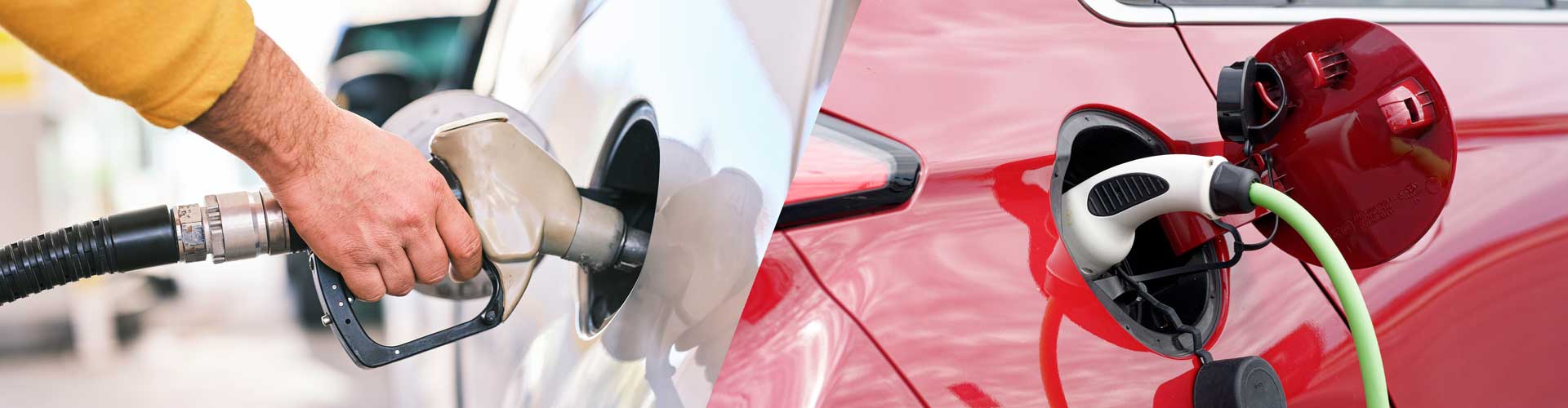
Gone are the days when the question was, ‘Petrol or diesel?’ Now consumers can choose between petrol, diesel, all-electric, plug-in hybrid and just plain hybrid.
We know this can be overwhelming, which is why The NRMA’s Open Road team created the Best Value Car Awards.
Comparing cars fairly means looking beyond their purchase price and measuring what they cost to own under the same conditions, regardless of what powers them.
The NRMA Best Value Car Awards compare entry-level vehicles over five years and 55,500km, taking into account depreciation, fuel or electricity, insurance, registration, CTP, scheduled servicing and replacement tyres.
Applying the same methodology to every drivetrain produces a surprisingly close contest. Petrol, hybrid and electric cars accumulate costs in different places, so the final bills can be remarkably similar.
The clearest example is found at the affordable end of the market. The petrol MG3 Vibe has the lowest five-year ownership cost of any vehicle assessed at $29,951. The BYD Atto 1 Essential electric car follows it at $30,616. Just $665 separates them.
That narrow margin suggests electric cars can now compete on value, rather than relying solely on their environmental benefits or lower running costs to justify a higher purchase price.
Five-year costs are remarkably close
The near tie between the MG3 and Atto 1 is not an isolated result.
Across the small-car contenders, petrol models average $35,527 to own over five years. Electric cars average $35,569, a difference of only $42.
Hybrids average $36,174, meaning just $647 separates the average five-year ownership costs of all three drivetrains.
In comparing costs of ownership, we also learned that although sales price can be higher for some drivetrains, running costs bring the five-year ownership tallies within shooting distance of each other.
For example, in the small SUV segment, the petrol Suzuki Ignis costs $34,068 to own over five years, followed by the petrol Mahindra XUV 3XO at $34,324 and the electric GWM Ora 5 at $35,087, leaving just $1019 between first and third place. This is despite the GWM Ora 5 being $6500 more expensive before on-roads and depreciating by $2300-3100 more than the top two.
Same total, very different costs
Although the MG3 and Atto 1 finish close together, they arrive at their totals in very different ways.
While the Atto 1 costs $3508 less to power over five years and saves another $438 in scheduled servicing over the MG3, it incurs $3725 more depreciation, $694 more in comprehensive insurance and $192 more for replacement tyres.
Compare the final five-year bills and the electric BYD is only $665 behind.
The same pattern appears across the small-car field. EVs perform strongly on electricity and servicing, while petrol cars tend to have lower insurance, tyre and depreciation costs.
Over five years, the average small EV incurs:
- $2781 in electricity costs
- $1335 in servicing
- $9552 in insurance
- $1024 for replacement tyres
- $16,295 in depreciation
Total: $30,987
By comparison, the average petrol small car incurs:
- $6143 in fuel costs
- $2187 in servicing
- $7447 in insurance
- $691 for replacement tyres
- $15,073 in depreciation
Total: $31,541
The end result is almost identical, but the money goes to very different places.

EV energy costs are lower
Electricity is the clearest EV advantage.
Small electric cars cost an average of $2781 to charge over five years, compared with $6143 to fuel the petrol contenders. That represents a saving of about 55 per cent, without even taking into account that EV energy costs can be close to zero if charging from rooftop solar or free midday power plans.
Hybrids sit between the two at an average of $4215, reducing fuel costs by about 31 per cent compared with petrol.
Electricity costs are also remarkably consistent across the dedicated EV category. The cheapest vehicle costs $2381 to charge over five years, while the highest comes in at $3337. All 13 EVs fall within a band of less than $1000.
Petrol costs vary much more as vehicle size, weight and fuel consumption increase.
Our assumptions use a blended electricity rate of 32.5c/kWh. An owner charging at home on a low overnight tariff or using rooftop solar could spend considerably less. Someone relying heavily on public fast charging would face a higher bill.
That makes access to affordable home charging one of the most important considerations when calculating whether an EV will offer the lowest energy costs for a particular household.
— Bridie Schmidt
Servicing costs differ, but the badge matters
Electric cars are generally expected to cost less to maintain because they do not need oil changes and have fewer moving components in their drivetrains.
The awards support that view, although the difference is not universal.
Scheduled servicing averages $1335 over five years for the small EVs, 39 per cent below the $2187 average for petrol models. Hybrids average $1817.
The GWM Ora and Ora 5 have the lowest servicing bill at $685 over five years, while the Jaecoo J5 Electric comes in at $915.
However, competitive capped-price programs mean some combustion cars can be just as inexpensive to service. The petrol Honda HR-V, ZR-V and CR-V each cost $995 over five years, while the Toyota Yaris Cross hybrid costs $1250.
At the other end of the scale, five-year servicing reaches $1799 for the Leapmotor C10 EV and $2957 for the petrol Volkswagen Polo.
The drivetrain provides a useful guide, but servicing intervals and the manufacturer’s capped-price program can matter just as much.
Insurance can erase savings
Insurance is one of the largest variables in the results and, for some EVs, it offsets much of the money saved on electricity and servicing.
Across the small-car category, EV insurance averages $9552 over five years. That is $2105, or 28 per cent, more than the petrol average of $7447.
The individual results, however, show the drivetrain is not the only influence. The petrol Kia Picanto has the lowest five-year insurance cost at $6093, followed by the petrol MG3 at $6891 and Mazda 2 at $7199. The BYD Atto 1 EV is not far behind at $7585, and costs less to insure than the Toyota Yaris hybrid at $7778, Hyundai i30 petrol at $8235, and MG3 hybrid at $8315.
At the higher end, the Suzuki Swift hybrid costs $9470 to insure over five years, similar to the MG4 EV at $9647. The GAC Aion UT is the clear outlier at $13,748.
Insurance is highly dependent on the driver, address, claims history and chosen policy, so individual quotes will differ. But the comparison shows why buyers should obtain an insurance quote for each model on their shortlist rather than assuming one drivetrain will always cost more.
Tyre costs are highly variable
Across the field, replacement tyres average $1056 for PHEVs, $1042 for EVs, $928 for petrol models and $893 for hybrids. With only $163 separating the highest and lowest averages, the drivetrain alone is not a reliable guide to tyre costs.
Small SUVs show how widely prices can vary. A replacement set costs $1652 for the petrol Suzuki Jimny, $1424 for the electric BYD Atto 2 and $1228 for the GWM Haval Jolion hybrid. At the other end of the category, tyres cost $644 for the petrol Mazda CX-3 and $752 for the electric GWM Ora 5.
Family cars continue the pattern. The petrol Mazda CX-90 has the highest replacement cost in the category at $1700, followed by the diesel Ford Tourneo Custom at $1540 and Toyota Kluger hybrid at $1444. The petrol Hyundai Santa Fe and diesel Kia Sorento both come in with $1348 in tyre costs per replacement.
Some of the highest costs are attached to larger vehicles regardless of how they are powered. Tyres cost $1628 for the Skoda Kodiaq hybrid, $1560 for the petrol Jaecoo J8 and $1484 for the petrol Chery Tiggo 8. Among larger PHEVs, replacement sets cost $1468 for the GWM Cannon Alpha and $1440 for the BYD Sealion 5.
Wheel diameter, tyre width, load rating and how common a particular size is in Australia can have a substantial effect on replacement cost. Checking the price and availability of the original tyre specification is therefore worthwhile, particularly on vehicles fitted with large wheels or an uncommon size.
No simple rule for depreciation
Across the passenger vehicles assessed, petrol models lose an average of 53.6 per cent of their drive-away price over five years, compared with 53.4 per cent for hybrids and 54.6 per cent for EVs. With just 1.2 percentage points separating them, individual models matter more than drivetrain.
Some small EVs buck the assumption that electric cars depreciate more quickly. The GAC Aion UT retains 52.4 per cent of its drive-away price, losing $15,690, while the MG4 retains 51.9 per cent, losing $15,390. The petrol MG3 performs even better, retaining 53.7 per cent with depreciation of $10,190.
Results vary more among small SUVs. The electric GWM Ora 5 retains 49.7 per cent and loses $17,090, while the BYD Atto 2 retains 39.3 per cent and loses $21,459. Petrol models are similarly varied: the Honda HR-V retains 52.3 per cent and loses $15,700, while the GWM Haval Jolion retains 37.4 per cent and loses $16,890.
Hybrids also sit at both ends of the field. The Skoda Kodiaq retains 58.0 per cent and loses $20,990, while the GWM Haval H6 hybrid retains 37.1 per cent and loses $25,790.
For buyers, depreciation deserves at least as much attention as energy consumption. Saving several thousand dollars at the bowser or charger can be outweighed by a relatively small shift in resale value.
What about plug-in hybrids?
Plug-in hybrids can deliver very low running costs, but their real-world result depends heavily on how they are used.
An owner who charges regularly at home, particularly using an off-peak tariff or rooftop solar, may complete much of their daily driving on inexpensive electricity. Someone who rarely plugs in will use considerably more fuel and carry the additional weight of a battery and electric drivetrain without receiving their full benefit.
Their value is therefore more dependent on charging behaviour than either a conventional hybrid or fully electric car.
What does this mean for buyers?
The results suggest there is no longer a simple answer to whether petrol, hybrid or electric offers the best value.
At the affordable end of the market, five-year costs have reached effective parity. EVs offer substantial savings on energy and servicing, while petrol cars can retain an advantage through lower insurance and cheaper consumables. Hybrids reduce fuel use without requiring external charging, but do not automatically cost less overall.
The best choice will depend on where a car is charged or refuelled, the insurance quote attached to the particular model and its driver, the car’s servicing plan, tyre specification and expected resale value.
For consumers, that means looking beyond the drive-away price and fuel figures alone. The most affordable car to buy is not always the cheapest to own, which is why the Best Value Car Awards help break it down for you.