Nissan Navara adopts plug-in hybrid power for 2027

At a glance:
- New PHEV drivetrain combines a 2.0-litre turbo-petrol four-cylinder engine with a battery and electric motor (outputs yet to be confirmed)
- Provisional combined outputs are rated at 300kW/800Nm, subject to homologation
- Pricing remains unknown, with the new model to grace Nissan showrooms at some stage in 2027
Nissan Australia has confirmed its popular Navara ute range will introduce plug-in hybrid power for 2027.
The first electrified version of the longstanding Navara, this new variant also doubles as Nissan’s first plug-in hybrid model in Australia and will complement Nissan’s existing diesel-powered Navara range.
The PHEV is due to join the local line-up sometime during 2027, with pricing and specifications to be confirmed closer to launch.
Given the current diesel-powered Navara Pro-4X tops out at $68,418 plus on-road costs, the PHEV version is expected to command upwards of $75,000 (plus ORCs) in Australia.
Under the bonnet, the Australian-specification Navara Pro Plug-in Hybrid combines a 2.0-litre turbo-petrol engine with an integrated electric motor, producing 300kW and 800Nm in total. Drive is shuffled to all four wheels via an eight-speed automatic transmission.
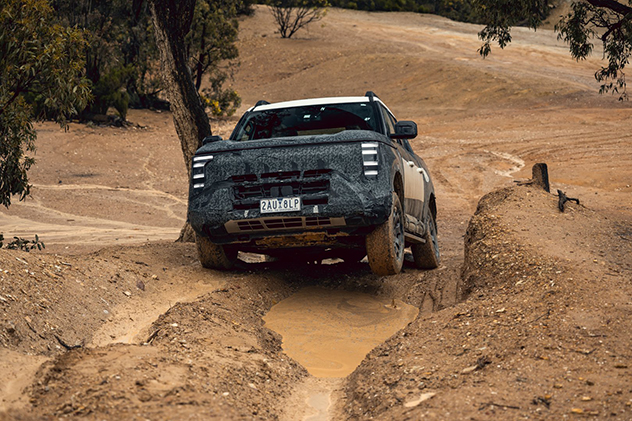
Nissan claims the newcomer retains the Navara’s “genuine capability” as a workhorse, offering a mechanical 4x4 system and differential lock, up to 1000kg payload and a 3500kg braked towing capacity.
“The all-new Navara Pro PHEV represents exactly the kind of product-led momentum that our Nissan Vision Strategy is built on,” said Steve Milette, Nissan Oceania’s managing director.
“Developed with our partners in China and engineered to meet the specific requirements of our region, it shows what Nissan is capable of delivering and what our customers can expect from us as we move forward.
“Utes have been central to Nissan in Australia for decades, with the Navara now spanning five generations. As the sixth generation of the Navara nameplate, the all-new Navara Pro PHEV is the next expression of that commitment – combining the capability and versatility customers expect from a Navara with new electrified technology, while opening a new chapter for Nissan’s ute offering in Australia.”
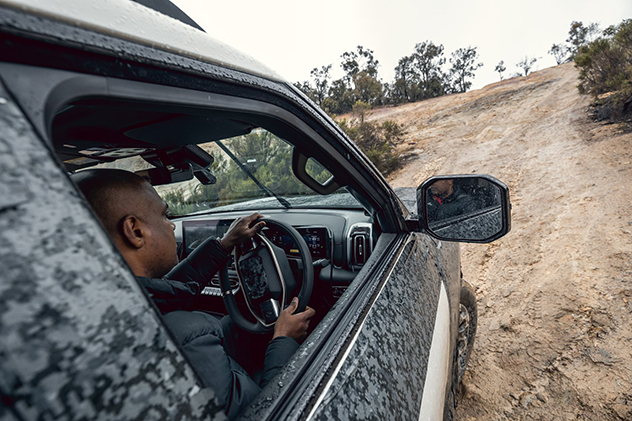
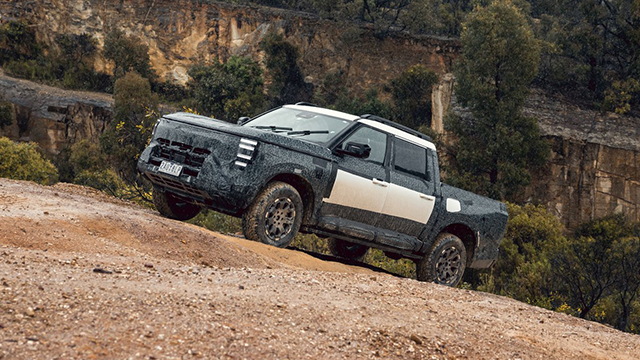
According to Nissan, the Australian focus of the Navara is demonstrated by the country’s extensive role in the development of the new vehicle.
All told, five development and prototype vehicles have undertaken more than 20,000km in Australian testing since 2025 – helping inform validation work on the powertrain, suspension, ADAS calibration, terrain and drive modes, tyres, differential lock, towing and load performance.
“Australia wasn’t simply where we tested Navara Pro PHEV. It was one of the markets helping shape it. The depth of local evaluation and the collaboration between our teams in Australia, Japan and China reflect the importance of Oceania to the development of this vehicle,” Milette said.
“We have put the vehicle through thousands of kilometres of real Australian conditions because we know what customers here expect from a ute. The result is a Navara Pro PHEV specification developed specifically to deliver electrification without compromising the capability that defines the segment.”
As part of that testing, Nissan extensively assessed leaf-sprung and multi-link coil-sprung rear suspension options on the new PHEV model, with a final decision on configuration to be confirmed closer to the start of sales.
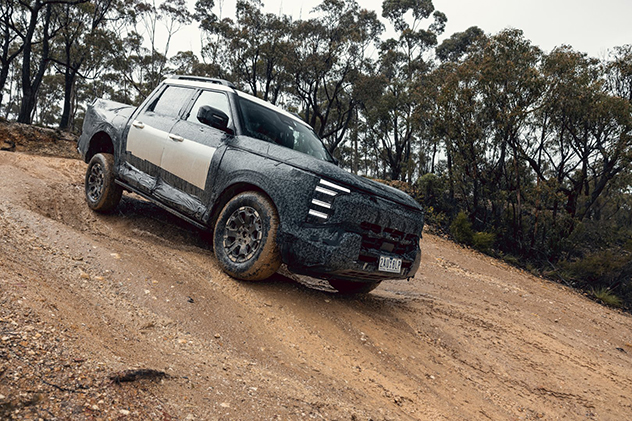
The Navara Pro PHEV will offer four selectable drive modes as standard (Eco, Standard, Sport and Slippery) together with seven powertrain modes (Standard, Deep Snow, Mud, Sand, Rock, Wading and Expert).
Additionally, vehicle-to-load (V2L) charging capability is fitted standard, allowing users to charge and power electrical goods out on the road.
Visually, the Navara Pro PHEV is said to take inspiration from Nissan’s D21 Hardbody pickup from the 1980s, including its three-slot hood opening.
Like the rest of the Navara range, the PHEV variant will be backed by Nissan’s 10-year/300,000km conditional warranty (owners must service through the Nissan network to take advantage).
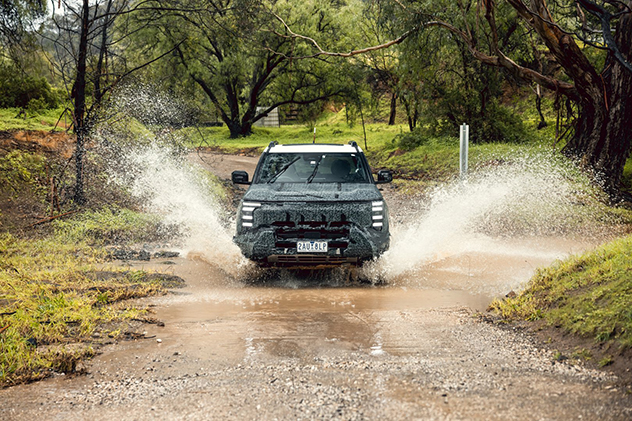
The Navara’s battery capacity, EV-only range, power/torque and load-carrying figures will be confirmed upon completion of the vehicle’s homologation process.
It is not yet known whether Mitsubishi will offer a comparable plug-in hybrid version of its Triton ute in due course – it and the Navara share common architecture underneath.