Aussie roads claim 1333 lives

New figures from the National Road Safety Data Hub show there were 1333 road fatalities in Australia for the year ending April 30, 2026 – a 3.5 per cent increase on the same period the previous year.
This is the 35th consecutive month that Australia’s year-on-year road toll has risen and there has been a 21.5 per cent rise in deaths since the ‘National Road Safety Strategy 2021-30’ (which sought to halve Australia’s road deaths by 2030) was introduced in 2021.
The release of these figures coincided with National Road Safety Week, which runs from May 17-24.
“Australia’s road deaths have increased in each of the past five years, and we can only address our worsening road toll by understanding what’s causing it to rise in the first place,” said AAA managing director, Michael Bradley.
“States and territories have very different approaches to management of speed, drink driving and emerging mobility devices, and our rising road toll demands that we identify any policy success stories that exist and help proliferate them, while identifying the failures that need to be updated.”
The AAA is a national motoring body that represents Australia’s state-based motoring clubs (including the NRMA) and their 10 million members.
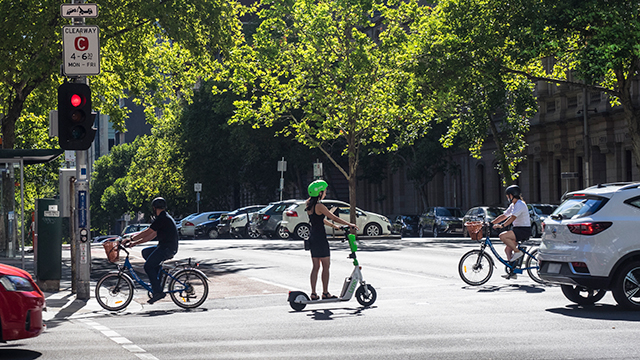
Increases in pedestrian (9.9 per cent) and cyclist (9.3 per cent) deaths contributed substantially to the overall rise.
Only Western Australia, Tasmania and the Northern Territory saw year-on-year falls in their road tolls, although even with a 28.6 per cent drop the NT still recorded the nation’s highest toll per capita – 13.2 deaths per 100,000 residents.
In NSW, there were 351 road-related fatalities for the 12-month period to April 30 – 17 (5.1 per cent) more than the previous year.
Of these, 56 were pedestrians – a 27 per cent jump in deaths compared to about 10 per cent nationally and the second biggest rise after Queensland.
Even more disturbingly, cyclist deaths in NSW saw a 100 per cent spike compared to 9.3 per cent nationally.
The NSW Government recently introduced a 2026 Road Safety Action Plan, which aims to halve deaths and reduce serious injuries on NSW roads by 30 per cent by 2030. It has also set an “aspirational target” of zero road deaths by 2050.
“The AAA looks forward to understanding the data-driven approach that the Commonwealth intends to fund, and to working with the government to curb the nation’s rising road toll,” said Mr Bradley.
“The AAA strongly believes that national leadership is needed if Australia’s piecemeal approach to road trauma management is to be improved.”
Road deaths in Australia
| Jurisdiction | 12 months to 30 April 2025 |
12 months to 30 April 2026 |
Change | % Change |
| NSW | 334 | 351 | 17 | 5.1 |
| VIC | 287 | 288 | 1 | 0.3 |
| QLD | 290 | 331 | 41 | 14.1 |
| SA | 85 | 101 | 16 | 18.8 |
| WA | 193 | 177 | -16 | -8.3 |
| TAS | 40 | 36 | -4 | -10 |
| NT | 49 | 35 | -14 | -28.6 |
| ACT | 10 | 14 | 4 | 40 |
| AUS | 1288 | 1333 | 45 | 3.5 |
Source: National Road Safety Data Hub