ADVERTISEMENT
2026 Mazda CX-5 review
The elder statesman of the medium SUV segment gets a youthful makeover, but for now it’s the same old story under the Mazda CX-5’s bonnet.

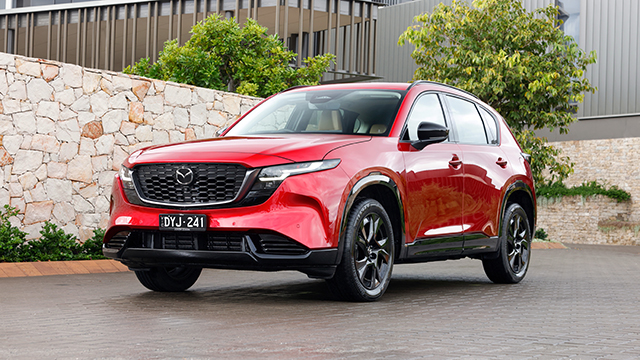
Few vehicles have enjoyed a shelf-life quite so long as the Mazda CX-5.
Debuting in Australia in 2012, Mazda’s venerable mid-size SUV has enjoyed increasing popularity among its loyal customer base, with over 330,000 sold in Australia since its debut and more than 20,000 repeat purchasers.
Given the typically conservative nature of Mazda CX-5 buyers, it’s no surprise to discover this new third generation has comparatively minor changes to the exterior styling and mechanicals, although the interior treatment and technology have at last dragged the CX-5 into the 2020s.
Is this mix of ‘brand new’ and ‘tried and true’ enough to ensure brisk sales for the coming decade as well?
Above the Pure are the Evolve ($42,990), Touring ($47,990), GT SP ($51,990) and Akera ($54,990). For more detail on the CX-5’s pricing, read our news story here.
To say Australia’s mid-sized SUV buyers are well catered for is an understatement, with a burgeoning market now at the point of saturation thanks to new Chinese entrants in the past couple of years.
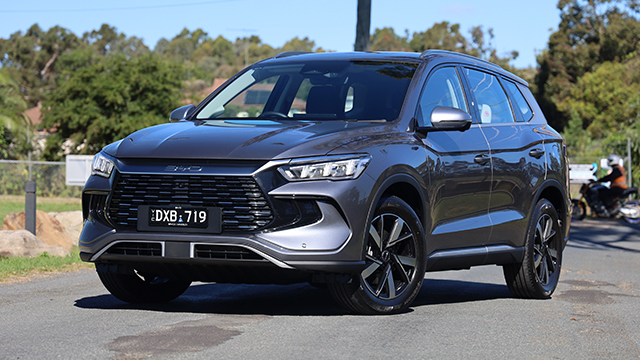
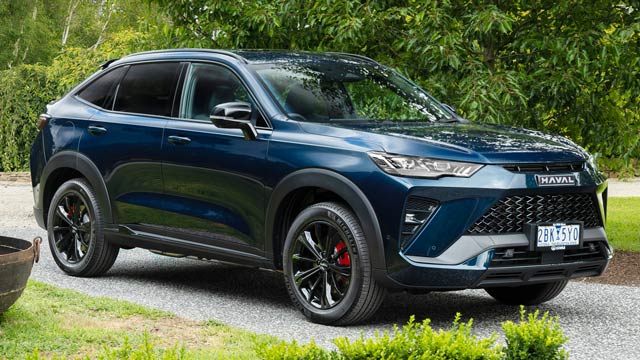
Long-time Mazda CX-5 rivals such as the Toyota RAV4 ($45,990), Hyundai Tucson ($39,100) and Mitsubishi Outlander ($39,990) now find themselves doing battle with rising stars such as the Chery Tiggo 7 Pro ($27,990), GWM Haval H6 ($34,490) and BYD Sealion 6 ($42,990). That’s but a sample of the 30+ models duking it out – and there are another 30 to choose from over the $65k mark.
The existing five-year/unlimited kilometre warranty carries over for the third-generation Mazda CX-5. Services are every 12 months or 15,000km, with servicing costs between $350 and $620 depending on which service is due.
Debuting in Australia in 2012, Mazda’s venerable mid-size SUV has enjoyed increasing popularity among its loyal customer base, with over 330,000 sold in Australia since its debut and more than 20,000 repeat purchasers.
Given the typically conservative nature of Mazda CX-5 buyers, it’s no surprise to discover this new third generation has comparatively minor changes to the exterior styling and mechanicals, although the interior treatment and technology have at last dragged the CX-5 into the 2020s.
Is this mix of ‘brand new’ and ‘tried and true’ enough to ensure brisk sales for the coming decade as well?
How much does the 2026 Mazda CX-5 cost?
Because Mazda has discontinued the 2.0-litre four-cylinder engine for the third-generation CX-5, the entry point before on-road costs jumps from $37,240 (for the old Maxx) to $39,990 (for the 2.5-litre Pure). The price hike is more than justified, however, as the Pure also gets AWD rather than FWD and many more luxuries than the old base model – more on that later.Above the Pure are the Evolve ($42,990), Touring ($47,990), GT SP ($51,990) and Akera ($54,990). For more detail on the CX-5’s pricing, read our news story here.
To say Australia’s mid-sized SUV buyers are well catered for is an understatement, with a burgeoning market now at the point of saturation thanks to new Chinese entrants in the past couple of years.
Long-time Mazda CX-5 rivals such as the Toyota RAV4 ($45,990), Hyundai Tucson ($39,100) and Mitsubishi Outlander ($39,990) now find themselves doing battle with rising stars such as the Chery Tiggo 7 Pro ($27,990), GWM Haval H6 ($34,490) and BYD Sealion 6 ($42,990). That’s but a sample of the 30+ models duking it out – and there are another 30 to choose from over the $65k mark.
The existing five-year/unlimited kilometre warranty carries over for the third-generation Mazda CX-5. Services are every 12 months or 15,000km, with servicing costs between $350 and $620 depending on which service is due.
The biggest departure in the CX-5 drive experience comes down to the central touchscreen.
— Kris Ashton

2026 Mazda CX-5 Pure in Aero Grey Metallic


1/8
What is the 2026 Mazda CX-5 like inside?
In a phrase: scarcely recognisable.The second-gen CX-5 interior was gussied up a number of times during its decade-long tenure, but compared to the new crop of medium SUVs it had begun to look dated. That’s not a criticism anyone could level at the new CX-5, with a horizontal theme reshaping its lines and the clutter of buttons and dials evicted in favour of a modern and minimalist approach.
Spearheading this minimalism is the disappearance of the large dial on the centre console, introduced in the second generation for navigation of the infotainment screen. This Mazda hallmark has been retired and replaced with touchscreen functionality and steering wheel buttons, a choice sure to spark discussion and conjecture among the CX-5 faithful.
Other cosmetic changes include the deletion of the Mazda badge from the centre of the steering wheel in favour of the company’s name in small caps (a change repeated on the boot) and some revisions to the shape of headlights/tail-lights and grille.
The seats in the Pure and Evolve are a bit soft and shapeless, something that became especially noticeable during our launch drive through the winding roads of the Gold Coast and northern NSW hinterland. The seats in higher grade models are much better, with firmer padding and more bolstering. While the black cloth upholstery in the Pure and Evolve isn’t especially endearing, the ‘Maztex’ synthetic leather in the Touring and real leather in top-spec grades are sumptuous and tactile.
Crucially, Mazda has stretched the CX-5’s wheelbase by 115mm, leading to a much-needed 50mm increase in boot length and a total volume of 466 litres (up 43 litres on the old model). Nor has this come at the expense of passenger comfort, with added leg room in the second row and loads of space for feet and heads as well.
The Mazda CX-5 comes with a space saver spare wheel on all model grades.

The 2026 Mazda CX-5 Touring in Navy Blue Mica


1/4
What equipment does the 2026 Mazda CX-5 come with?
These days $39,990 is a comparatively cheap starting price for a medium-sized SUV unless you opt for a budget brand, and that is reflected in the Pure’s standard equipment list. Things are a particularly spartan in the second row, with no air conditioning vents and no USB connections.What does the Pure get? The list includes automatic LED headlights and tail-lights, rain sensing wipers, dual-zone climate control (for the front seats), 12.9-inch central touchscreen, 10.25-inch driver display, Apple CarPlay/Android Auto (wired only), digital radio, eight-speaker sound system, cruise control with stop and go function, black cloth upholstery, leather wrapped steering wheel and gear shift knob, and two USB-C phone charging ports.
Given the upgrade to a 2.5-litre engine and all-wheel drive, though, Mazda says the Pure delivers $3000 more value than the old G20 Maxx base model.
Move up a step to the Evolve and added goodies include advanced keyless entry, auto-folding and heated side mirrors, second row air conditioning vents, a frameless rear-view mirror and light for the vanity mirror, heated front seats, wireless Apple CarPlay/Android Auto, and a wireless phone charger.
The additional $5000 for the Touring brings some proper luxury elements, among them a remotely operated tailgate, head-up display, heated steering wheel, 10-way power adjustable driver’s seat with memory function and lumbar support, synthetic leather upholstery with suede inserts (black or white options), and seat back pockets.
Topping $50k, the GT SP adds gloss black lower bumpers and wheel arch mouldings, ambient LED lighting in the cabin, USB-C ports for the second row (finally!), six-way power adjustable passenger’s seat, heated rear seats, black leather upholstery, premium 12-speaker Bose sound system, a 360-degree surround view monitor and adaptive headlamps.
Sitting atop the model tree is the Akera, which enjoys a powered panoramic sunroof, hands-free tailgate, ventilated front seats and a 15.6-inch central touchscreen.
A new colour option, Navy Blue Mica, replaces the Deep Blue Crystal seen in previous models. A remarkable amount of research went into its development – apparently Deep Blue Crystal often appeared black in low-light conditions, so Mazda worked to ensure Navy Blue Mica would appear blue no matter whether it was subject to harsh Aussie sun or an overcast day in London.
How safe is the 2026 Mazda CX-5?
For much of its life the Mazda CX-5 enjoyed a five-star ANCAP safety rating, but that lapsed in 2023 and it has remained unrated for the past few years. Quizzed on whether the 2026 CX-5 would be crash tested locally, Mazda said it would be following Euro NCAP protocols and expected a five-star rating, although at the time of writing it remains untested.Safety does not appear to be an issue based on available equipment, which includes 10 airbags, dynamic stability control, driver attention alert, emergency braking assistance, front and rear obstruction warning, front cross traffic alert, lane departure warning and lane keeping assistance, traffic sign recognition, and much more besides.
Reflecting Mazda’s continued focus on a pleasurable driver experience, the ADAS equipment intrudes only when absolutely necessary. In that respect, it’s a good template for other manufacturers to follow.

2026 Mazda CX-5 Akera in Soul Red Crystal


The 2026 Mazda CX-5 has a 466-litre boot.
1/6
What powers the 2026 Mazda CX-5?
For the time being, exactly one powertrain is offered across all grades: the 2.5-litre naturally aspirated four-cylinder ‘Skyactiv’ engine that has seen service in the Mazda CX-5 since 2013, matched to a similarly long-in-the-tooth six-speed transmission.Not only have the engine choices available in previous CX-5s (including the naturally aspirated 2.0-litre engine and turbo 2.5-litre) gone bye-byes, the direct-injection 2.5 has been revised for its appearance in the third generation and now puts out less power and torque – 132kW/242Nm versus 140kW/252Nm. This does allegedly save a thimbleful of fuel, with claimed consumption down from 7.5L/100km on comparable 2025 models to 7.4L/100km.
A hybrid version of the Mazda CX-5 will eventually arrive on Aussie shores, but at the time of writing it’s still at the prototype stage. It’s slated to go on sale in America in early to mid-2027, so we’ll likely have to wait until late 2027 or early 2028. Mazda says it’s taking it’s time to make sure the hybrid has the right balance between economy and performance, but it’s hard to see its absence from the 2026 CX-5 lineup as anything other than an opportunity gone begging.
What is the 2026 Mazda CX-5 like to drive?
The drive experience is eminently familiar, which will either be good news or a disappointment depending on your opinion of the direct-injection 2.5-litre engine, which has powered Mazda CX-5s since Julia Gillard was PM.It’s quick off the line and acceleration is steady, although anything more than moderate throttle input sees the transmission kick down and the engine raise its less than tuneful voice to reach peak torque, which doesn’t arrive until 4000rpm (and power arrives at 6000rpm).
Changes to sheet metal resulted in a 10 per cent weight reduction even though the car’s proportions are fractionally larger, although at 1720kg kerb weight the third-gen CX-5 is no slim Jim and weighs nearly 40kg more than the previous model.
Mazda says it has redesigned the suspension with a lower spring rate and more responsive dampers, but for the most part ride and handling provide more déjà vu – firm but well-damped suspension, linear steering, and a calm and quiet cabin that feels built to precision and designed for touring comfort.
There’s even a traditional mechanical gear shifter across all grades (which is preferable to most attempts at digitising something that didn’t need to be digitised). Really, the biggest departure in the CX-5 drive experience comes down to the central touchscreen, which is now home base for nearly every function and instrument.
Mazda’s claims this change means the driver doesn’t need to look down at buttons and therefore his or her vision remains higher and more focused on the road, but as anyone who has used a similar system will tell you, this is a specious argument. The air conditioning controls in the CX-5, for example, are located on a narrow strip at the bottom of the central touchscreen and accurately hitting the small arrows for temperature up or down is much trickier than just pressing a physical button or twisting a knob. It’s unlikely Mazda’s conventionally conservative customers will feel this is an improvement.
On the other hand, switches for the front and rear demister mean it’s not an entirely buttonless affair on the dashboard and Mazda has introduced some clever functionality for the steering wheel buttons. They’re touch sensitive, which means you can either press the button to increase the volume (for example) or swipe up.
It’s a similar story with the touchscreen icons – if you press and hold, say, the temperature icon, it will expand into a bar that you can slide up or down. Perhaps best of all is the 360-degree camera on the GT SP and Akera. It gives you a 3D rendering of the vehicle, which you can manipulate on screen to see exactly how close you are to surrounding objects that would otherwise not be visible.
Also worth mentioning is the head-up display (available on Touring and above), which is one of the largest we’ve encountered and makes the driver display all but redundant in most situations.
In short, Mazda probably could have retained a few more buttons for convenience’s sake, but overall the added technology works superbly and gives the CX-5 a much-needed kick into modernity.
Open Road’s take on the 2026 Mazda CX-5
The third-generation Mazda CX-5 is an exercise in contradictions. The brand-new infotainment system and interior fit-out belong to an up-to-the-minute vehicle from 2026, while under the bonnet buzzes yesteryear’s engine.With so many superb hybrid and electric alternatives in the mid-sized SUV market today, it was long past time for Mazda to do something different mechanically and instead it’s resting on its laurels for another year or more.
That said, it has those laurels for a reason – and with the previous generation’s hopelessly dated interior now just a memory and more space in the boot, two of the CX-5’s biggest shortcomings have been rectified. While its engine’s performance and economy won’t trouble competitors, in every other respect the 2026 Mazda CX-5 has a great deal to recommend it.
Pros
- Spacious and stylish interior
- Well-considered tech improvements
- Cargo space now nearer to rivals’
Cons
- Base model feels spartan for the price
- Powertrain is showing its age
- No hybrid alternative (it’s coming)
Share this article