2026 Suzuki eVitara review

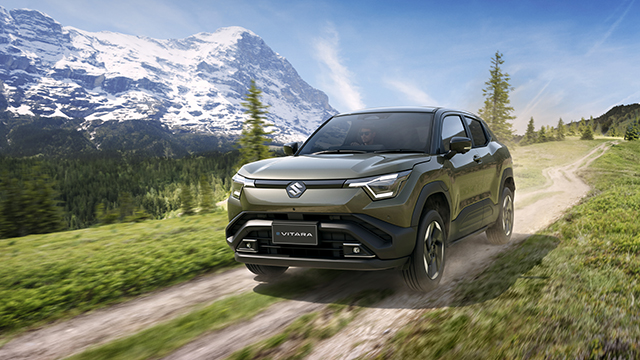
As fully electric vehicles (EVs) begin to find price parity with ICE and conventional hybrid vehicles, it makes sense that Suzuki, a budget Japanese brand, would now dip its toe in the water.
Why it chose the Vitara SUV as the first model to electrify, however, is an interesting question. Worldwide, its Swift hatchback sells far better and, even if the Vitara outdoes it in certain Euro markets, the Swift would seem the better EV option.
The eVitara also lines up against a plethora of Chinese electric SUVs, many of which will likely undercut it on price. So, what exactly does the Suzuki’s first campaign in the electric space offer?
How much does the 2026 Suzuki eVitara cost?
The 2026 Suzuki eVitara It will be offered in two specifications, Motion and Ultra, with the Ultra enjoying more luxury inclusions and a much larger battery capacity.
The eVitara isn’t expected to hit showrooms in Australia until June or July 2026 and Suzuki Australia has yet to reveal local pricing. In the UK, the eVitara retails from £29,999, which converts to around AU$56,000. With the new Suzuki Vitara Hybrid retailing for $40k to $45k, it’s hard to imagine the eVitara slipping in under the $50,000 mark.
Comparable competing models in Australia currently include the Hyundai Kona ($54,000), Deepal S07 ($49,990), MG S5 EV (from $40,490), BYD Atto 3 ($39,990) and Chery E5 ($36,990), to name just a handful.
What is the 2026 Suzuki eVitara like inside?
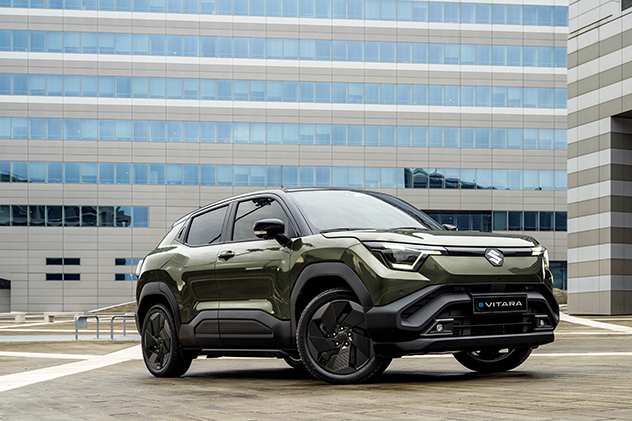
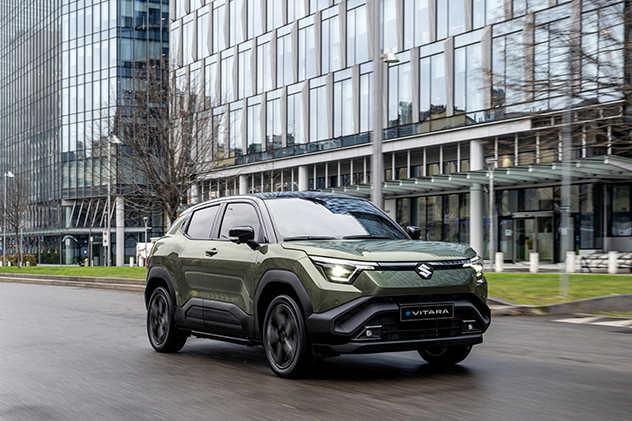
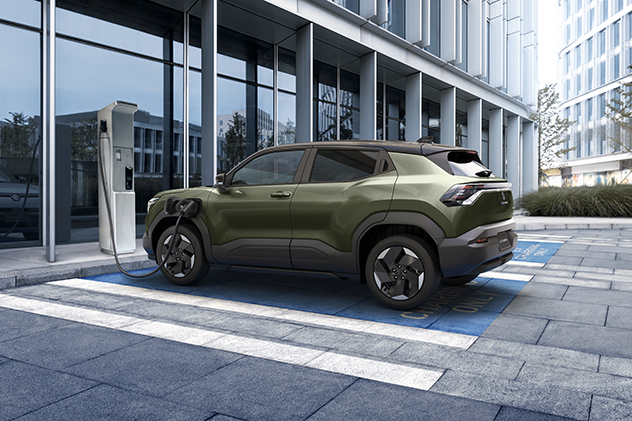
Both the interior and exterior styling of the 2026 Suzuki eVitara are light years ahead of the existing petrol Vitaras.
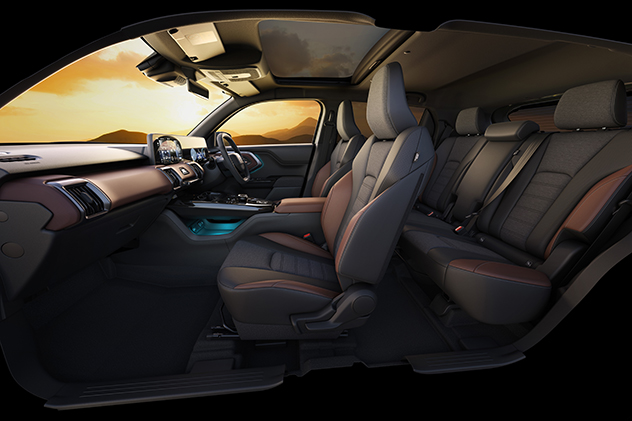
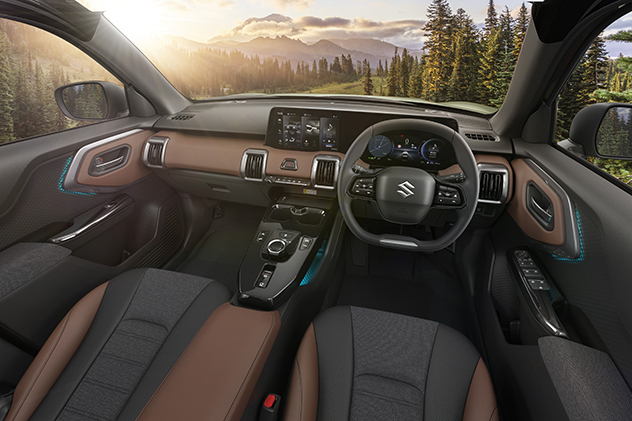
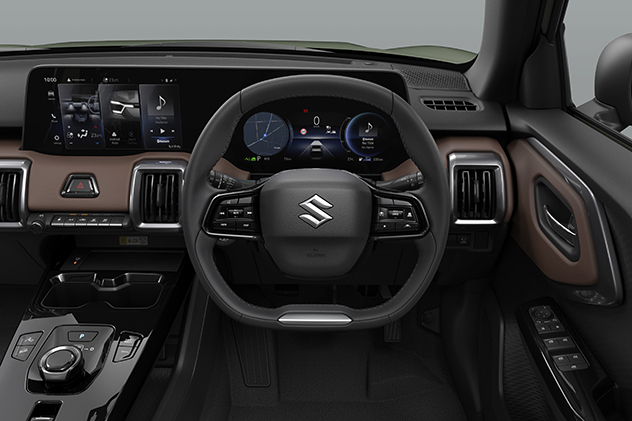
It presents as a car conceived for today, not 10 or 15 years ago, with modern and interesting aesthetics. Hard plastics remain evident here and there, but a proper armrest, dash pads, massive 20-inch driver information and central touchscreen combination, and a well-laid-out console give the interior considerable visual and practical appeal.
Passenger space is excellent and the eVitara exudes a general sense of roominess. Less pleasing are the seats, which immediately feel flat and unsupportive compared to those in the ICE Vitaras, and we found them uncomfortable after just 15 minutes – it’s hard to imagine doing a two-hour stint in these saddles.
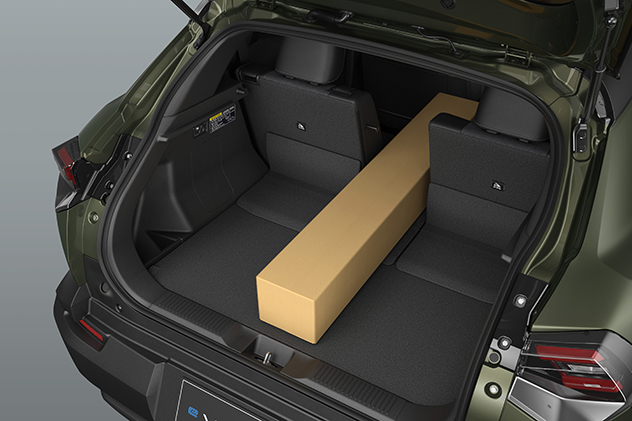
Boot space is also a bit of an issue. The 2026 Suzuki Vitara doesn’t have the most capacious cargo area anyway, at 375 litres, and in the EV version it is limited further, with the boot floor sitting quite high and reducing volume to just 310 litres.
What equipment does the 2026 Suzuki eVitara come with?
Without a definite starting price, it’s impossible to judge how well the 2026 Suzuki eVitara is equipped.
The base model Motion comes standard with a 49kWh battery and front-wheel drive, 18-inch alloy wheels, automatic LED headlights, keyless entry and start, leather-wrapped steering wheel, electrically adjustable heated door mirrors, rain-sensing wipers, 10.25-inch driver’s display and 10.1-inch central touchscreen, Apple CarPlay and Android Auto connectivity, digital radio, air conditioning, ambient interior lighting, two USB-A and two USB-C chargers, and a 360-degree camera.
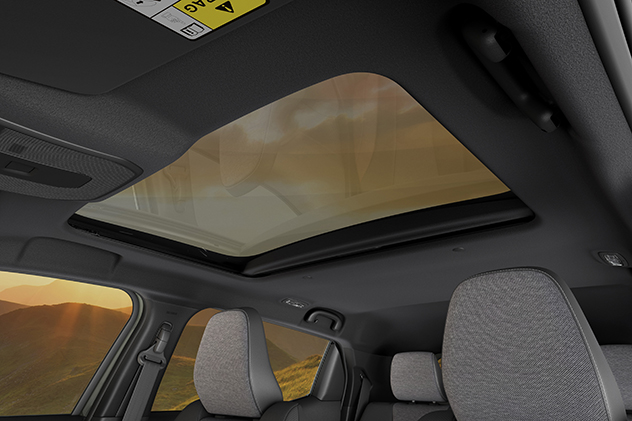
The much more lavishly equipped Ultra gets a 61kWh battery and all-wheel drive, fog lamps, glass roof with sunshade, hill descent control, a premium Infinity sound system, wireless phone charger, synthetic leather inserts on the seat upholstery, 10-way electrically adjustable driver’s seat, heated front seats, and adaptive high beam.
How safe is the 2026 Suzuki eVitara?
The 2026 Suzuki eVitara has not been ANCAP crash tested, but the Motion comes standard with an array of safety equipment including seven airbags, ABS, lane keeping assistance, lane departure prevention, traffic sign recognition, adaptive cruise control, blind-spot monitor and rear cross-traffic alert.
— Kris Ashton
What powers the 2026 Suzuki eVitara?
One of two powertrain configurations is available in the 2026 Suzuki eVitara, depending on model grade.
The Motion has a 49kWh lithium iron battery pack which powers an electric motor on the front axle via a single-speed electric transmission. Outputs are 106kW and 193Nm. It has a claimed range of 344km (WLTP) and a 0-100km/h time of 9.6 seconds.
The Ultra has a 61kWh battery pack and a single speed four-wheel drive electric system, with 135kW and 307Nm outputs. Range is 395km on the WLTP cycle and the 0-100km/h time drops to 7.4 seconds.
Both have an 11kW on-board AC charger, which can replenish the battery from 10 to 100 per cent in a claimed 4.5 hours for the Motion and 5.5 hours in the Ultra.
While both also have a CCS2 DC charging inlet, Suzuki Australia didn’t provide a charging capacity in its press materials. Overseas, the eVitara is rated at just 70kW, which explains the quoted 10 to 80 per cent DC charging time for both models of a rather tardy 45 minutes.
What is the 2026 Suzuki eVitara like to drive?
The gear shifter arrangement on the centre console is neat, compact and well considered in the 2026 Suzuki eVitara.
There’s a central dial which you push down for neutral and then turn right for drive or left for reverse, while the park button is just ahead of the dial and the parking brake switch just behind it. The drive mode selection button (offering Eco, Normal, Sport and Snow in the Motion or Trail in the Ultra) is situated just to the left and the driver barely needs move his hand to access everything.
Prior to our drive experience, Suzuki executives spoke about not wanting to lumber the eVitara with an enormous battery just to give it a longer range. While this might sound like a public relations specialist trying to cope, in practise the logic is sound.
No, the eVitara doesn’t offer throw-you-back-in-your-seat acceleration, but even a modestly powered EV has grunt available when and where it’s needed. Dialling back on battery capacity means even the Ultra has a kerb weight of just 1860kg (quite trim for a mid-sized electric SUV) and this is evident in the eVitara’s handling – while it’s not sporty, there’s a lightness and agility one doesn’t readily associate with this segment of the EV market.
MacPherson struts with coil springs up front and multilink suspension at the rear provide a very smooth and comfort-biased ride, with potholes and bumps alike unable to unsettle the eVitara. We noted some tyre noise in the cabin, but that’s almost always the case with EVs because they operate so quietly.
In Trail mode, the AWD eVitara Ultra showed reasonably capable off-roading skills, tackling hills and some slippery/muddy sections of track on the 4WD course at Sydney Motorsport Park.
The eVitara has regenerative braking with adjustable resistance levels, although on full resistance it’s not quite one-pedal driving. During our short stint the energy meter showed an average use of 4.7km/kWh, which would put true range at around 230km for the Motion and 287km for the Ultra. Motoring journalists (many of whom drove the car before us) aren’t known for their gentle and economical driving, however, so 4.7km/kWh may be a worst-case scenario.
Open Road’s take on the 2026 Suzuki eVitara?
Price will be the key to the 2026 Suzuki eVitara’s success or failure. If Suzuki can bring the Motion to market for a price that rivals the cheaper Chinese brands, it could be onto a winner.
If the base model comes in around the $50,000 mark, however, it will likely disappear without a trace. The Suzuki eVitara is a good-looking, characterful and well-sorted EV, but in the current Australian landscape buyers expect value as well. Time will tell.
What we liked
- Styling a vast improvement on petrol Vitaras
- Drive selector system and panoramic screens
- Comfortable ride and competent handling
What could be better?
- Terrible front seat ergonomics
- Slow DC fast-charging time
- Compromised cargo space
,
What powers the 2026 Suzuki eVitara?
One of two powertrain configurations is available in the 2026 Suzuki eVitara, depending on model grade.
The Motion has a 49kWh lithium iron battery pack which powers an electric motor on the front axle via a single-speed electric transmission. Outputs are 106kW and 193Nm. It has a claimed range of 344km (WLTP) and a 0-100km/h time of 9.6 seconds.
The Ultra has a 61kWh battery pack and a single speed four-wheel drive electric system, with 135kW and 307Nm outputs. Range is 395km on the WLTP cycle and the 0-100km/h time drops to 7.4 seconds.
Both have an 11kW on-board AC charger, which can replenish the battery from 10 to 100 per cent in a claimed 4.5 hours for the Motion and 5.5 hours in the Ultra.
While both also have a CCS2 DC charging inlet, Suzuki Australia didn’t provide a charging capacity in its press materials. Overseas, the eVitara is rated at just 70kW, which explains the quoted 10 to 80 per cent DC charging time for both models of a rather tardy 45 minutes.
What is the 2026 Suzuki eVitara like to drive?
The gear shifter arrangement on the centre console is neat, compact and well considered in the 2026 Suzuki eVitara.
There’s a central dial which you push down for neutral and then turn right for drive or left for reverse, while the park button is just ahead of the dial and the parking brake switch just behind it. The drive mode selection button (offering Eco, Normal, Sport and Snow in the Motion or Trail in the Ultra) is situated just to the left and the driver barely needs move his hand to access everything.
Prior to our drive experience, Suzuki executives spoke about not wanting to lumber the eVitara with an enormous battery just to give it a longer range. While this might sound like a public relations specialist trying to cope, in practise the logic is sound.
No, the eVitara doesn’t offer throw-you-back-in-your-seat acceleration, but even a modestly powered EV has grunt available when and where it’s needed. Dialling back on battery capacity means even the Ultra has a kerb weight of just 1860kg (quite trim for a mid-sized electric SUV) and this is evident in the eVitara’s handling – while it’s not sporty, there’s a lightness and agility one doesn’t readily associate with this segment of the EV market.
MacPherson struts with coil springs up front and multilink suspension at the rear provide a very smooth and comfort-biased ride, with potholes and bumps alike unable to unsettle the eVitara. We noted some tyre noise in the cabin, but that’s almost always the case with EVs because they operate so quietly.
In Trail mode, the AWD eVitara Ultra showed reasonably capable off-roading skills, tackling hills and some slippery/muddy sections of track on the 4WD course at Sydney Motorsport Park.
The eVitara has regenerative braking with adjustable resistance levels, although on full resistance it’s not quite one-pedal driving. During our short stint the energy meter showed an average use of 4.7km/kWh, which would put true range at around 230km for the Motion and 287km for the Ultra. Motoring journalists (many of whom drove the car before us) aren’t known for their gentle and economical driving, however, so 4.7km/kWh may be a worst-case scenario.
Open Road’s take on the 2026 Suzuki eVitara?
Price will be the key to the 2026 Suzuki eVitara’s success or failure. If Suzuki can bring the Motion to market for a price that rivals the cheaper Chinese brands, it could be onto a winner.
If the base model comes in around the $50,000 mark, however, it will likely disappear without a trace. The Suzuki eVitara is a good-looking, characterful and well-sorted EV, but in the current Australian landscape buyers expect value as well. Time will tell.
What we liked
- Styling a vast improvement on petrol Vitaras
- Drive selector system and panoramic screens
- Comfortable ride and competent handling
What could be better?
- Terrible front seat ergonomics
- Slow DC fast-charging time
- Compromised cargo space