What the 2026 Federal Budget means for motorists


The long-awaited and much talked about Federal Budget has finally been announced and while housing and tax reforms are dominating the headlines, there’s plenty that impacts motorists too. From a drop in road funding, to changes to the Fringe Benefits Tax scheme, and timing for the controversial road-user charge, the budget signals some significant shifts in how the Federal Government is tackling some key issues.
So are motorists winners or losers under the new budget? Let’s take a look.
Drivers of petrol and diesel cars: winners
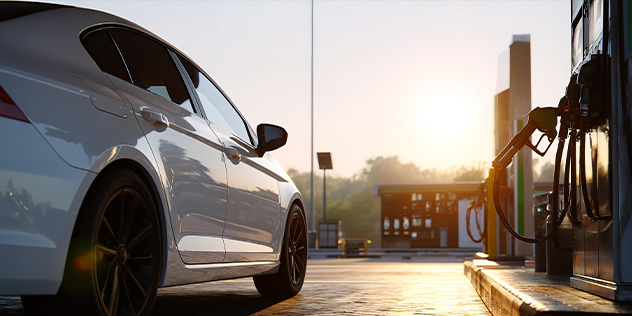
Good news: temporary cuts to the fuel excise and heavy vehicle road user charge will remain under the new budget. These measures were first introduced on April 1 and include halving the fuel excise from 52.6 to 26.3 cents per litre and reducing the heavy-vehicle road user charge to zero for three months. Other incentives include interest-free loans to help manufacturing and logistics companies manage cash flow.
But while the reduction in the fuel excise provides short-term support, the measures are temporary and will be phased out from July 1, 2026.
Happily, the Federal Budget also includes some longer-term initiatives to help secure Australia’s fuel security. A $14.8 billion package has been outlined to increase Australia’s minimum fuel reserves and to establish a government-controlled Australian Fuel Security Reserve of around one billion litres. The aim is to lift diesel and jet fuel reserves to around 50 days.
A commitment of $10 million is also allocated towards feasibility studies to expand Australia’s domestic refining capacity.
Buyers of electrified cars: losers
Changes to the Electric Car Discount, and specifically the Fringe Benefits Tax (FBT) exemption, could see EV owners on a typical novated lease lose more than $17,000 in tax savings.
The good news is the current FBT exemptions remain in place until March 2027 but eligibility criteria will be tightened over time.
From April 2027, only EVs under $75,000 will still be eligible for the full exemption, while more expensive EVs will receive a smaller 25 per cent FBT discount, up to the Luxury Car Tax threshold. From April 2029, all eligible EVs will move to the 25 per cent FBT discount. You can read more about the changes to the FBT exemption here.
Funding for roads and infrastructure: winners & losers
Budget documents show road and infrastructure investment funding will be cut by $2.2 billion under the new Federal Budget, from $14.1 billion in 2025-26 to $11.9 billion in 2026-27. That sounds like a significant drop, however there is a silver lining when you dig into how the new funding will be allocated.
Important initiatives like the Black Spot Program and Roads to Recovery both see slight funding increases for 2026-27 (+$7.4 million and +$109 million respectively), as does the Safer Local Roads and Infrastructure Program, which jumps from 201.5 million to 330 million (+128.5 million).
The biggest cut is to ‘Rail investment’ which drops from $4.9 billion in 2025-26 to $2 billion in ’26-27. Again, though, there are some positive stories to tell. Notably for NSW and ACT residents, the Federal Government will invest $50 million to upgrade train travel between Sydney and Canberra. That investment will be matched by $25 million from both the NSW and ACT State Governments respectively for a total of $100 million, with the aim of bringing journey times down to four hours between the two cities.
Development work for the high-speed rail project from Sydney to Newcastle also receives $659.6 million, with that funding rolling out over three years from 2026-27.
Meanwhile, the ‘Road investment component’ of the federal budget’, which entails large road projects, road construction and maintenance, increases from $7.7 billion to $8.2 billion nationally. NSW will receive $2.2 billion in road investment funding in 2026-27, with $8.8 billion to be spent on NSW roads over the next four years.
Electric vehicle charging infrastructure: unchanged
While the budget didn’t reveal any new major initiatives or additional expenditure for EV infrastructure, it does include a $40 million investment to support new regional and kerbside chargers. Australia Post also receives $40.5 million to support the electrification of its delivery fleet.
Road user charge: verdict pending
Few issues have been as controversial as proposals to introduce a road user charge for electric vehicles. Currently, a large chunk of Australia’s funding for road infrastructure projects and maintenance comes from the fuel excise, which EV drivers do not currently contribute to because they do not buy petrol or diesel.
The Australian Automobile Association (AAA) has called for Australia to introduce a distance-based road-user charge, where EVs would be charged a tax per kilometre. For now, though, the Federal Government is keeping its powder dry.
The budget states that: “The Government is continuing to work with states and territories on the development of a road-user charge for electric vehicles to ensure fair and sustainable funding for road investment and maintenance.”
Notably, budget documents also show a reduction in how funds collected from the fuel excise will be allocated to road funding. Under the new budget, 70 per cent of funds over the following four years will be re-invested into the road network. That’s down from the 79 per cent forecast 12 months ago.
AAA managing director Michael Bradley said those figures should be increasing, not being reduced.
“There will be an increasing need for investment in recharging stations to support electric vehicles as more Australians shift to electric vehicles and hybrids. And our existing road building and maintenance costs will remain. That means overall funding must increase.
“The fuel excise system was designed for a different era, and we are rapidly shifting into a new age with no plan for sustainably funding the infrastructure needed to support that transition.”
Road safety and Australia’s rising road toll: winner
Australia’s road toll has remained stubbornly high, with a concerning number of drivers dying on our roads. The new budget increases funding for key road safety projects, including the Black Spot and Roads to Recovery programs. The allocation of road funding and programs suggest a shift toward fatality reduction, network safety and reliability, rather than major new roads.
The Open Road verdict on the 2026 Federal Budget
Overall, the new budget prioritises short‑term fuel stability and targeted relief, while leaving longer‑term transport reform, disaster resilience and mobility challenges largely unchanged.